
Joy, confidence and vitality abound where NSA members gather to share true Buddhism.

A guest is warmly welcomed at a meeting.

Defining the Buddhist Faith
The Three Proofs of Religion
What is the measure of a religion? It would seem that man seeks religious teaching and practice in order to explain the unexplainable, to provide direction where there was previously aimlessness, or to give meaning and order to the seemingly random experience of life. Perhaps, when all is said and done, it could be simply stated that man seeks religion to provide him with happiness. Happiness is a rather vague, sometimes unpopular term—it can be spiritual, emotional or physical. It can stem from immediate gratification or long-range objectives. Whatever the case, it would be hard to argue against the fact that the human being spends most of his or her waking life striving toward some individually defined concept of happiness.
Buddhism is a religion taught for the human being by a human being we refer to as the Buddha. Because the Buddha is no more or less than human himself, he recognizes that what human beings seek most and what also motivates them most is their own happiness. Actually, the Buddha simply means “enlightened human being” and can refer to any number of individuals—from the man known as Shakyamuni, the first historical Buddha, to the man we call Nichiren Daishonin, whom Nichiren Shoshu considers to be the original and ultimate Buddha.
Thus, we come to the conclusion that the Buddhist faith has been revealed to allow human beings to seek their happiness. One problem, however, is that the concept of faith, by nature, embodies, to one extent or another, the concept of belief. Belief is a hard thing to adhere to in our times. Staggering changes are taking place in the human community and more and more people are questioning what were, until now, commonly accepted attitudes about life. Change has affected every facet of our daily reality and our entire society has come to reconsider its direction. At the same time, all of us continue to live under the spectre of imminent destruction posed by nuclear weapons and attendant barbaric concepts such as “winnable nuclear war.” It is no wonder that ours is an age of skepticism and doubt.
Any religion that avoids proving its doctrine, theory and practice would seek to deny the questioning nature of man. Buddhism suggests that we evaluate religion according to the “three proofs” (sansho). These offer a standard for gauging the quality and validity of a religion. They are known as documentary, theoretical and actual proof.
In the pages that follow we will examine Nichiren Shoshu Buddhism from these three criteria. First, we will address the documented ideals of the religion—the historical Lotus Sutra which provides much of Nichiren Shoshu’s theoretical underpinning and Nichiren Daishonin’s Gosho ( writings) which spell out the specifics of the practice and the objectives of the Buddhist faith. Second, we will examine the theories of life expounded by Buddhism, attempting to highlight the common-sense and rational approach of these theories as being consistent with the Buddhist notion of religious faith.
Finally, and most importantly, we will spell out the way in which stated doctrine and theory in Nichiren Shoshu are implemented as a real process in everyday human existence—a process that leads to the creation of actual proof as a result of adherence to the doctrinal and theoretical tenets of faith.
It is in its insistence upon actual proof that Nichiren Shoshu reveals its greatness. Nichiren Daishonin himself said, “I, Nichiren, conclude from my own experiences in Buddhism that literal and theoretical proofs are vital factors to judge religions, but actual proof is far superior to both.” The elements of religious practice and their results deserve more attention than they are generally given. Naturally, results must substantiate theory.
Science is highly respected because it backs up its ideas with experimentation. For a theory to be considered valid, experiments must offer the same proof no matter how many times or under what conditions they may be repeated. Natural sciences such as physics and chemistry go to great lengths to produce substantial evidence.
It is clear that a religion—because it is essentially a matter of faith—is something that can never be proven by scientific experimentation. Nevertheless, if a religion that purports to explain life cannot at least equal the effort of science to demonstrate continuing and overwhelming proof to its believers in daily usage, it is of little worth. The proof of Nichiren Shoshu lies in the undeniable enlightenment that becomes the indestructible possession of each and every lifetime-practicing member. The process of attaining this enlightenment is what we call human revolution—a process which comprises the underlying theme of all that follows.
The Documents of the Teaching
The believers of Nichiren Shoshu are fortunate in that the founder of the religion, Nichiren Daishonin, the man referred to as the original Buddha, left behind a quantity of letters and theses that have been compiled in a volume known as the Gosho. These writings include theoretical explanations as well as practical instructions concerning the Buddhist faith.
It should be noted that, prior to the formalization of his teachings, beginning on April 28, 1253, Nichiren Daishonin had engaged in almost two decades of exhaustive study and research. He aimed at eliminating the confusion of the Buddhist teachings that existed in his time and at pointing out a clear, new direction for the Buddhist faith in the future. Our Western religious tradition might cause us to wonder about this process; after all, should one tamper with explanations of the Law handed down from on high? In this context, what should be understood is that Buddhism has always been a religion which has evolved and changed in accordance with the people and the times. The Buddhist canon is not the creation of some deity— it is an explanation of the unchangeable Law of life that has been revealed by a succession of enlightened human beings we refer to as Buddhas.
In Nichiren Daishonin’s time, the Buddhist Law, as had been predicted by Shakyamuni, was corrupted and vastly misinterpreted by great numbers of Buddhist believers—both priests and laity. As a youth, Nichiren Daishonin fully realized that it was his great mission to restore the purity of the Buddhist Law and make it practicable for the endless succession of generations to come. It was to this end that he engaged in almost twenty years of traveling from temple to temple throughout Japan, seeking out every available sutra in order to crystallize the essence of the Buddhist teaching.
The conclusion the Daishonin arrived at was that the Lotus Sutra represented the apex of all Buddhist thought. This sutra was to provide the Daishonin with the theoretical underpinning, or blueprint, which he would use as a reference in the exposition of his new true Buddhist teaching. In his Gosho there are many references to the Lotus Sutra and, prior to his death in 1282, Nichiren Daishonin gave lectures on the Lotus Sutra which were translated by his main disciple Nikko, and which exist today under the title of “A Record of the Oral Teachings” (Ongi Kuden).
It should be clearly understood that Nichiren Daishonin’s teachings are not a derivative of the Lotus Sutra. Rather, he used this sutra as a theoretical reference for what he had to say; in this way, he could spend more time giving practical explanations of his teaching, avoiding redundant and abstract philosophizing. Because the Lotus Sutra is such a major influence in the teaching of Nichiren Shoshu, we would do well to examine the historical and philosophical context of this document with regard to the entire body of Buddhist sutras.
The Lotus Sutra
Of the numerous Buddhist scriptures, the Lotus Sutra has from ancient times been regarded as pre-eminent. It has been revered since antiquity as the sutra which Shakyamuni Buddha expounded in the last eight years of his life to accomplish the purpose of his advent in this world.
The Lotus Sutra consists of twenty-eight chapters. Doctrinally speaking, it can be divided into two parts— the first fourteen chapters and the latter fourteen chapters. The former half is known as the theoretical teaching and the latter half as the essential teaching. The principal chapter in the theoretical teaching is the second (Hoben) chapter. In this chapter Shakyamuni reveals that he will finally explain the true purpose of the provisional teachings with which he had led the people up until this point by revealing the true teaching. He further declares that belief in this true teaching will lead all people equally to Buddhahood. This statement is in great contrast to earlier teachings of Shakyamuni in which he had stated that certain people, because of their sex, life-condition, or whatever, could never attain Buddhahood. Therefore, the essential point of the second chapter of the Lotus Sutra is that Buddhahood is a possibility for every human being, no matter what his or her situation or condition may be. The doctrine of the essential teaching is based on the sixteenth (Juryo) chapter. This chapter, together with the second chapter, comprises the core of the Lotus Sutra. The sixteenth chapter says that all people think that Shakyamuni Buddha attained enlightenment at Buddh Gaya in India; however, Shakyamuni reveals that he actually attained Buddhahood in the inconceivably remote past and he has been a Buddha ever since. In explaining his life in this way, Shakyamuni is representing the eternal and universal Law of life underlying his teachings as an historical Buddha. Put more simply, whereas the second chapter of the Lotus Sutra admits to the possibility of all human beings attaining enlightenment to the Law of the universe, the sixteenth chapter explains that this enlightenment is in truth something that exists eternally within life. Therefore, attaining Buddhahood is not a matter of some future destination; rather, the correct practice of Buddhism allows us to inevitably reveal the enlightenment that eternally resides within. The shortcoming of the Lotus Sutra is that, having explained this much and given so much hope to those who heard it, it never clarified precisely what the Law of the universe is or what the practice is that one must follow in order to realize it. The implication contained within the sutra itself is that the true, eternal Law will be revealed in some latter age when the theoretical teachings of Shakyamuni will have lost their power to help the people. So, taking his cue from this sutra, Nichiren Daishonin realized that his was the age in which the Law was being lost and that it was his mission both to clarify the Law once and for all and to describe a practice that would enlighten all mankind to that Law— the ultimate objective of all Buddhas. It is in Nichiren Daishonin’s Gosho that we find his complete revelation of the Law in addition to instructions as to how his teachings are to be carried out. For that reason, we now turn our attention to that most important document of the Nichiren Shoshu religion.
Fundamentals of the Practice
As mentioned previously, Nichiren Daishonin left behind more than 400 different writings— letters to his disciples and a variety of theses—which have been compiled into what is known as the Gosho. Within the pages of this text are contained not only the theoretical blueprints that underlie true Buddhism, but also detailed instructions as to the components of the Buddhist practice and directions as to how these components are to be utilized in everyday life.
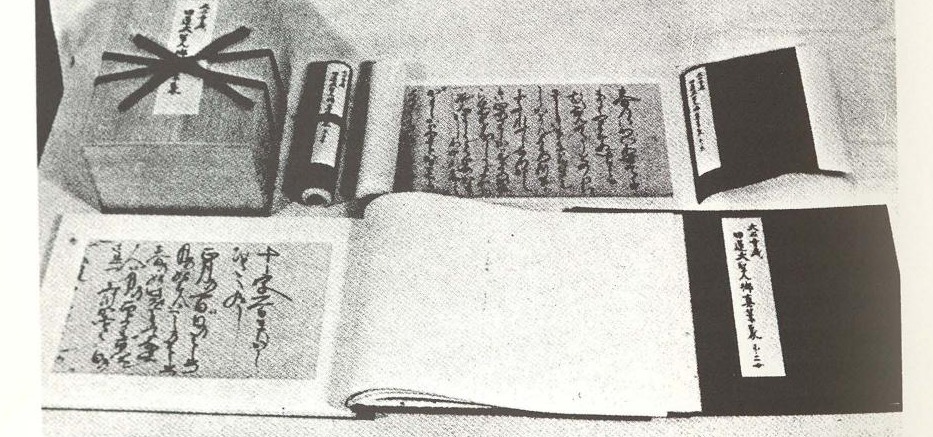
Of utmost importance is the recognition that Nichiren Daishonin was far more than a man of theory and dogma. He was a man of action who was adamant in his conviction that Buddhism is a religion to be lived, not just believed in a spiritual or philosophical sense. His conviction led him to the conclusion that what was needed to restore Buddhism in this day and age was a simple yet profound practice that would be accessible to every living being. The sutras of Shakyamuni, even the beautiful teachings of the Lotus Sutra, could be little more than objects for speculation and meditation.
For the common man, many of whom lacked the knowledge or capacity for such things, an approach to the Buddhist faith based only on the teachings of the sutras was impossible. The sutras were written in an age when Buddhism was spread mainly among the ruling class and intelligensia in hopes that its principles would filter down to the masses. Nichiren Daishonin understood that the coming ages of man would require a practice that could be utilized by every human being. Clarifying this practice became his essential purpose. This purpose undergirds every writing in the Gosho.
Basically, what the Daishonin postulated was that one should chant a mantra to an object of worship inscribed in mandala-like form. In addition, he prescribed faith, practice and study as being the three processes by which Buddhism moves from the world of abstract theory into the reality of everyday existence. Let us now take a look at these fundamentals of the true Buddhist religion.
The Prayer
On April 28, 1253, Nichiren Daishonin first publicly proclaimed that the essence of his teaching lay in chanting the mantra, Nam-myoho-renge-kyo. Myoho-renge-kyo is a Japanese pronunciation of the Chinese title of the Lotus Sutra and nam is a Sanskrit word meaning devotion, which the Daishonin added to complete the chant, also referred to as daimoku.
The Daishonin explained his premise by giving this rationale in a writing referred to, appropriately enough, as “The One Essential Phrase”:
Since the Lotus Sutra defines our life as the Buddha’s life, our mind as the Buddha’s wisdom and our actions as the Buddha’s behavior, all who embrace and believe in even a single phrase or verse of this sutra will be endowed with these three properties. Nam-myoho-renge-kyo is only one phrase, but it contains the essence of the entire sutra...
Everything has its essential point, and the heart of the Lotus Sutra is its title, Nam-myoho-renge-kyo. Truly, if you chant this in the morning and evening, you are correctly reading the entire Lotus Sutra. Chanting daimoku twice is the same as reading the entire sutra twice, one hundred daimoku equal one hundred readings of the sutra, and a thousand daimoku, a thousand readings of the sutra. Thus, if you ceaselessly chant daimoku, you will be continually reading the Lotus Sutra.
What does Nam-myoho-renge-kyo mean? Nichiren Daishonin stated that it is the essential reality of life. This implies that the phrase cannot be understood by verbal definition alone. Indeed, the practice of Buddhism is the only thing which can ultimately reveal the deepest meanings of Nam-myoho-renge-kyo. Nevertheless, there is a superficial definition for each of the component words.
As mentioned previously, nam derives from Sanskrit and means dedication, or the perfect relation of one’s own life with eternal truth. Strangely, the word “religion,” which derives from Latin, originally meant “to bind strongly to something” and so is also encompassed by the word nam. The significance of nam is actually twofold. One is, as just mentioned, to dedicate one’s own life to or become one with the eternal truth of life. The other is to draw infinite energy from this source and take positive action toward relieving the suffering of others.
What is this eternal truth? It is Myoho-renge-kyo, the title of the Lotus Sutra. Myoho literally means the Mystic Law. Myo (mystic) signifies “unfathomable,” and ho means “law.” Myoho is the incomprehensible law which permeates all the realities of life.
Buddhism postulates that all existence at one time or another assumes a physical condition with shape, size and kinetic energy. At other times existence may be incorporeal (in a state known as ku in Buddhism). No matter how reality may appear or change, its fundamental essence is eternal. Phenomena (ho) are changeable, but pervading all phenomena is the constant entity called myo.
Renge literally means lotus flower. Buddhism uses the lotus to explain the profound law of causality because the lotus produces its flowers and seeds at the same time. The lotus is therefore the symbol of simultaneous cause and effect (inga guji). Simultaneous cause and effect means that in truth our future is determined by present causes, even though we generally perceive causes and effects to be separated by time (inga iji). Thus the law of cause and effect is also a principle of personal responsibility for one’s own destiny, or karma. However, because the innermost depth of our life—the eternal core of Nam-myoho-renge-kyo— remains independent of the karmic cycle we have created through our past deeds, we can transform our karma by tapping this core and thereby create absolute happiness. This is also represented by another quality of the lotus. Its beautiful blossoms spring forth from a muddy swamp, yet they are unsoiled by the mud. In other words, the innermost nature of our life remains untainted despite the bad karma we may have created. Renge thus means to reveal the most fundamental nature of the reality of life.
Finally, kyo indicates sutras, or the teachings of the Buddha. In a broader sense, it includes the activities of all living beings and phenomena throughout the universe. By tapping the Mystic Law within, each person can experience this universal harmony in his or her daily life. The Chinese character for kyo also means the warp of cloth, symbolizing the continuity of life throughout the past, present and future—the eternal, recurring nature of life.
The Object of Worship
Nichiren Daishonin established an object of worship known as the Gohonzon. This is in the form of a mandala inscribed with Chinese characters. The Gohonzon is generally inscribed on either wood or paper by the high priest of the sect, depending on where and by whom it is to be used. All members of Nichiren Shoshu have a Gohonzon in their homes.
On the Gohonzon itself are inscribed the Chinese characters for “Nam-myoho-renge-kyo” and “Nichiren.” The Gohonzon is thus considered a physical object which embodies a perfect fusion of the Law and the Person. To the left and right of these characters, which are written down the center of the Gohonzon, are inscribed names of different historical and mythical characters which represent the different life-conditions known as the Ten Worlds (see “Buddhist Theory”).
The question might be raised as to the need for an external object of worship, particularly in the form of a paper scroll covered with Chinese characters. Buddhist theory is quite clear in explaining that the infinite power of the universe exists within each human life. In addition, in his own writings, Nichiren Daishonin said, “Never seek this Gohonzon outside yourself.” Why, therefore, is an object of worship necessary?
Perhaps the simplest way to answer would be to ask the reader of these lines to begin laughing—right now. Unless one were to find something hilarious in these few paragraphs, such a request would be impossible to fulfill. The reason is simple: nothing to be read here is particularly funny.
Now, Buddhism postulates that each human being has the nature of enlightenment within. How to bring it out is the question. One might want it to come out, but without an actual connection being made between one’s life and the environment, the life-condition of enlightenment is impossible to manifest. No one operates in a vacuum. It is our interaction with the world around us that provides the dynamics and meaning of life.
We need an environmental connection to bring out our laughter, anger or whatever. Similarly, a connection is needed to bring out the Buddha nature of enlightenment. Nichiren Daishonin inscribed the Gohonzon as the proper object to bring out this deepest condition of our existence. True Buddhism teaches that the Gohonzon manifests the life of Nichiren Daishonin, a life fully enlightened to Nam-myoho-renge-kyo. This same Nam-myoho-renge-kyo exists dormant within each human being. When a person chants to the Gohonzon, a fusion is achieved and the life-condition of enlightenment wells up from within. The Gohonzon is not some external deity, bestowing that which the believer does not already possess. Rather, it is an environmental stimulus that allows each person to manifest his or her ultimate human potential, creating an unshakable happiness in the midst of an ever-changing reality.
The concept of the object of worship is perhaps one of the most difficult to fathom in the Buddhist religion. What should be understood is that Buddhism is something which always deals with the interrelation between the individual and his or her environment. In this sense, an environmental object of worship which serves as a catalyst for the creation of an indestructible life-condition is essential.
Faith, Practice and Study
In a writing entitled “The True Entity of Life,” Nichiren Daishonin stated, “Exert yourself in the two ways of practice and study. Without practice and study there can be no Buddhism. You must not only persevere yourself, you must also teach others. Both practice and study arise from faith.” In saying this, he set forth the three things which are considered to be the integral components of the Buddhist religion. Anyone who wishes to consider himself a Buddhist in the true sense of the word should strive to harmonize these three in the course of his daily life.
Faith in Buddhism has a somewhat different meaning than the traditional concepts usually generated by Judeo-Christian doctrine. In a religion which emphasizes the importance of actual proof, there is no way that faith can be construed as meaning blind belief. Faith in Buddhism is defined as a level of expectation. For the new member beginning to practice the Daishonin’s true Buddhism, the expectation might be simply that the practice will lead to desired and promised results. Ultimately, confidence in the religion, or stronger faith, comes from actual proof, i.e. prayers being answered.
It is at the point where actual proof becomes a reality that a member’s faith begins to entail some degree of a priori belief. That is to say, on the basis of prior experience, the seasoned Buddhist has some degree of expectation that new challenges will be met and overcome, even though on one level the obstacles may seem insurmountable.
Ultimately, faith is an intangible which fuels the daily actions of practice and study. Practice and study in turn become real-life causes, the effects of which ultimately instill greater faith. In this way, the aspects of faith, practice and study comprise a long-term process by which a believer achieves an endlessly elevating condition of happiness and fulfillment.
The practice of Nichiren Shoshu is made up of two parts—practice for oneself and practice for others. Practice for oneself refers to the daily chanting of Nam-myoho-renge-kyo to the Gohonzon. In addition to this, each Nichiren Shoshu member performs a morning and evening recitation of two chapters of the Lotus Sutra. This recitation combined with the chanting of daimoku is known as gongyo. The purpose of gongyo is to activate the dormant Nam-myoho-renge-kyo within and to instill a sense of discipline, so crucial to the Buddhist process. In addition, gongyo creates a rhythmical flow to life which allows each believer to make full use of every moment and every effect created through the power of Nam-myoho-renge-kyo.
The practice for others which Nichiren Daishonin expounded is that of teaching them about the faith of Nichiren Shoshu. Teaching others about Nam-myoho-renge-kyo and the Gohonzon is known in Japanese as shakubuku. Rather than being a process of proselytization for the simple purpose of developing or expanding the religious organizational structure, shakubuku implies making people aware of the limitations within their own lives and teaching the Buddhist practice as a valid methodology for dealing with difficulties and attaining a greater degree of happiness.
Practice for oneself and for others should not be viewed as two separate things. The Nichiren Shoshu believer practices for others not only for their sake, but for his own as well. Altruism and Buddhist mercy do not come easily to the human being, but Buddhism would claim that they do emerge naturally as a result of effort, because they are fundamental aspects of the Buddha nature within. The Buddhist recognizes that happiness which cannot be shared is rather limited in its scope. Buddhism teaches that the deepest happiness is that which can be shared in human bonding.
Buddhist study is something quite different from the traditional concept. It implies an active, integrated examination of what is happening in daily life and an attempt to tie those happenings into the theories and teachings of Buddhism in order to further develop one’s faith and practice. Such an effort and examination can make sense out of real, daily events and place those events into greater perspective. What follows is a section in which the more basic and all-encompassing theories of Buddhism will be discussed. These theories, when put into practice by using tools of the Buddhist teaching we have just finished discussing, eventually can lead human beings to a complete understanding of both the nature and function of life.
REFERENCES
Fundamentals of Buddhism. Y. Kirimura. Los Angeles: World Tribune Press, 1982.
Scripture of the Lotus Blossom of the Fine Dharma. Translated by Leon Hurvitz. New York: Columbia University Press, 1976.