
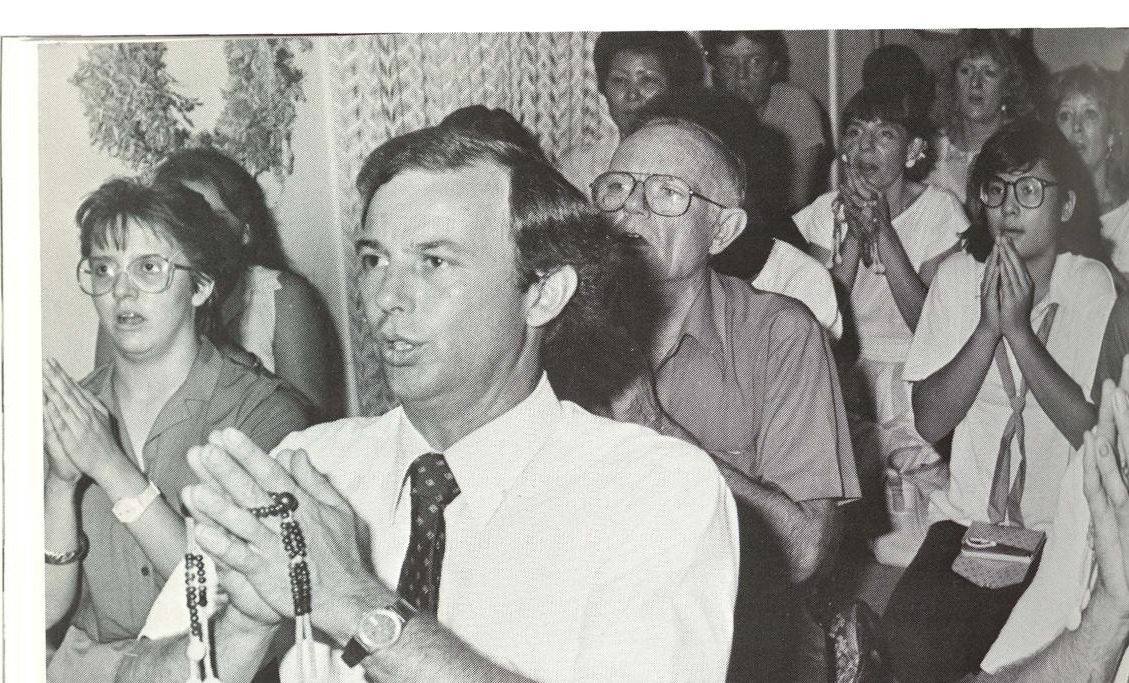
NSA members practice the recitation of gongyo together at one of the nightly gatherings. Gongyo is the foundation of the practice of true Buddhism.
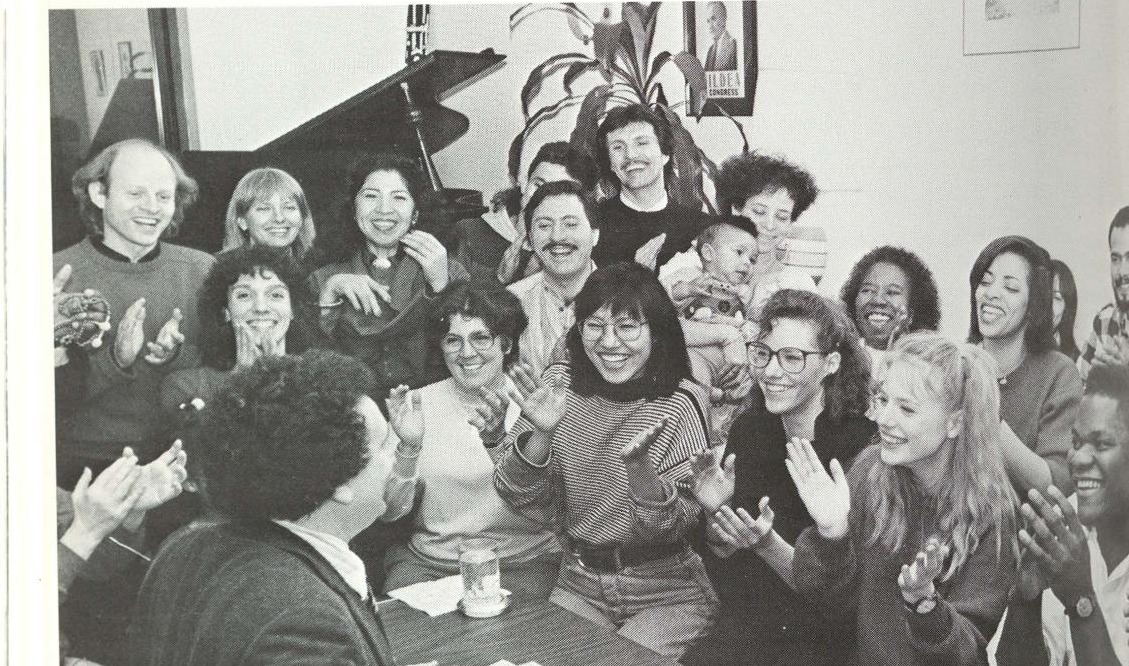
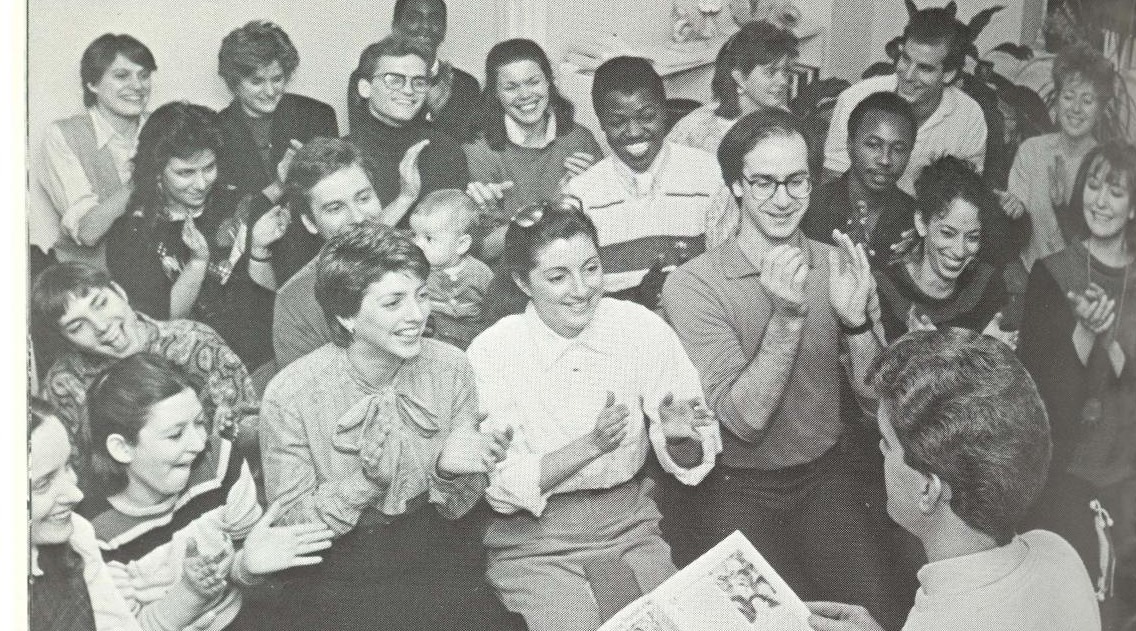
A discussion meeting, at which guests are introduced to the practice of orthodox Buddhism, is always a happy occasion.
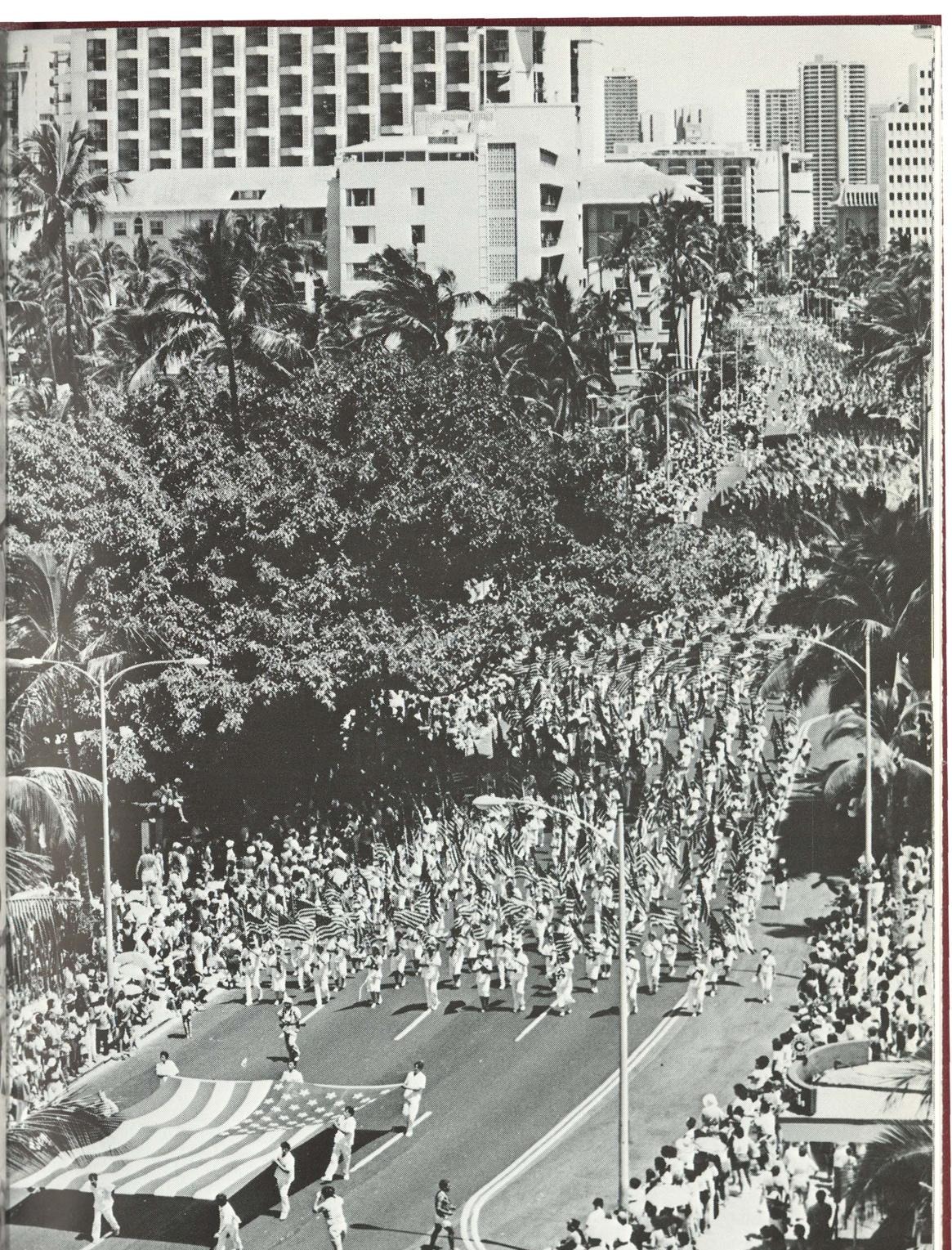
NSA members hold a parade through the heart of Waikiki, part of an ongoing celebration of the human spirit which reveals itself in civic and cultural events, as well as in the participants’ personal lives.
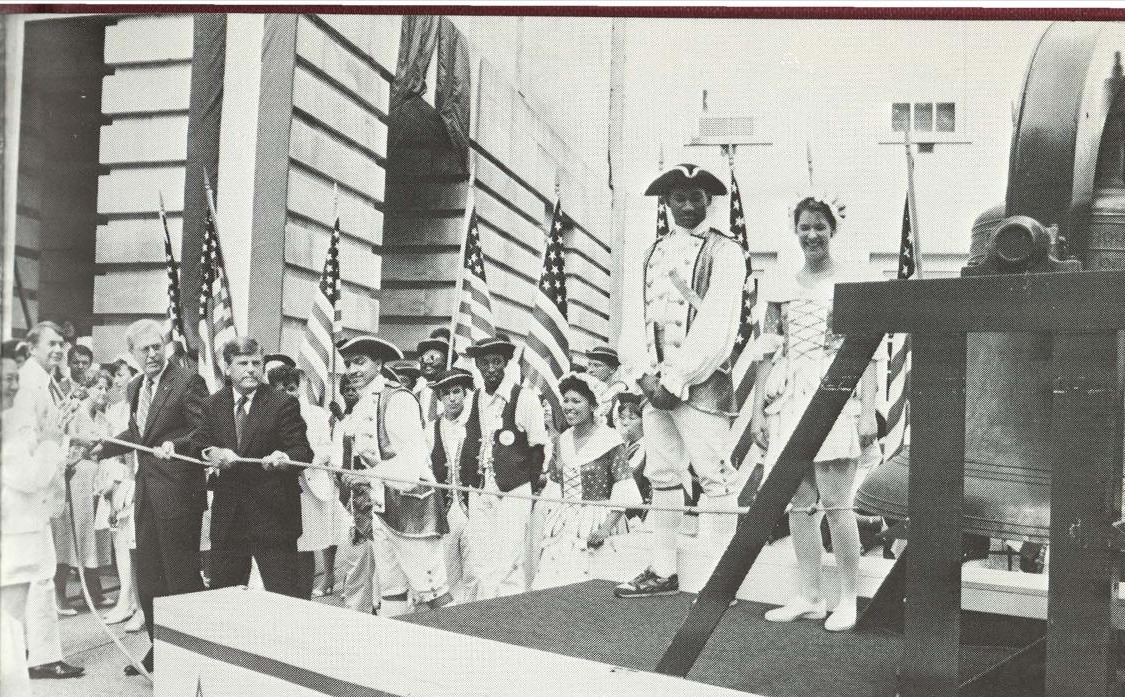
NSA members gather in Philadelphia on July 4, 1987, to celebrate the bicentennial of the nation’s Constitution. Members, wherever they practice, always work for the betterment of their society, while saluting its heritage.
Throughout the spring and summer of 1987, NSA sponsored a tour of the New Freedom Bell throughout the United States. This replica of the original Liberty Bell served as the primary national effort to mark the bicentennial of the U.S. Constitution. The bell traveled 11,500 miles to 44 cities.
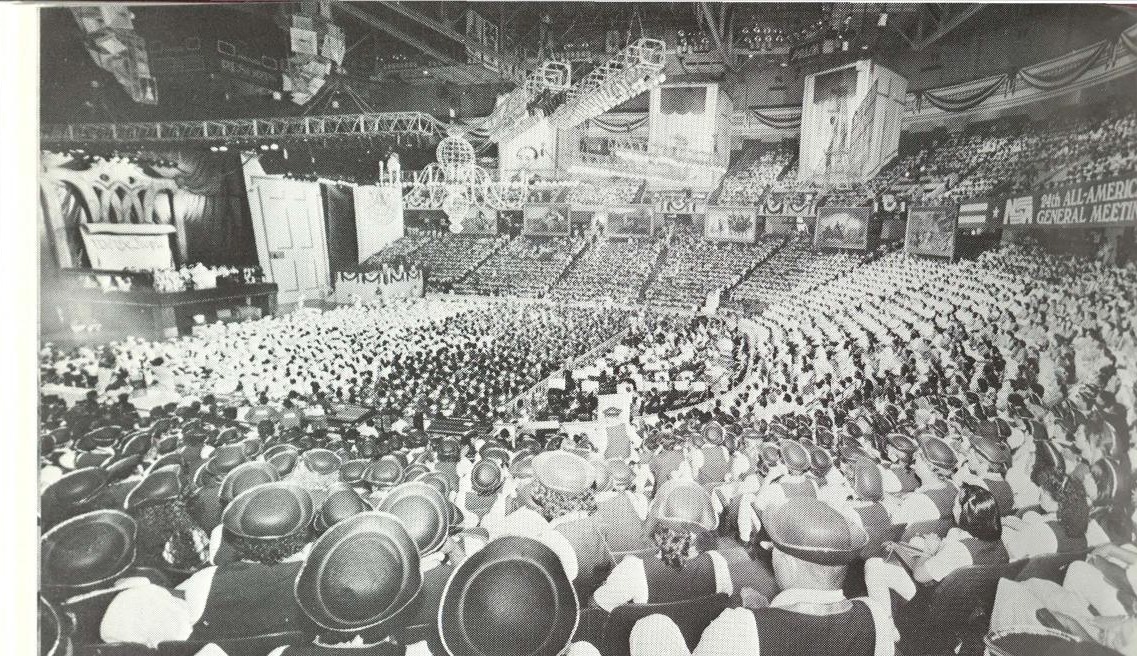
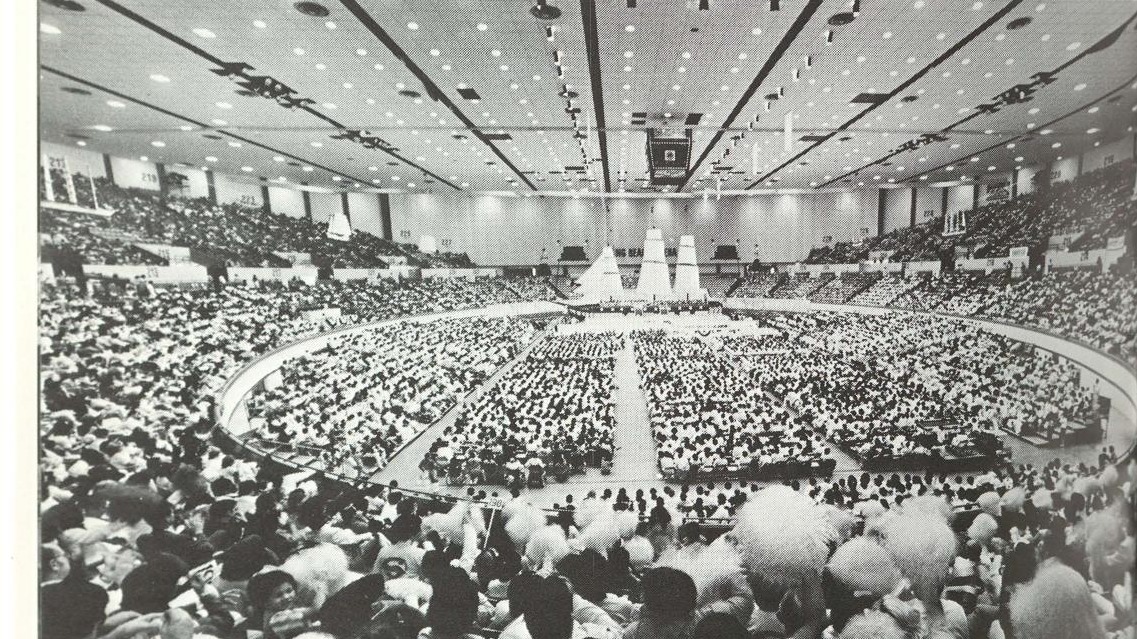
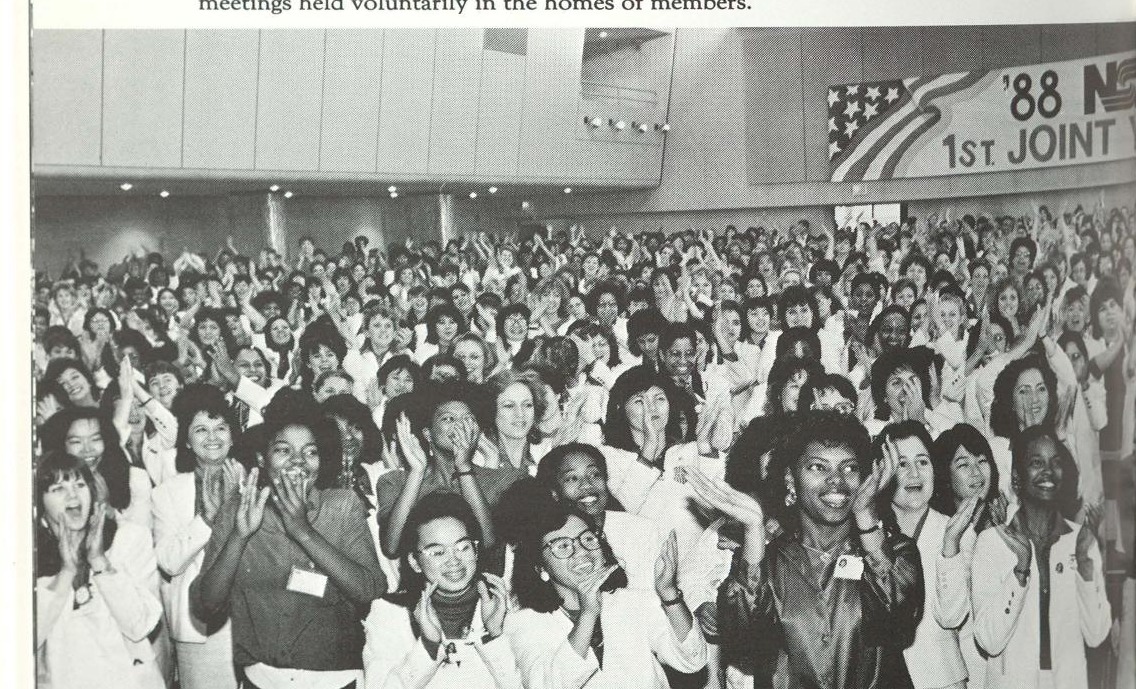
A sign of the growth in the number of people who believe in Nichiren Daishonin’s Buddhism is exhibited at the larger scale gatherings hosted by NSA.
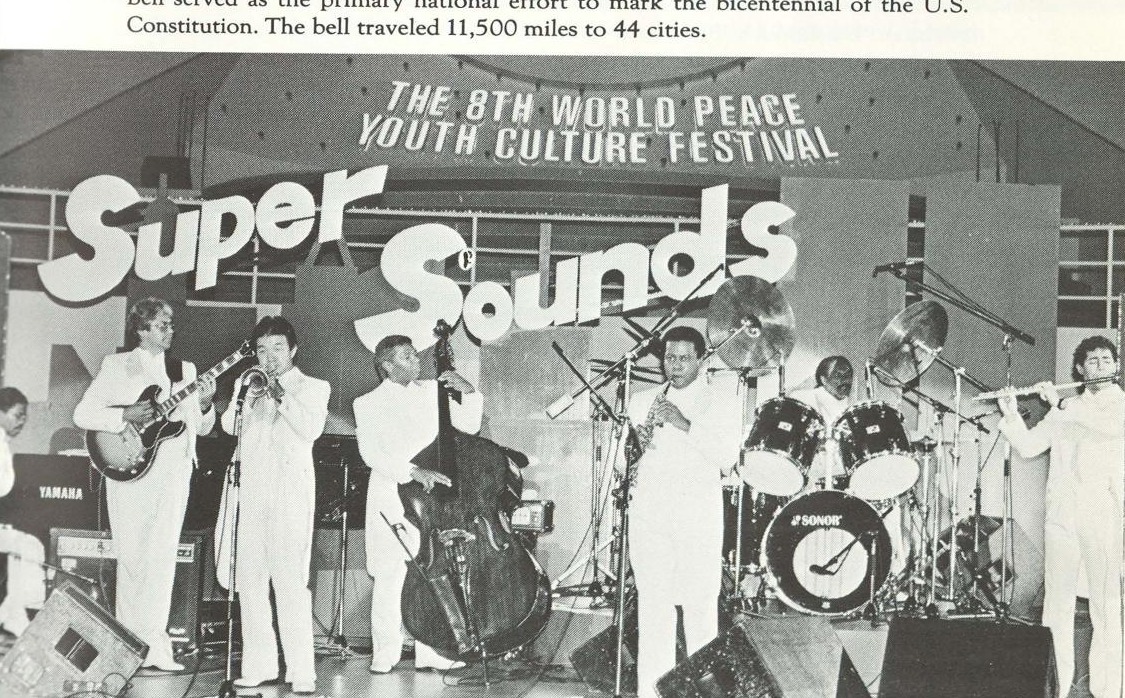
Buddhism’s universal appeal has attracted people from all walks of life. Here, famous jazz musicians, including Herbie Hancock and Buster Williams—all members of NSA—perform at the SGI World Peace Youth Culture Festival.
Nichiren Daishonin’s Buddhism is introduced to Americans at discussion meetings held voluntarily in the homes of members.
The young men of NSA show the enthusiasm and joy they have gained through their practice of Buddhism by constructing a human ladder-tower.
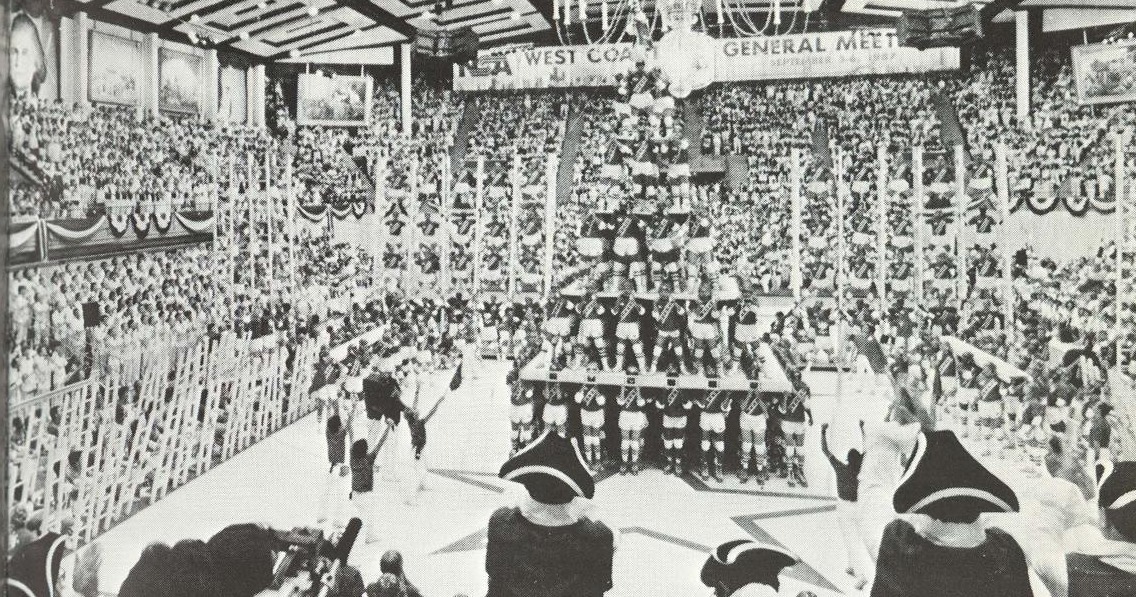
Youthful members of NSA exhibit the enthusiasm they gain from practicing Buddhism. NSA members are dedicated to sharing this enthusiasm with others.
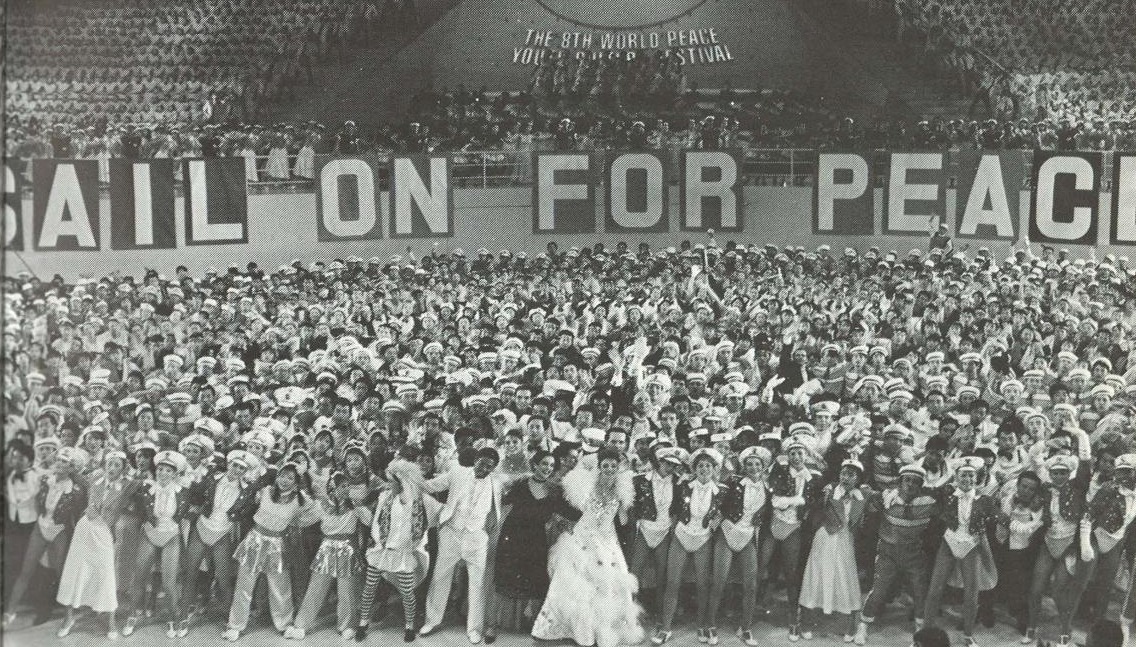
Each year the Soka Gakkai International hosts a World Peace Youth Culture Festival with participants from countries throughout the world. The festivals abound with expressions of human vitality and camaraderie.
Starting as only a handful of believers, NSA has blossomed into an energetic and massive movement for human and cultural rejuvenation.
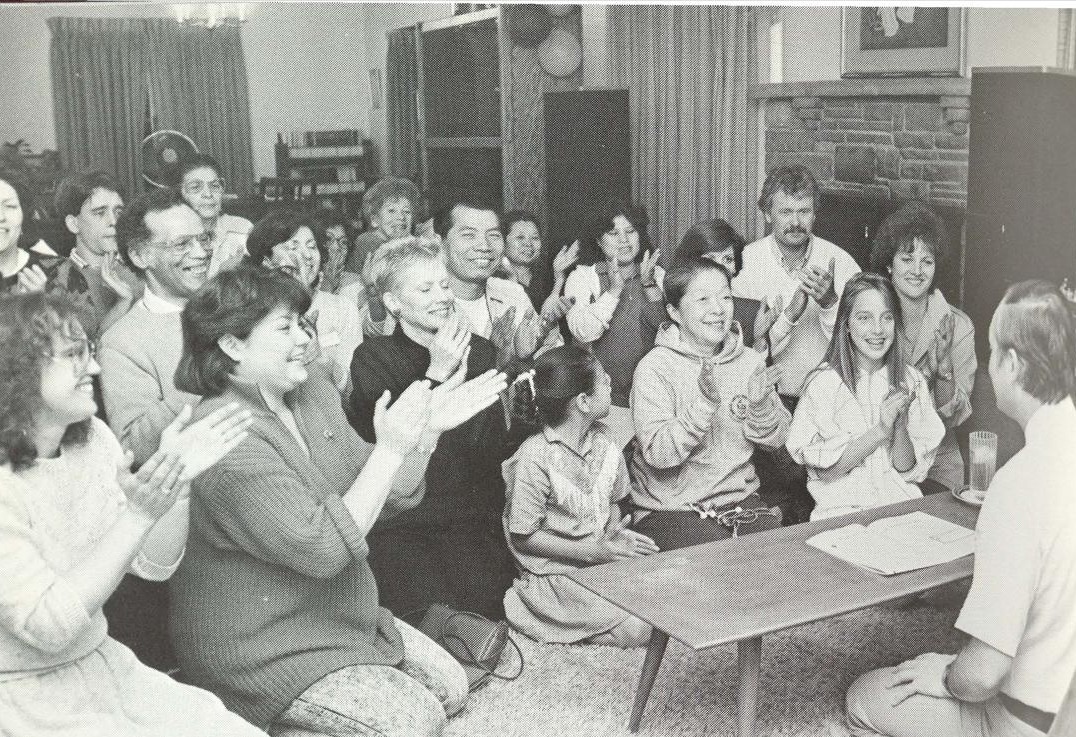
NSA cultural events bring Buddhism to life.
NSA—The American Buddhist Movement
History of NSA
The Buddhism of Nichiren Daishonin made its way to America in the hearts and minds of the wives of American servicemen returning from overseas duty in Japan. Scattered throughout the United States, these few war bride believers had little or no contact with each other until a man named Masayasu Sadanaga came here in 1957. He took it upon himself to encourage them and to establish an informal network of communication so that others, too, might take up the faith. Later, he became a naturalized American and took the name George M. Williams. To this day he considers himself a native American, and he shows his love for his “homeland” by spreading what he considers the fundamental means to people’s happiness— faith in true Buddhism.
The organization of lay believers now known as NSA (Nichiren Shoshu Soka Gakkai of America) was officially formed in 1960 during a visit by Daisaku Ikeda, then president of the Soka Gakkai, Japan’s lay organization, and now president of the global Soka Gakkai International. Mr. Williams personally took up the challenge of spearheading the organization and spurring its growth from few to many thousands. Today, he holds the post of general director of NSA, as well as the position of vice president of the Soka Gakkai International. NSA is a legally recognized nonprofit religious corporation in all fifty states.
In 1967, in recognition of the growth of the membership in America, the Nichiren Shoshu priesthood built its first overseas temple here on American soil. Myoho-ji Temple near Etiwanda, California, about fifty miles east of Los Angeles, was officially opened in a ceremony attended by President Ikeda, Mr. Williams and scores of members, and conducted by the sixty-sixth high priest of Nichiren Shoshu, Nittatsu Shonin. Since then, the priesthood and laity in the United States have striven together to help the American public learn of the Buddhism of Nichiren Daishonin.
The basic emphasis of NSA has always been on the introduction of people to the Buddhist faith. This is done so that people can, through the practice of Nichiren Shoshu Buddhism, carry out their own self-reformation, a self-reformation that will lay the foundation for world peace. The goal of introducing others is accomplished through the NSA discussion meeting, a gathering in people’s homes throughout the country where invited guests can come and air their problems, seek the answers that Buddhism offers, and hear from those who already believe in Buddhism tales of their human revolution and benefits from practicing. Quite appropriately, these discussion meetings have come to be known as people’s forums, because nowhere else can people of so many diverse backgrounds, nationalities and beliefs gather in a single meeting of the heart.
NSA also conducts study programs so members can come to grasp the essence of the truths of Buddhism and thereby apply them to their daily lives according to the prescription, “faith equals daily life.”
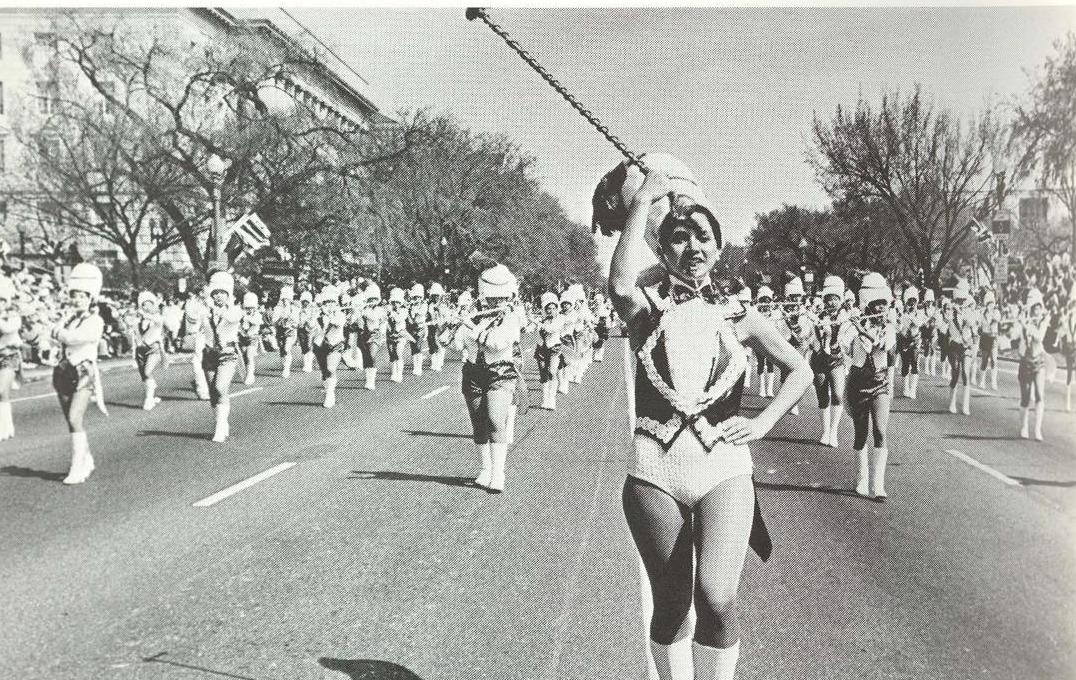
NSA has long been active in the cultural-civic field as well. Its brass band and fife and drum corps marching units routinely appear in some of the nation’s biggest parades, including the Columbus Day Parade in Chicago, the Cherry Blossom Parade in Washington, D.C., and the Mother Goose Parade in San Diego. In recognition of the nation’s bicentennial, NSA sponsored a huge celebration in New York, Boston and Philadelphia in 1976. Parades, shows and meetings extolled the country’s 200-year tradition of freedom. In 1987, NSA sponsored a nationwide tour of a replica of the Liberty Bell, called the New Freedom Bell, to salute the bicentennial of the U.S. Constitution.
Mr. Williams himself has been active through the years in bringing the teachings of Buddhism to American youth through a series of college and university seminars at more than eighty campuses. Some of the schools he has visited include: Harvard, Stanford, Princeton, Berkeley, the U.S. Air Force Academy, Rice,
UCLA, the City University of New York, the University of Colorado, the University of Nebraska, the University of New Mexico, the University of Maryland, the University of Southern California, the University of Hawaii, Oberlin College, the University of Illinois, Memphis State University, Boston University, Cornell University and many others.
Presently, NSA maintains community centers in most all major cities in the United States. At these locales, members can gather for larger, area-wide meetings to augment the smaller, ongoing discussion meetings. The national headquarters by NSA is in Santa Monica, California, and it is in this building, which is also called the World Culture Center, where a special Gohonzon inscribed specifically for “the attainment of the great desire for world peace and kosen-rufu” is enshrined. This special Gohonzon was bestowed on NSA by the sixty-seventh high priest of Nichiren Shoshu, Nikken Shonin, in recognition of America’s central role in spreading Buddhism far and wide.
But most of all, NSA is people, and you will find NSA members in virtually every field of endeavor in society. There are doctors, lawyers, actors, students, teachers, servicemen and women, writers, artists, career women, housewives, skilled laborers, musicians, dancers, photographers, sales representatives, store owners and many others. Indeed, wherever you find an NSA member, you are sure to find a little bit of NSA in the hope, joy and confidence that that person exudes.
Background of George M. Williams
The current general director of NSA, George M. Williams, was born in Seoul, Korea of Japanese parents in 1930. After the Second World War, he moved with his parents to Japan, and in 1953 he took up faith in true Buddhism along with his mother. As a student and youthful believer, he was active in the Soka Gakkai under its second president, Josei Toda, and his disciple, Daisaku Ikeda. He learned much of his vast knowledge of Buddhism from these two and their lectures and guidance.
After graduating from Meiji University with a degree in law, Mr. Williams (who, as previously mentioned, was then named Masayasu Sadanaga) came to the United States to further his studies. This was in 1957. Sensing in Mr. Toda’s words at his departure, “Don’t try to spread Buddhism, just study hard,” a subtle hint to actually do both, Mr. Williams began dedicating his whole life to the cause of introducing Buddhism to the American people. He has not wavered in his dedication since those struggling days as a student at UCLA and later at George Washington University and the University of Maryland. Despite the difficulty of learning a new language, Mr. Williams received a master’s degree in political science in 1962. It should be noted that all through this period of his American education, he was busily involved in laying the groundwork for NSA.
Having been a Methodist himself when his mother urged him to join Nichiren Shoshu, Mr. Williams understands full well the difficulties that Westerners face in taking up an Eastern religion. In his own case, however, he found that Nichiren Daishonin’s Buddhism soon cleared up the many misconceptions that he harbored about life. He now believes the American people, too, can find in this Buddhism the solution to their most vexing problems and the answer to the riddle of life that they cannot solve with any other religion or philosophy.
In his capacity as the leader of NSA, Mr. Williams has traveled throughout the United States on repeated occasions to take the message of Nichiren Shoshu Buddhism wherever there is a receptive ear. On his travels he meets constantly with the members of NSA. He attends their meetings to share his experience and impart the lessons in faith he has learned, and he struggles side by side with them in their quest to show others the truth and beauty of this religion.
In a recent article in the NSA newspaper, the World Tribune, which he founded and now edits and publishes, he wrote:
Buddhism is humanism. It teaches that every individual has the right to become happy. Human freedom, equality, respect for the dignity of human life—these have long been advocated, but where are these today? Neither political change nor greater awareness gained from academic scholarship alone can guarantee happiness.
Seven hundred years ago, Nichiren Daishonin stood alone and had great compassion to share the kind of true happiness which would enable each individual to live a life of joy no matter how cruel or painful their world became. Based on this same spirit, we in NSA are also determined to work for this cause with the great Buddhist teaching he left us.
And, it can be said, devotion to a grand cause is the prime motivating factor of this man who is championing the Buddhist teaching in America, a man to whom thousands of people are grateful for the new lives they forged through faith in true Buddhism.