 BuddhaJones Archive ProjectFree Nichiren Buddhism
San Diego, a city rich in Mexican and American history, hosted this year’s annual NSA convention. The San Diego-Mexico convention drew ten thousand participants from thirty different countries. It heralded the dawn of a new era for NSA and reaffirmed its commitment to a global peace.
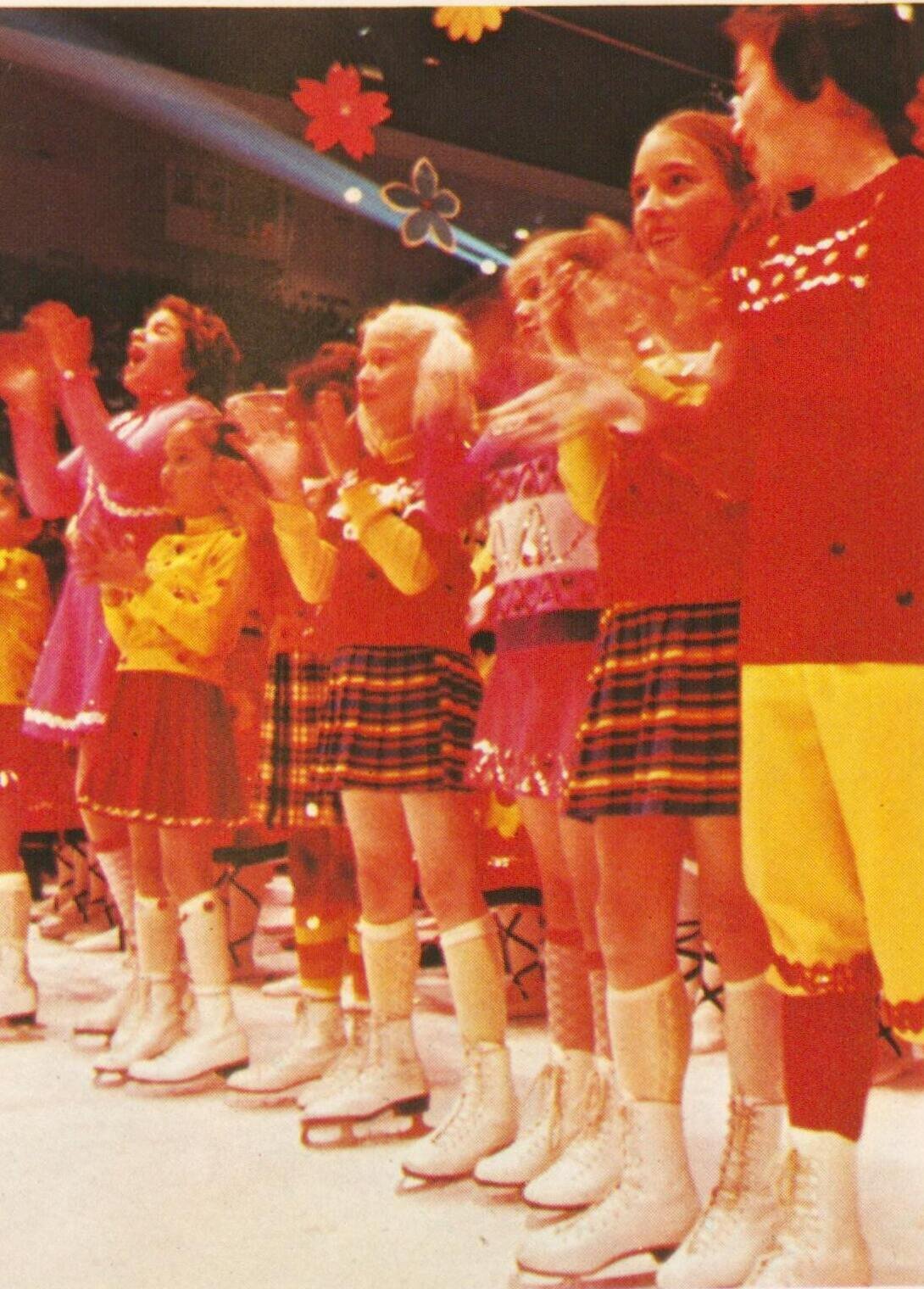
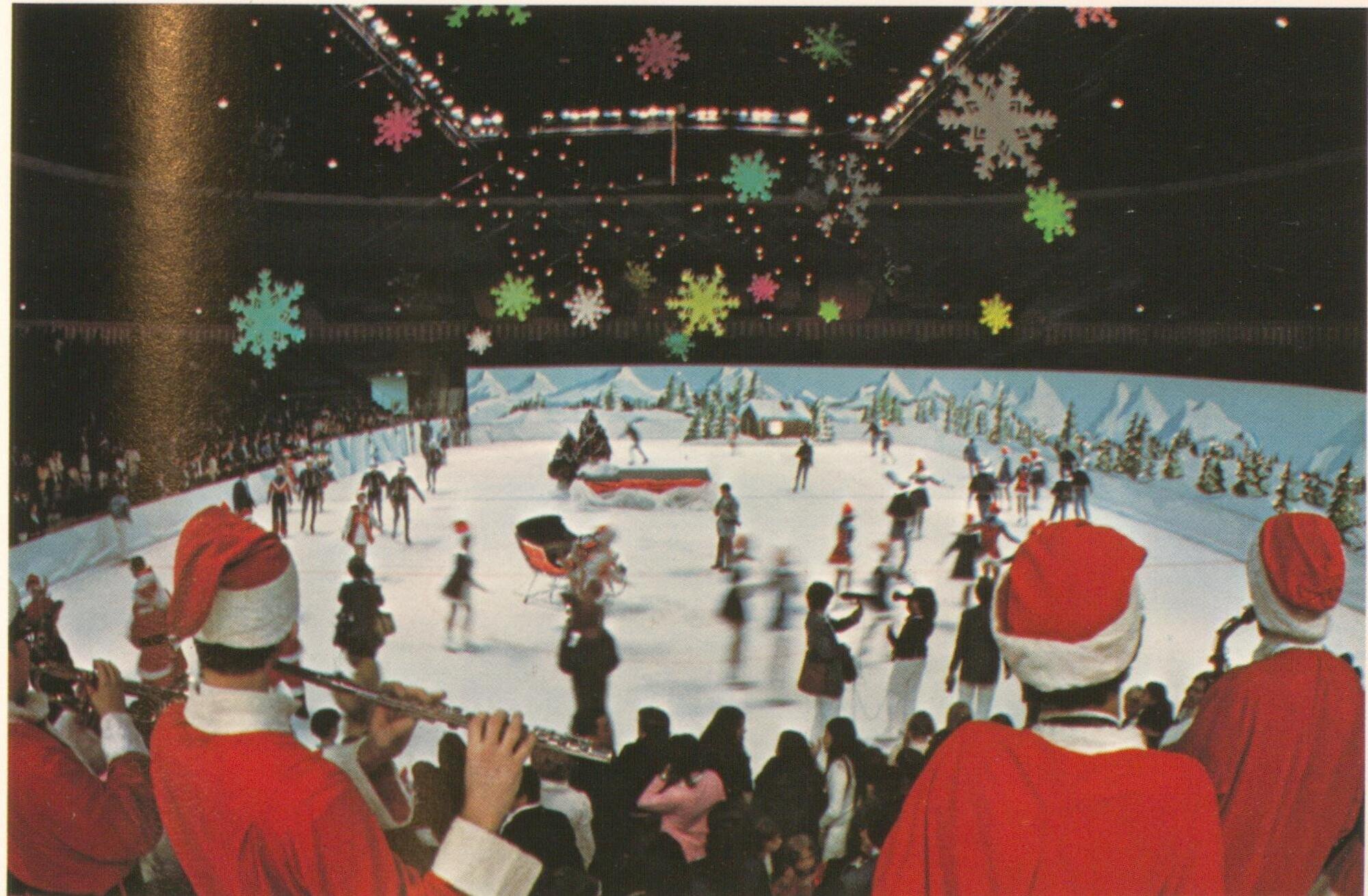
The theme of turning winter into spring was joyfully displayed in “The Spring Festival On Ice” at the San Diego Sports Arena. Seven hundred members from Mexico, Hawaii and the continental United States, dressed in dazzling costumes, staged this humanistic drama of the triumph of mankind.
President Daisaku Ikeda was the guest of honor during the two-day event that included “The Spring Fiesta Parade,” a visit to Sea World and a gigantic fireworks display, “The Spring Festival On Ice” and the 11th NSA General Meeting. President Ikeda, together with the thousands of participants, extended a humanistic message of hope to the world.
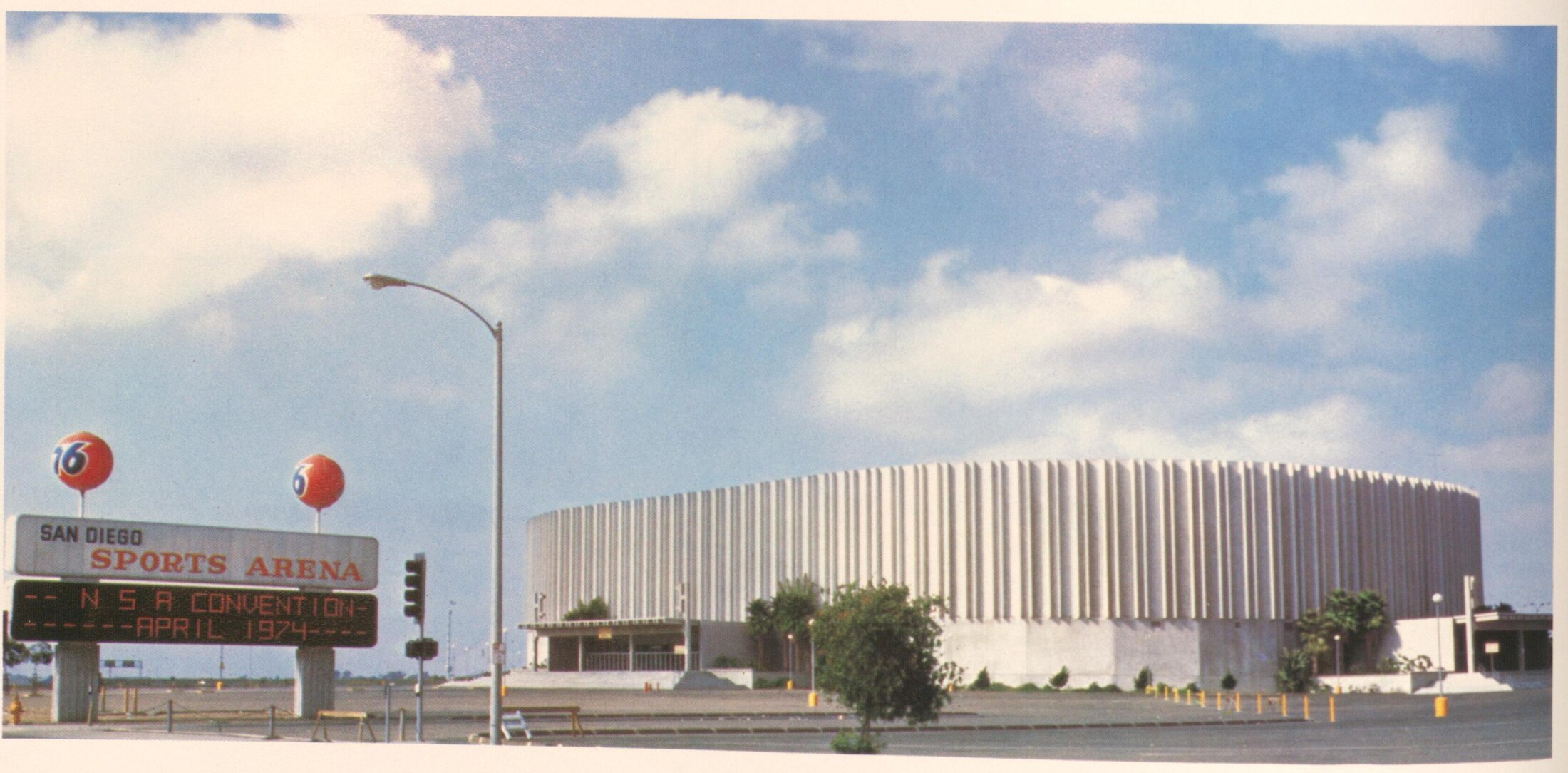
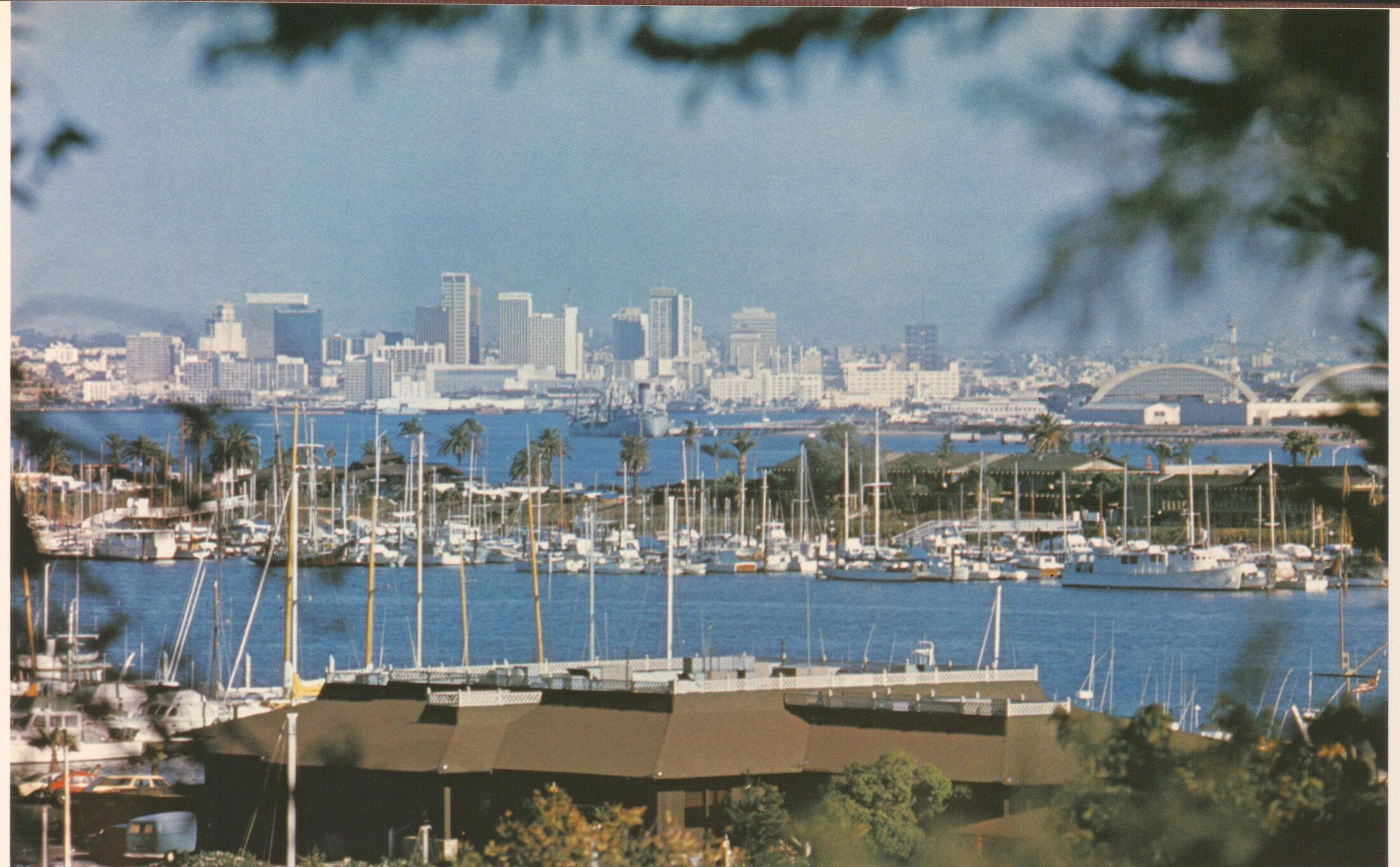
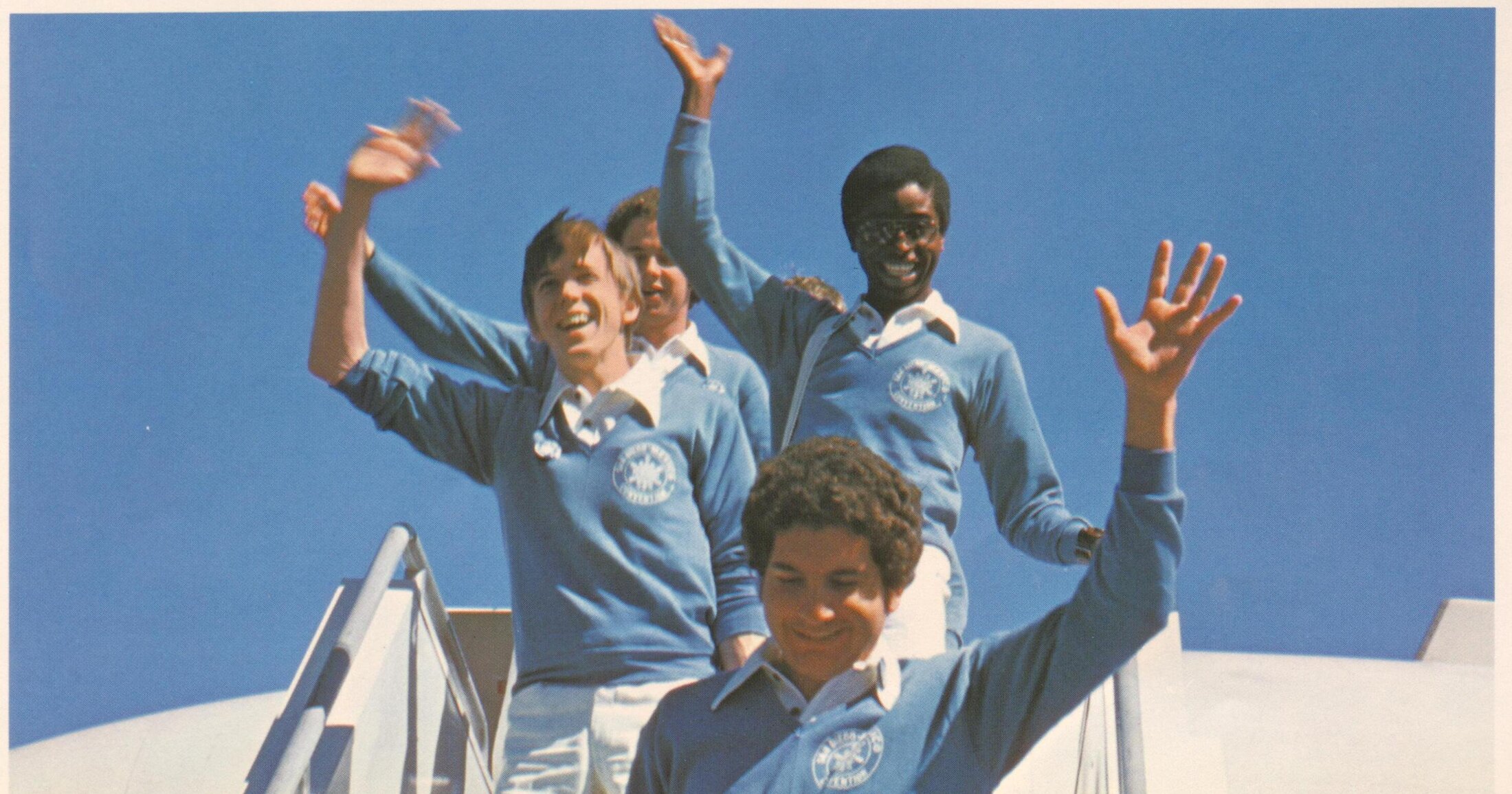
The 10,000 members arrived from every corner of the Western Hemisphere, converting the serene Southern California seaport into a site of bustling activity.
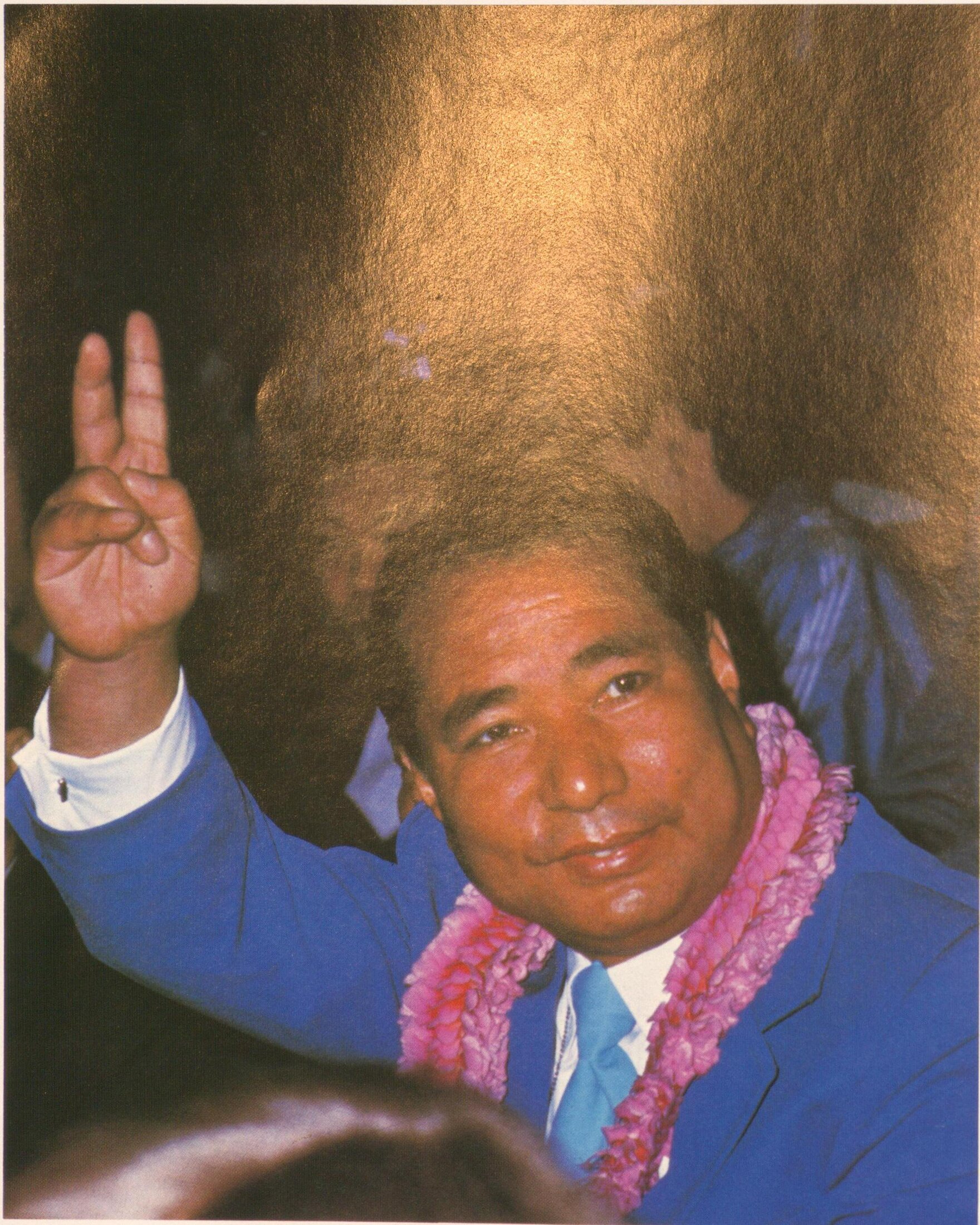
All men truly seek to be happy. Anywhere in the world a smile means “Welcome.”
In the opening sequence skating performers glide across the ice in a festive welcome entitled “Consider Yourself At Home.”
The scene begins with a solitary skater who is joined by one, then another and still others until a strong bond of unity is created.
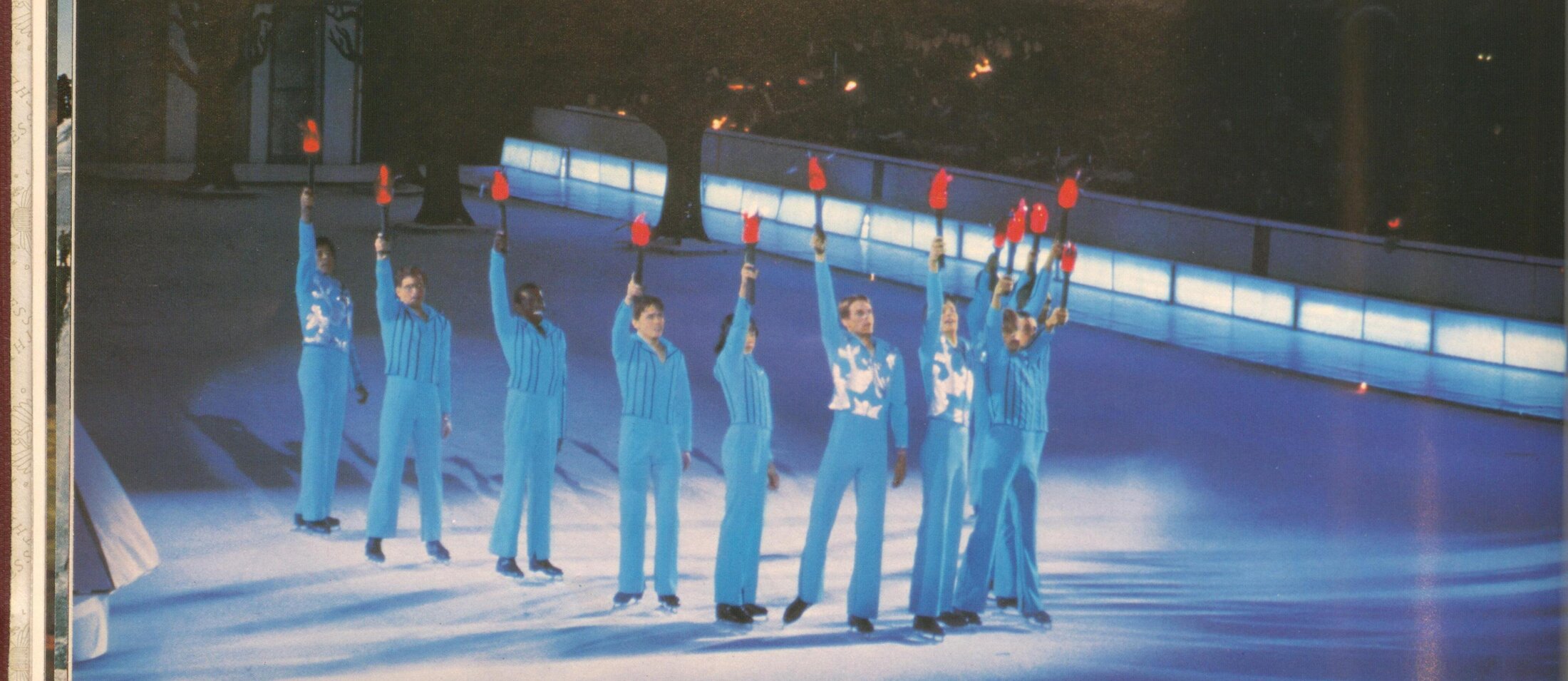
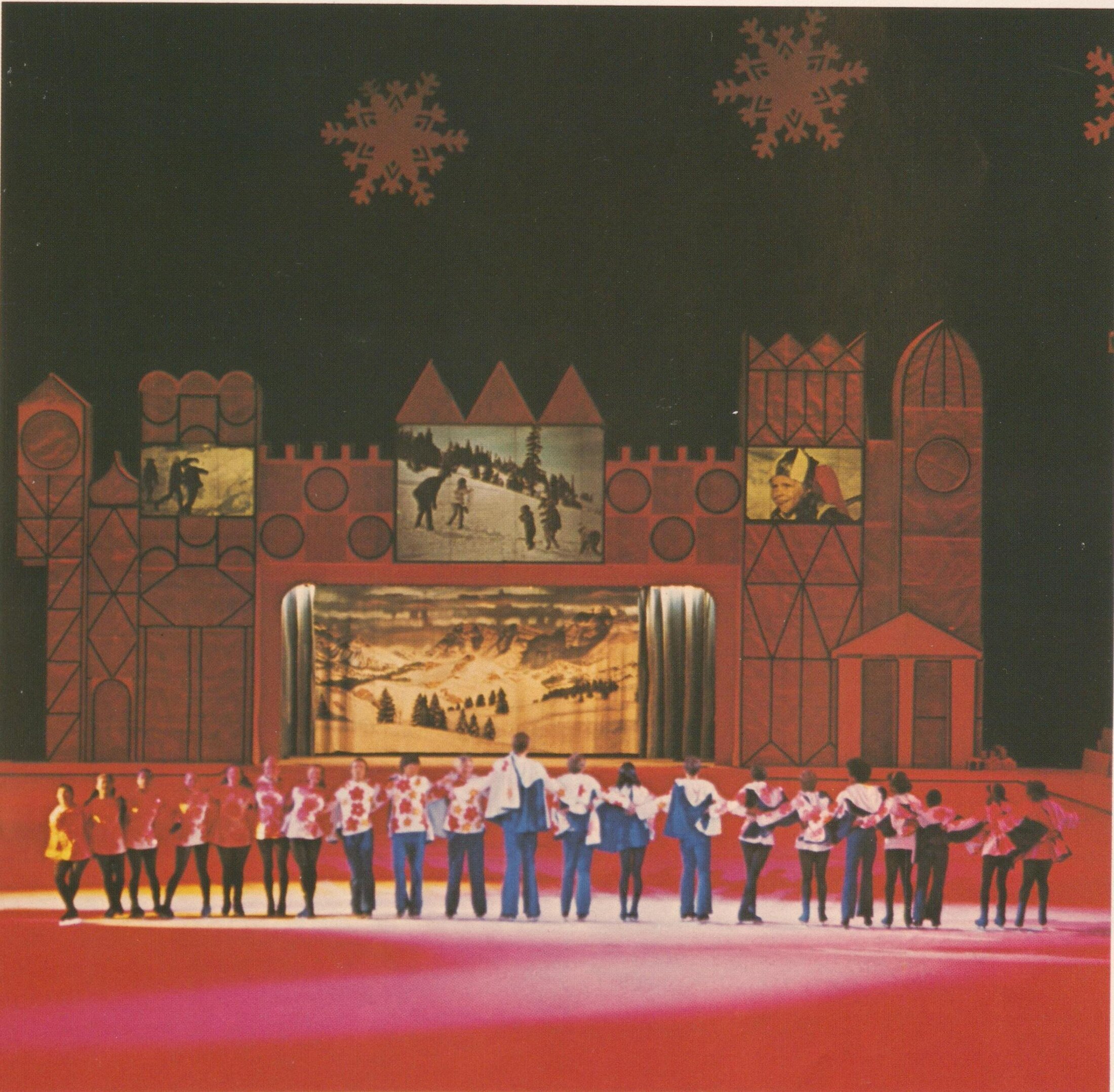
A single line of people face impending danger; a storm has set in and they huddle together. The setting is bleak and somber, but somehow they manage to survive. Utilizing a quick change of costumes, they transform the drab atmosphere to one of brightness and color as they defeat winter hardships.
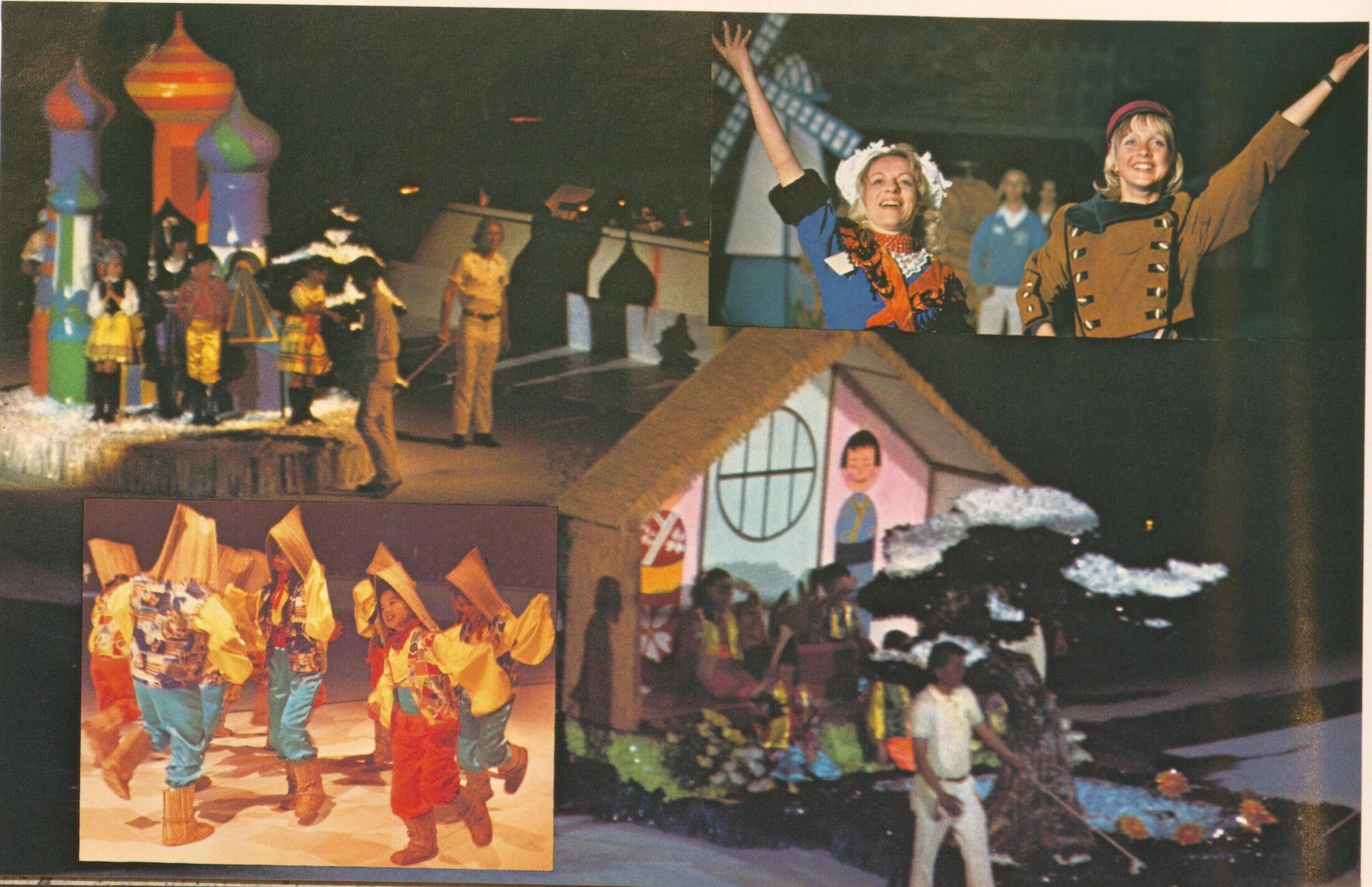
“It’s A Small World” portrays scenes of mutual friendship with characteristically-clad children skating to dances from countries around the world.
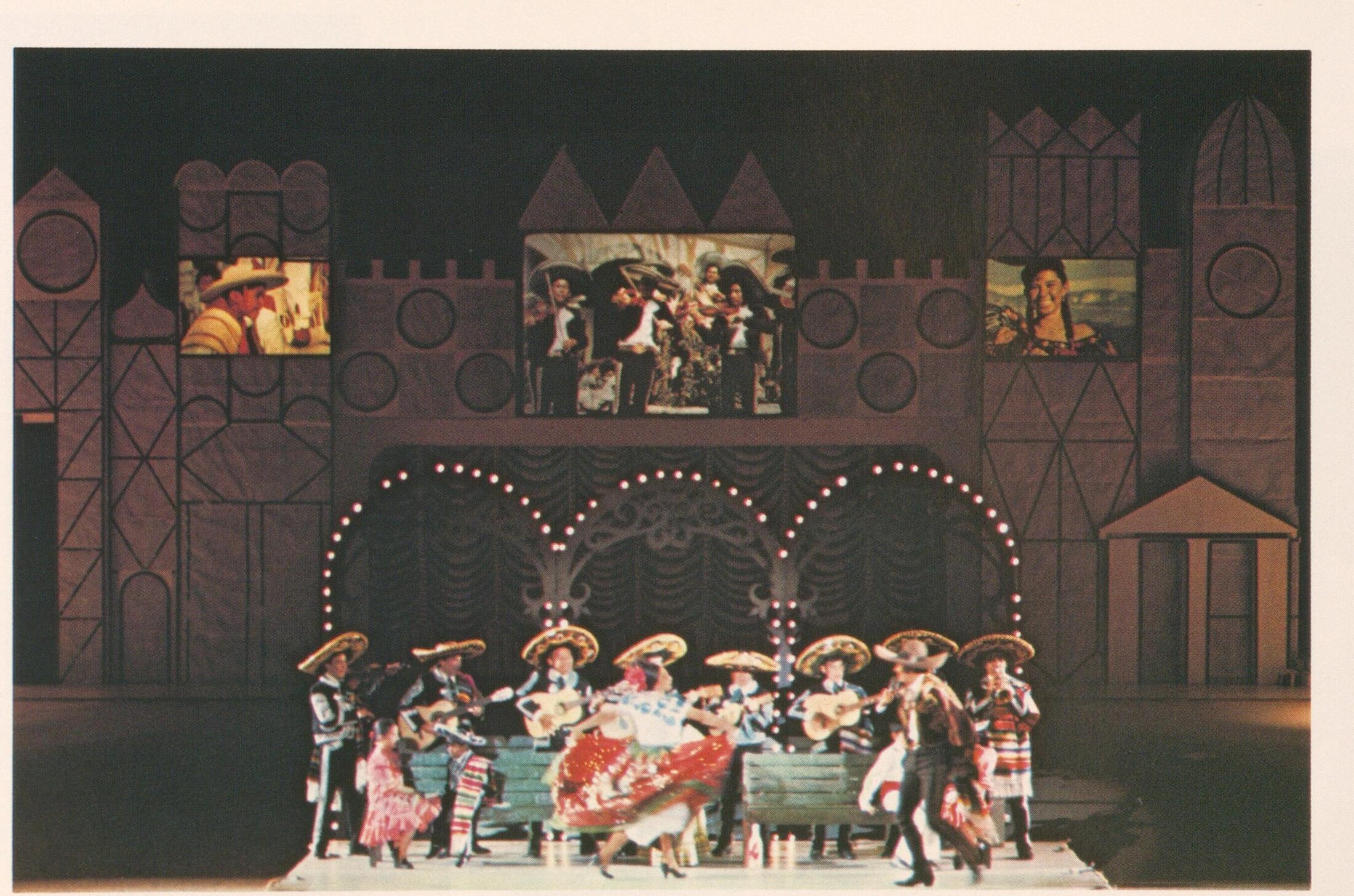
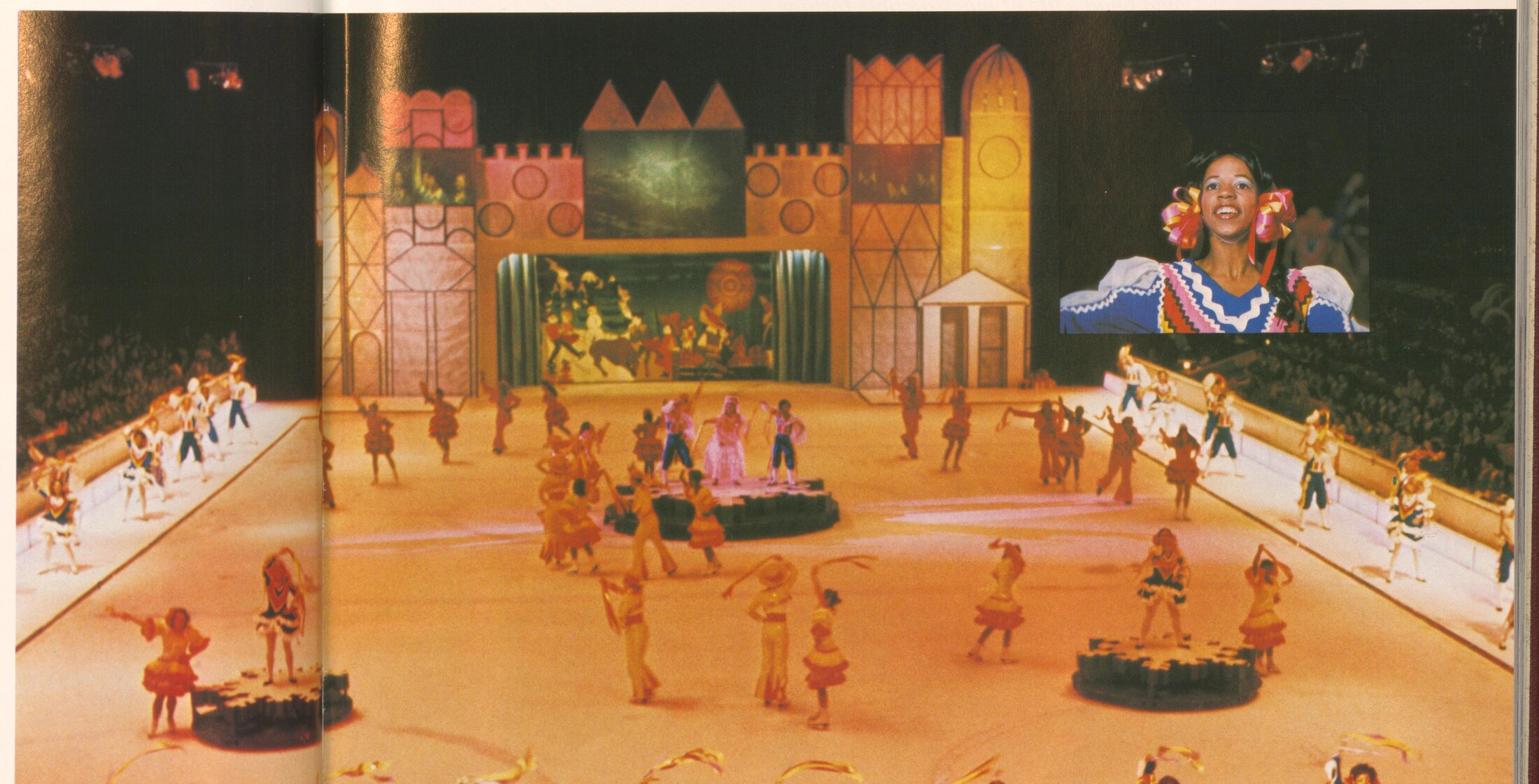
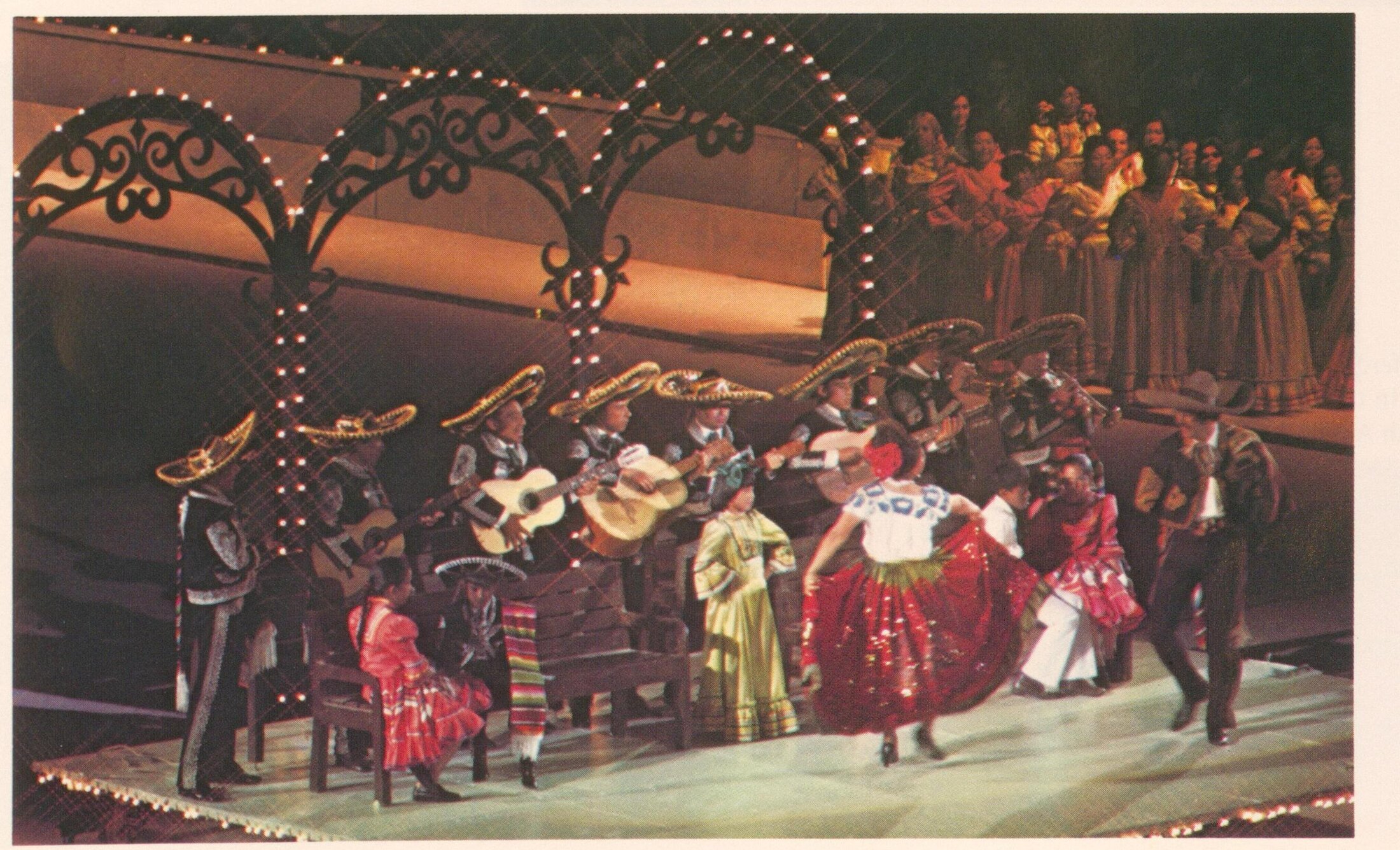
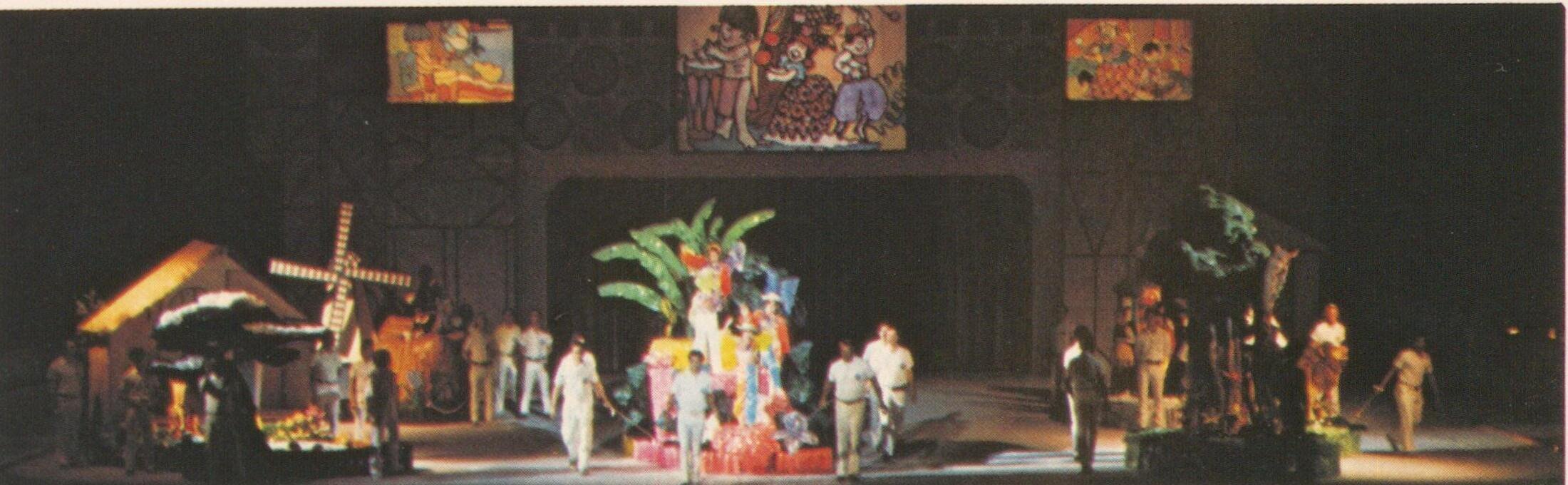
As co-hosts of the 1974 San Diego-Mexico Convention, members from south of the border present a spirited Fiesta: “Arriba Y Adelante.”
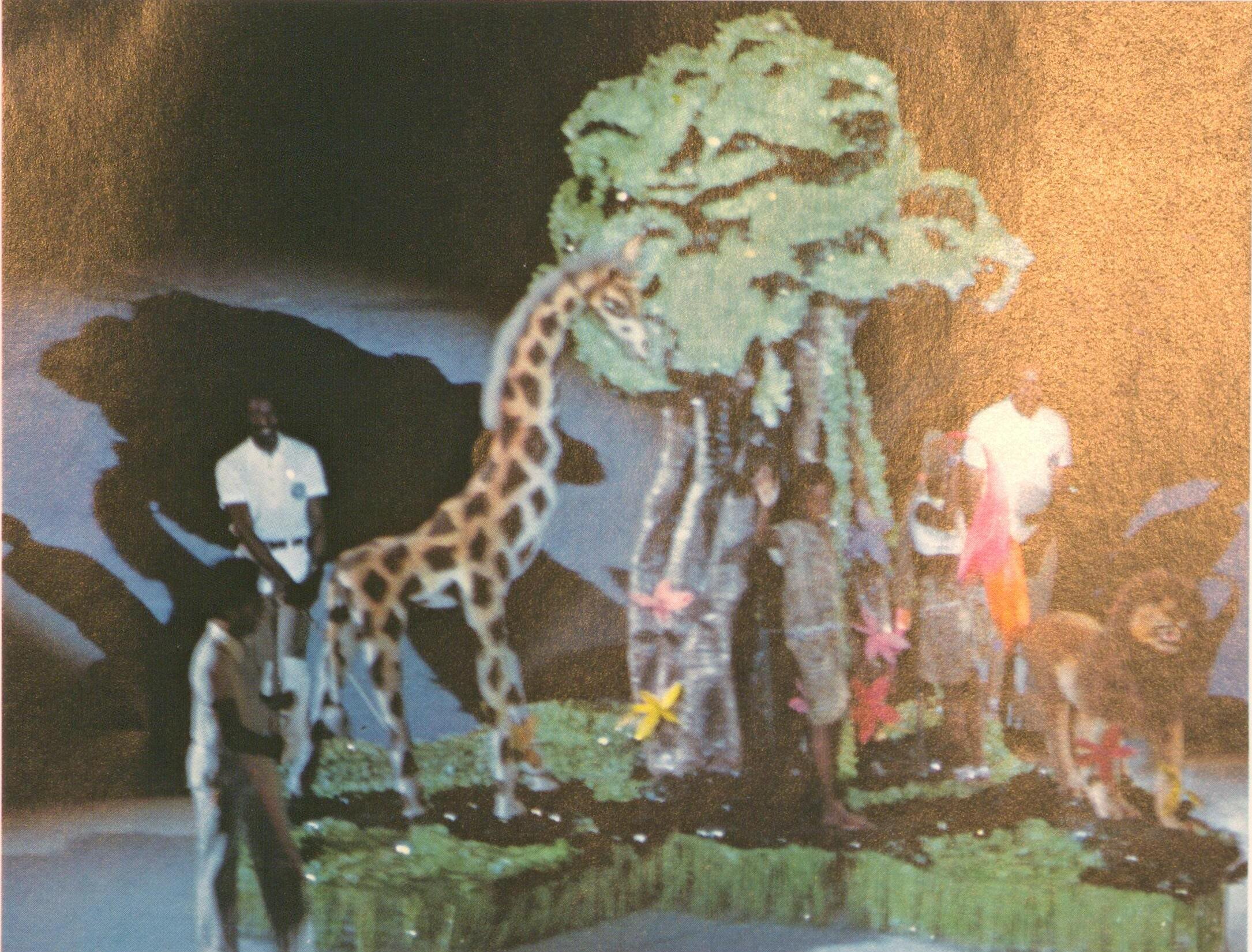
Winter takes on different expressions around the world. In this collage of ethnic dances, South America and Africa are portrayed through the use of rear-projections, elaborate floats and authentic costumes.
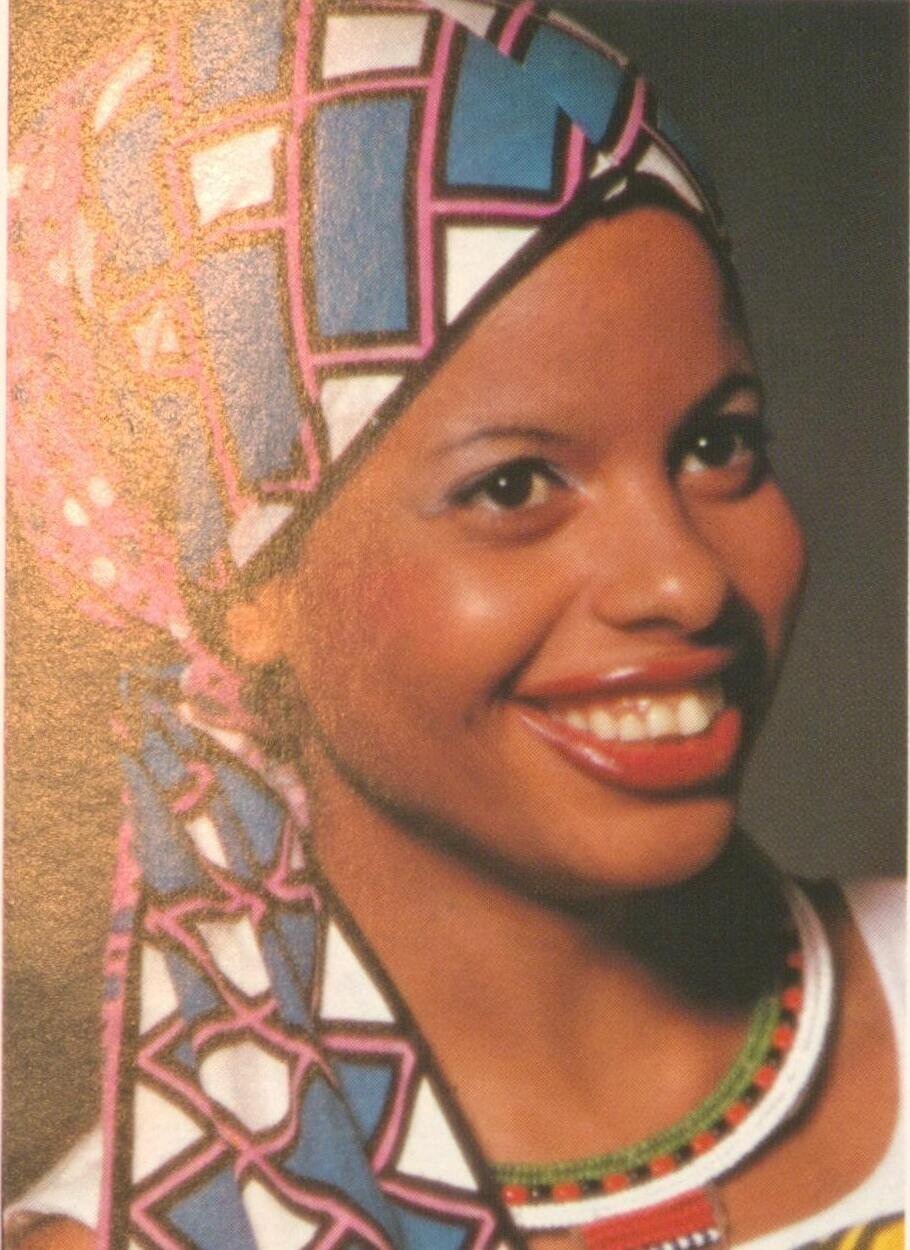
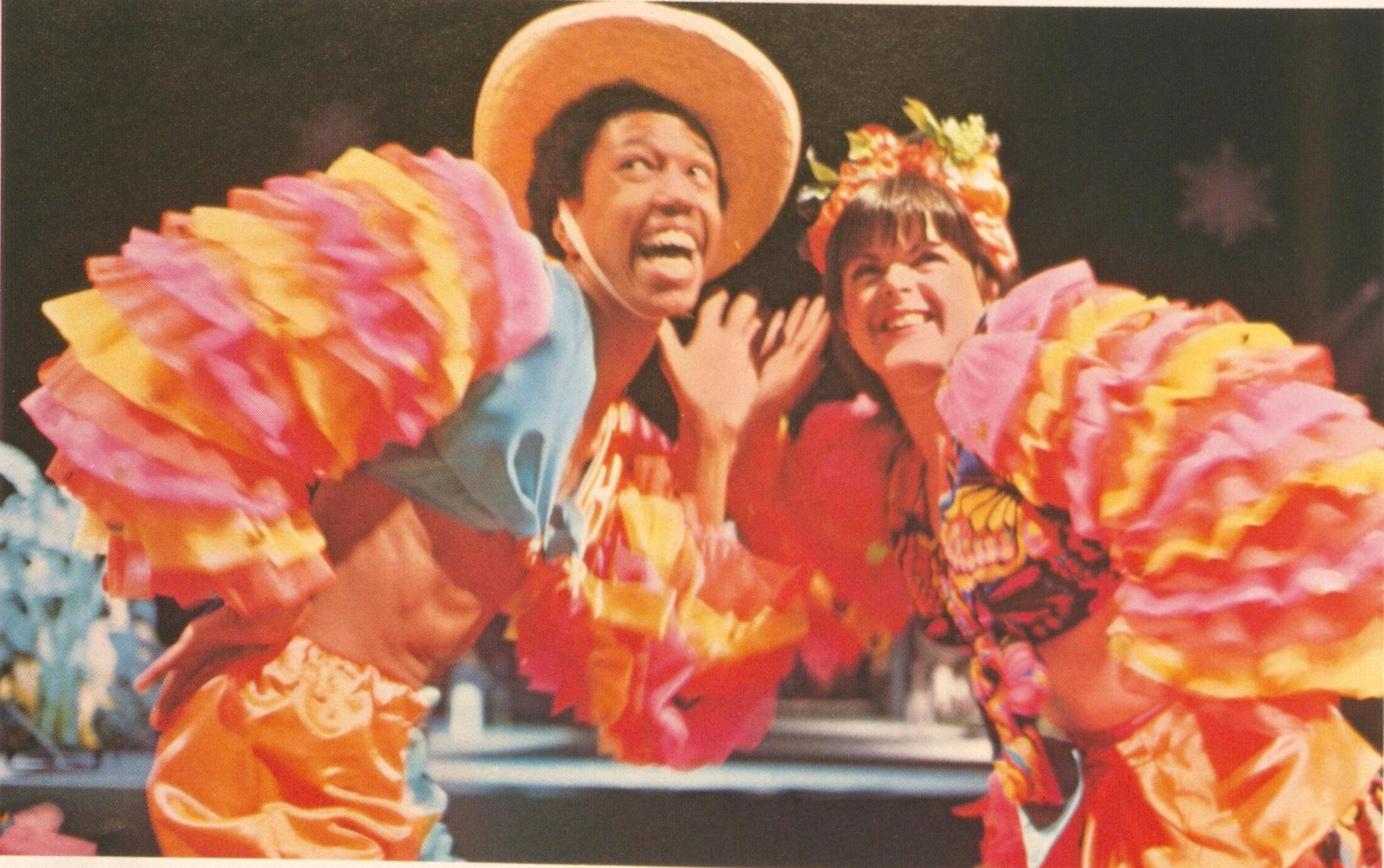
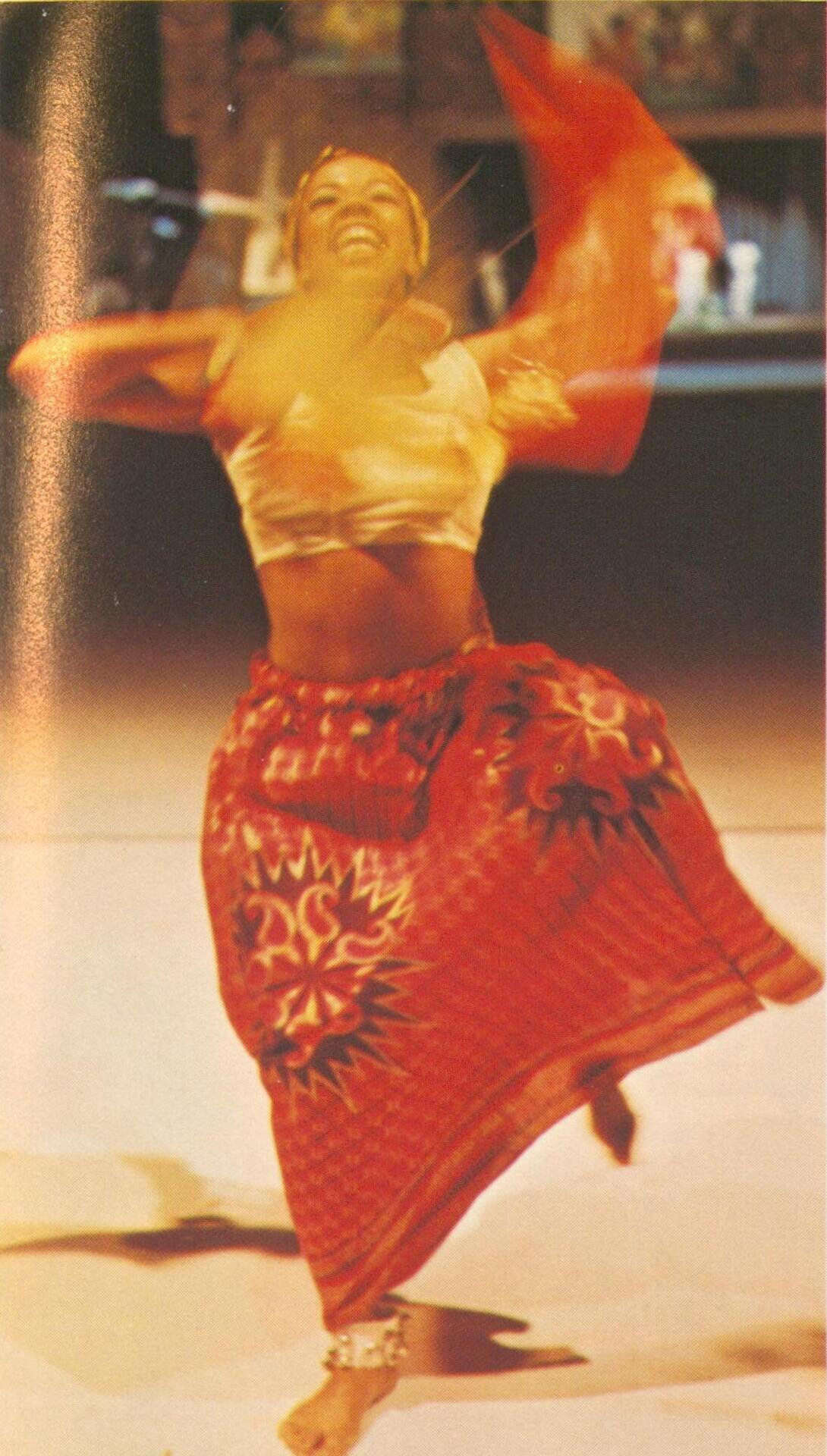
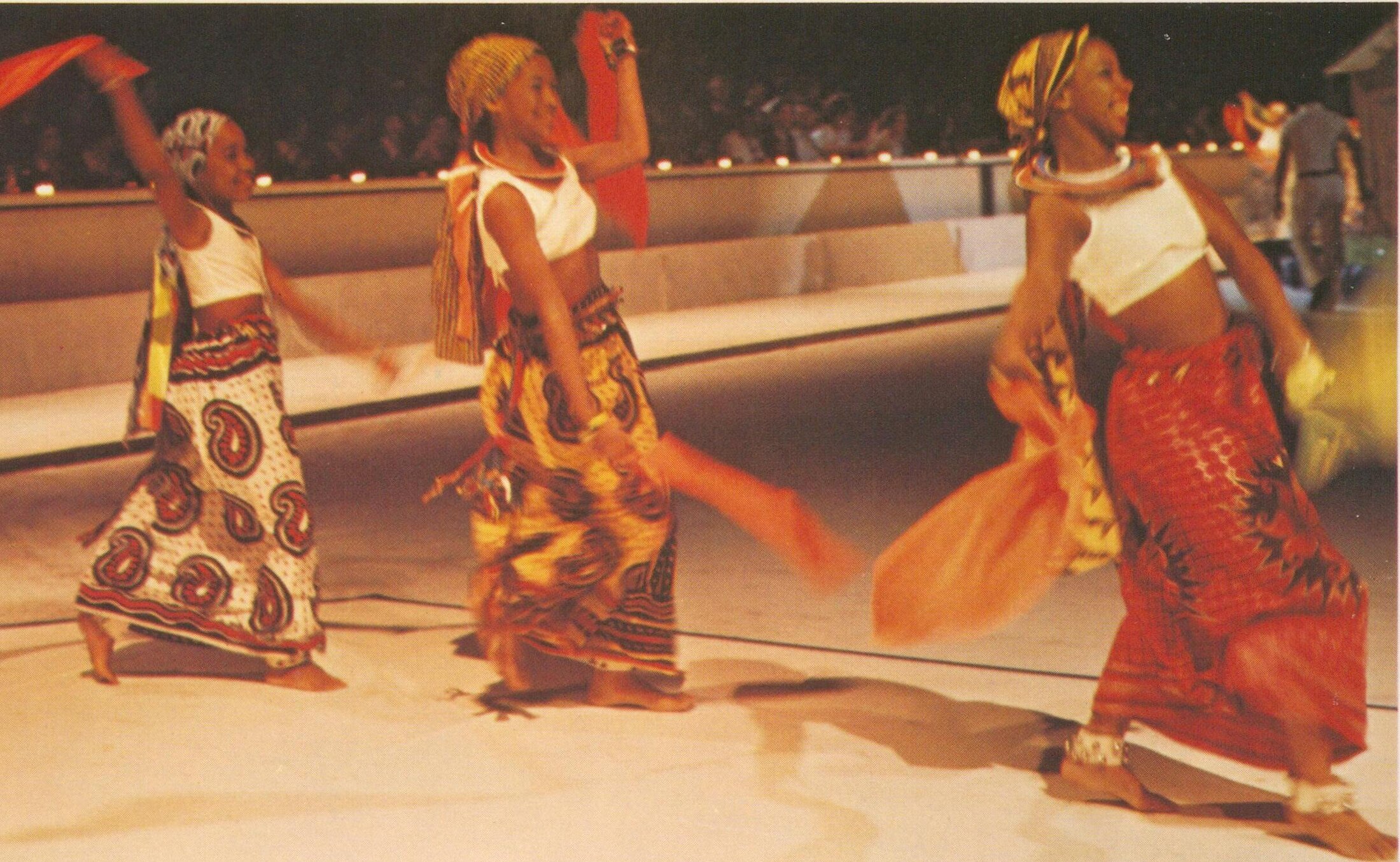

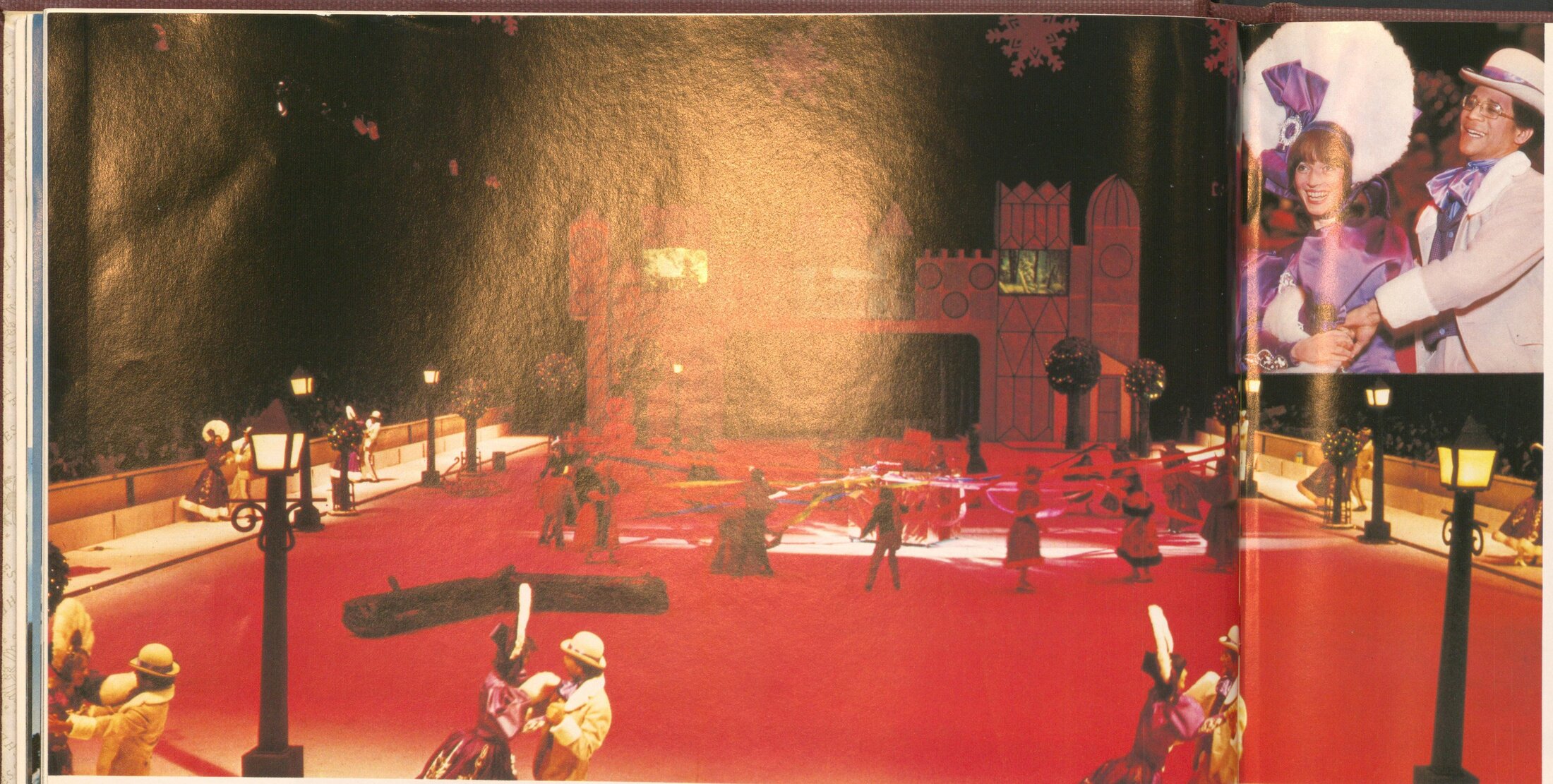
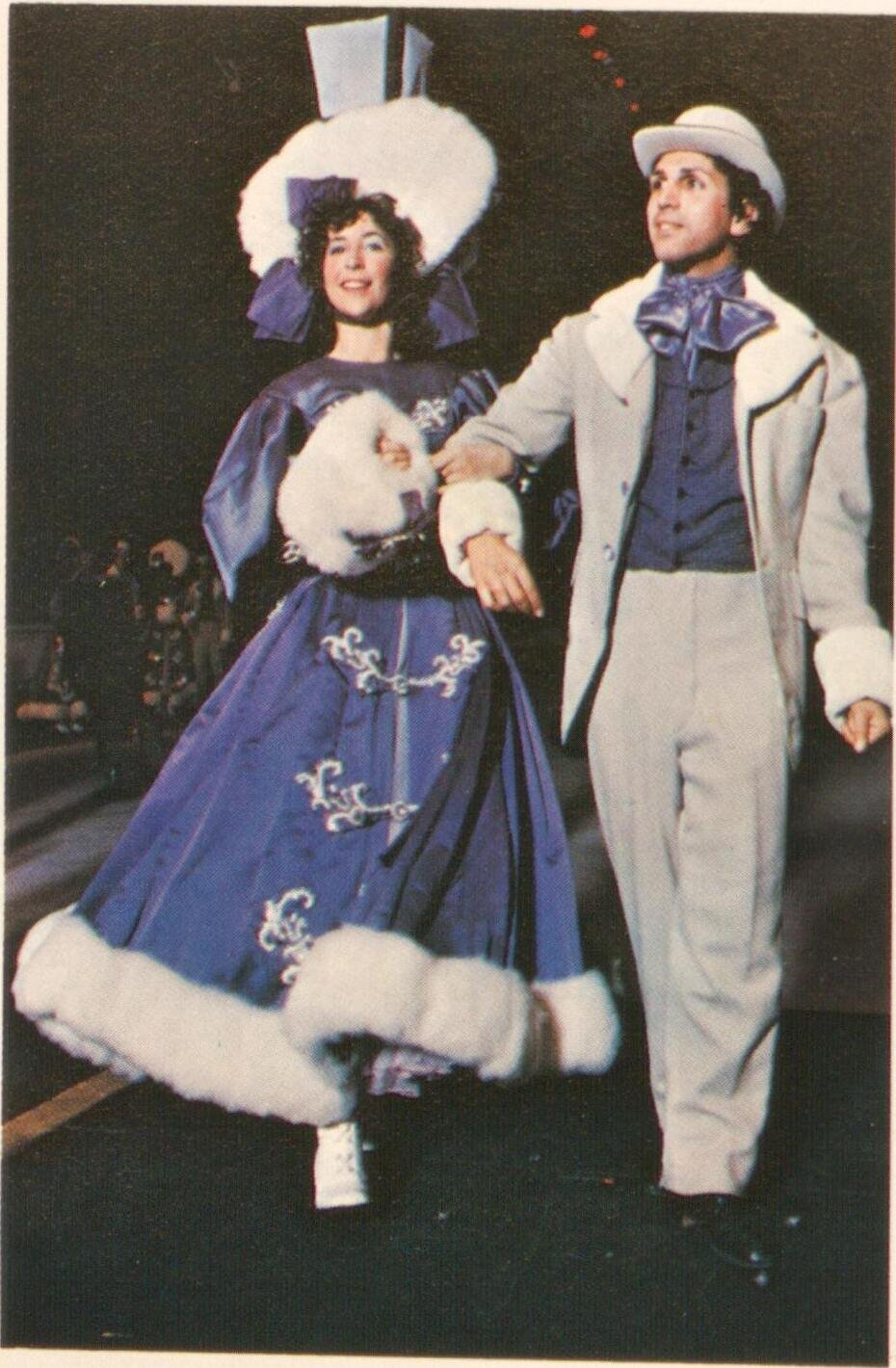
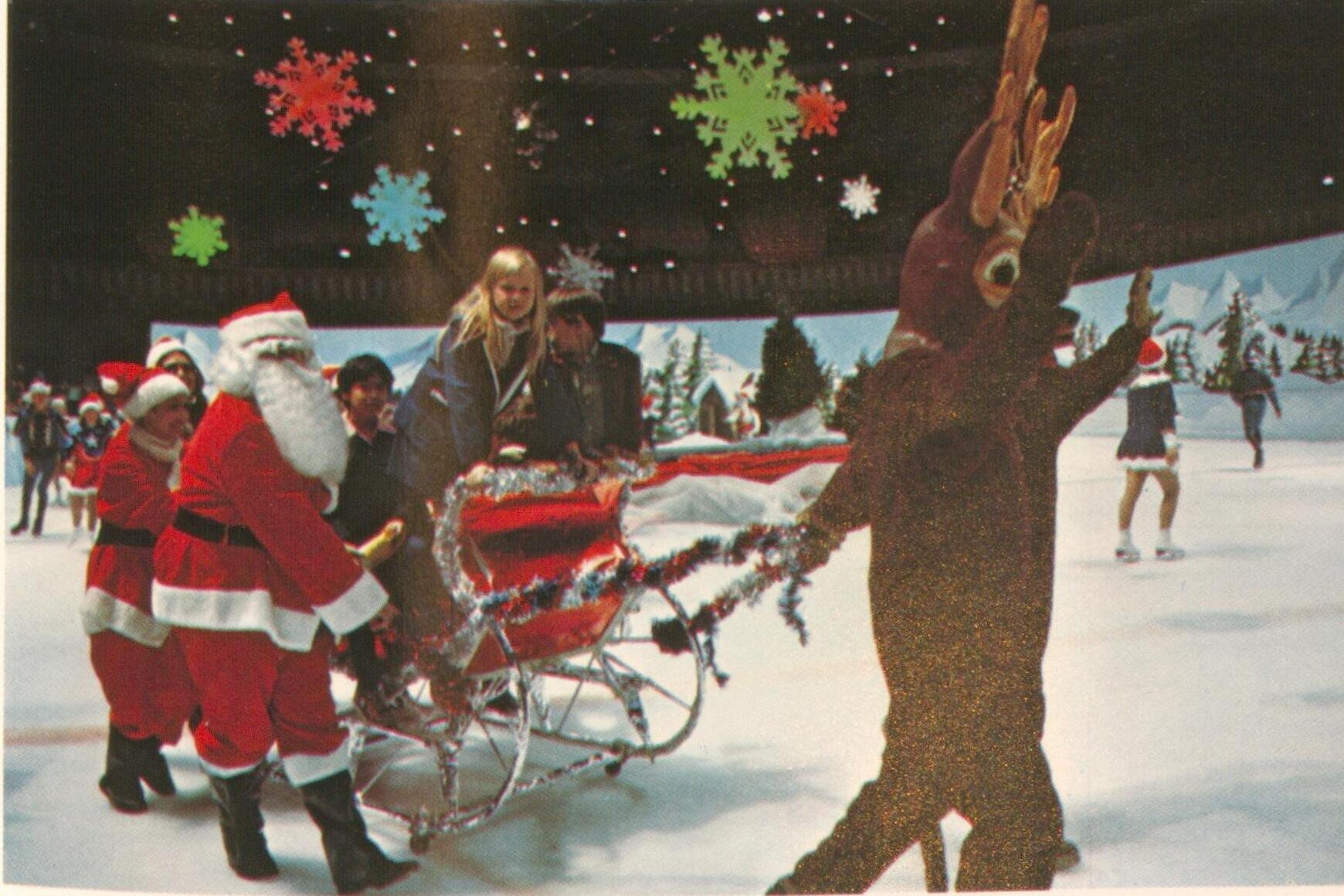
The ice comes alive in one of the most spectacular numbers — a turn-of-the-century yuletide scene reminds us of the spirit of goodwill. Winter is the coldest time, the traditions of this season serve to bring people close together and create a warm glow of friendship.
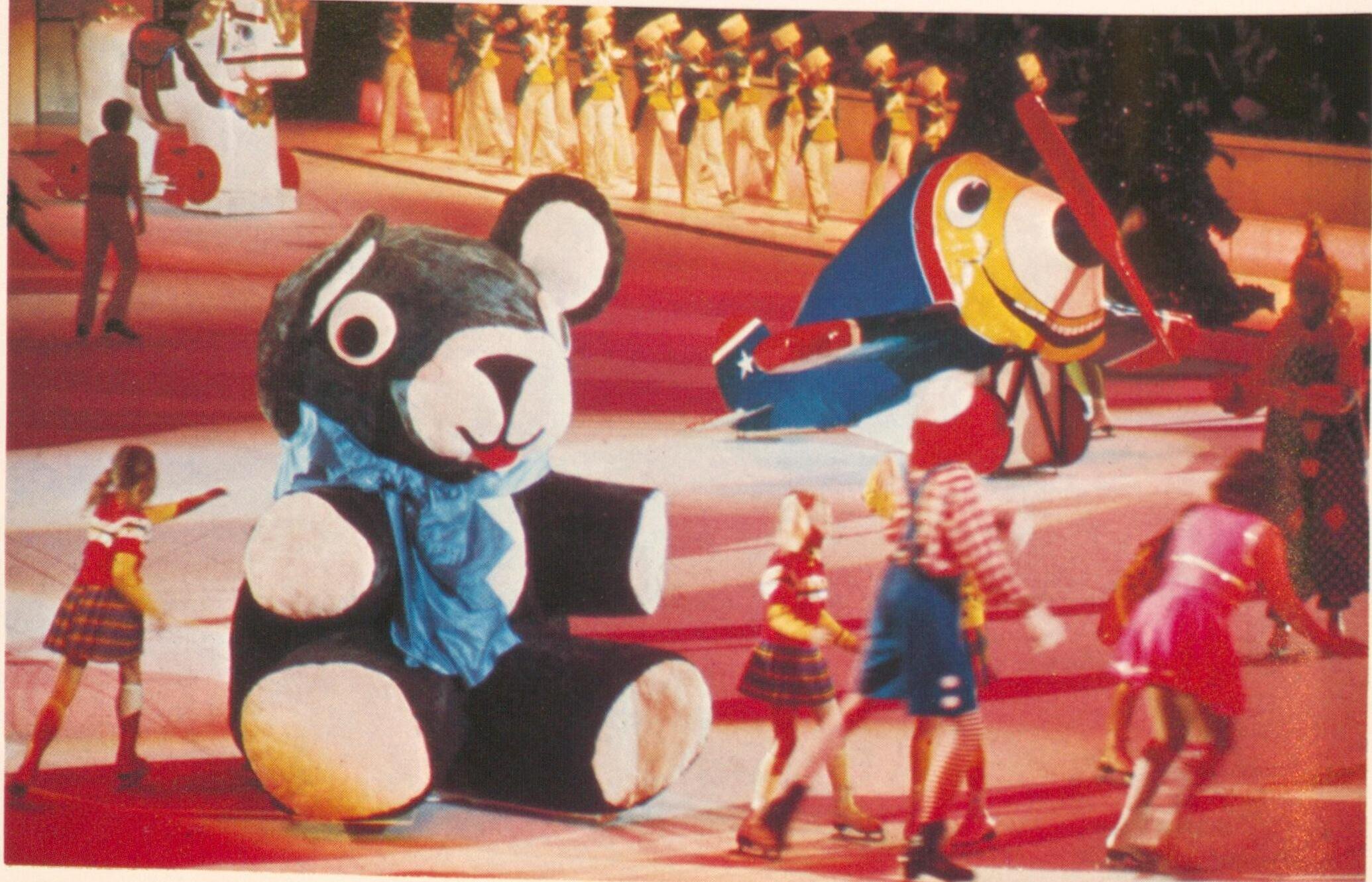
For children, Christmas time has always meant something special. The arena becomes a giant toyland as huge teddy-bears, airplanes, rocking horses and toy soldiers frolic in a delightful fantasy. Period costumes and decor lend authenticity to the pageant, and everyone sways to the strains of “The Skater’s Waltz.”
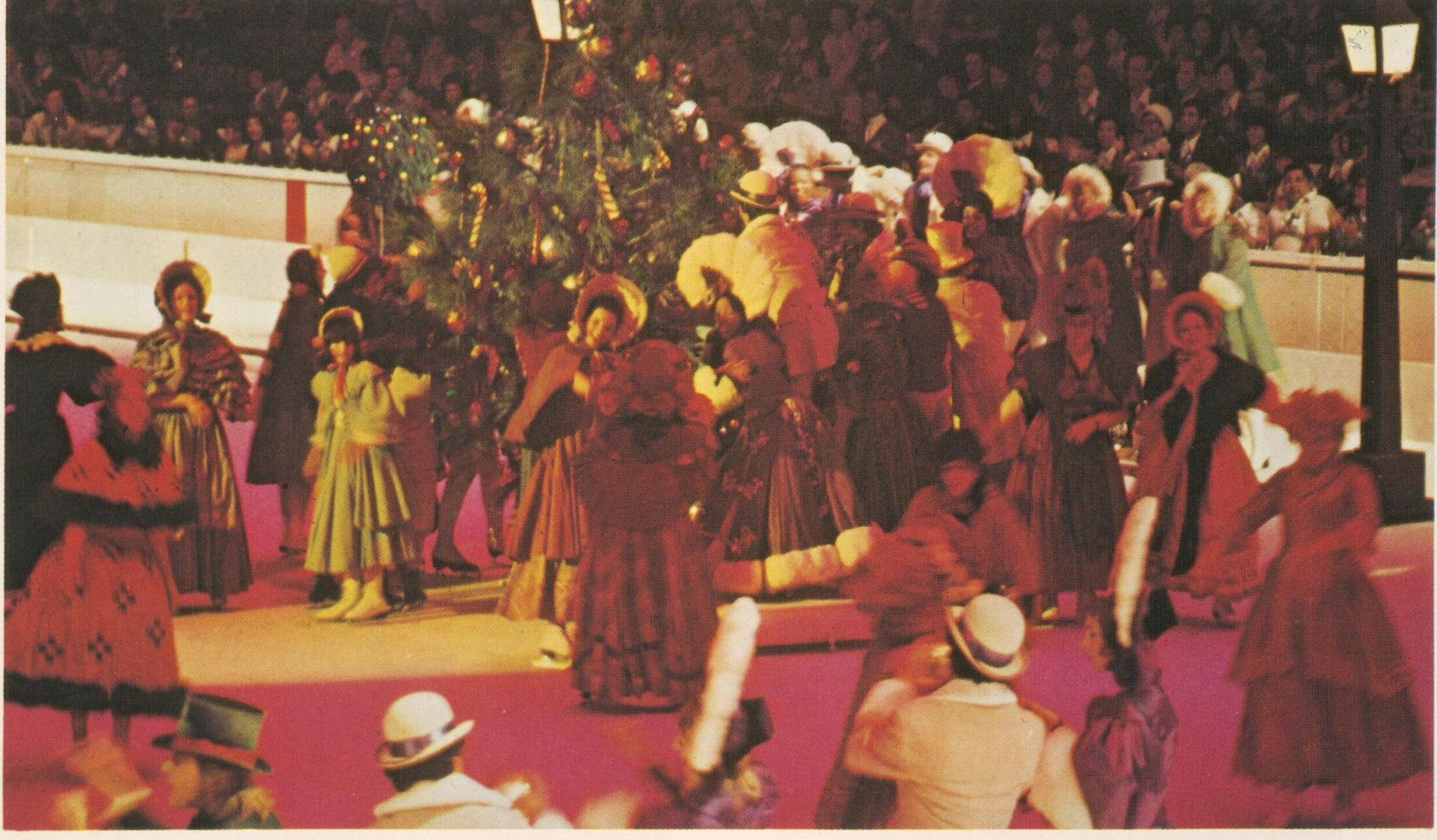
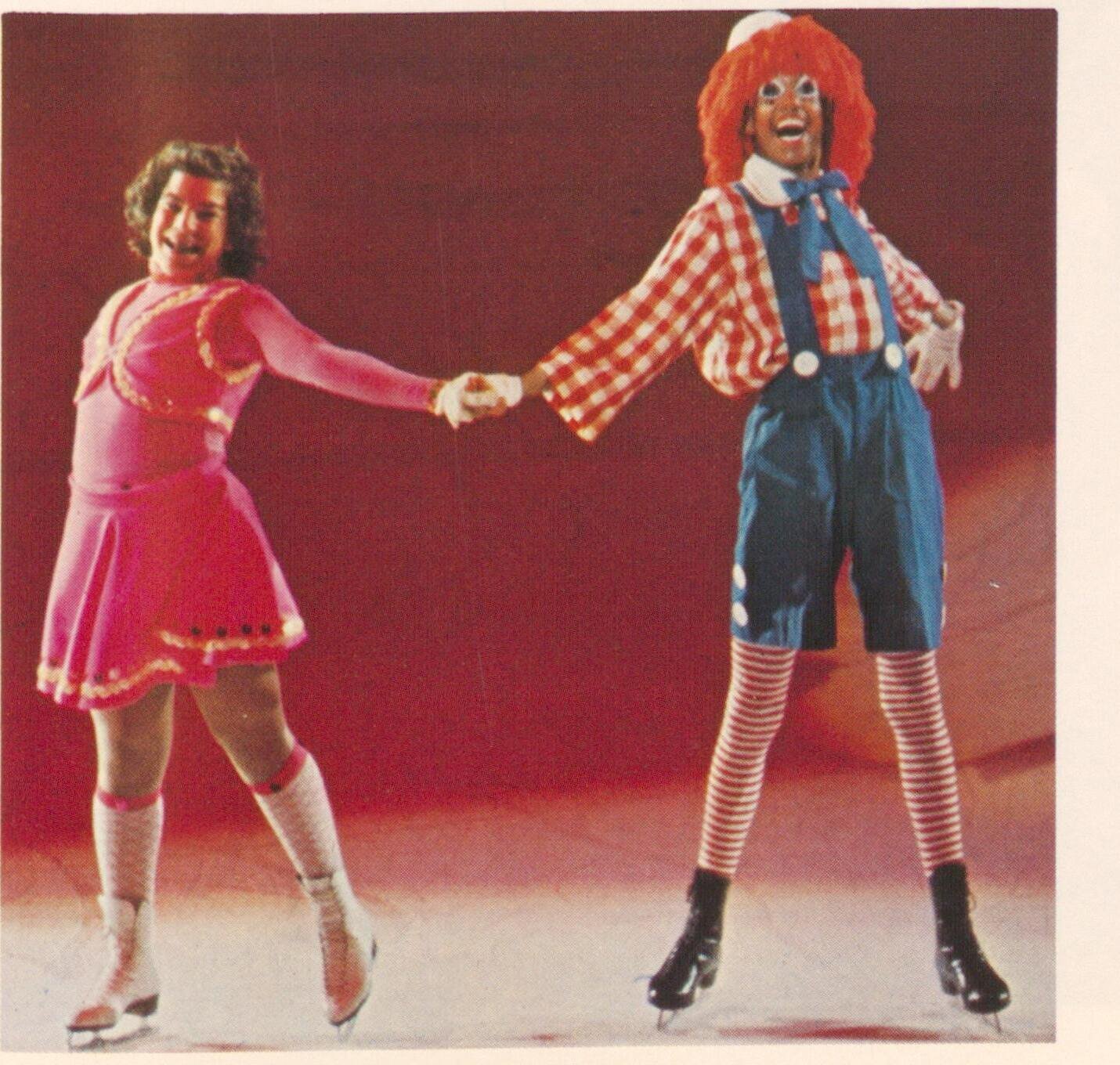
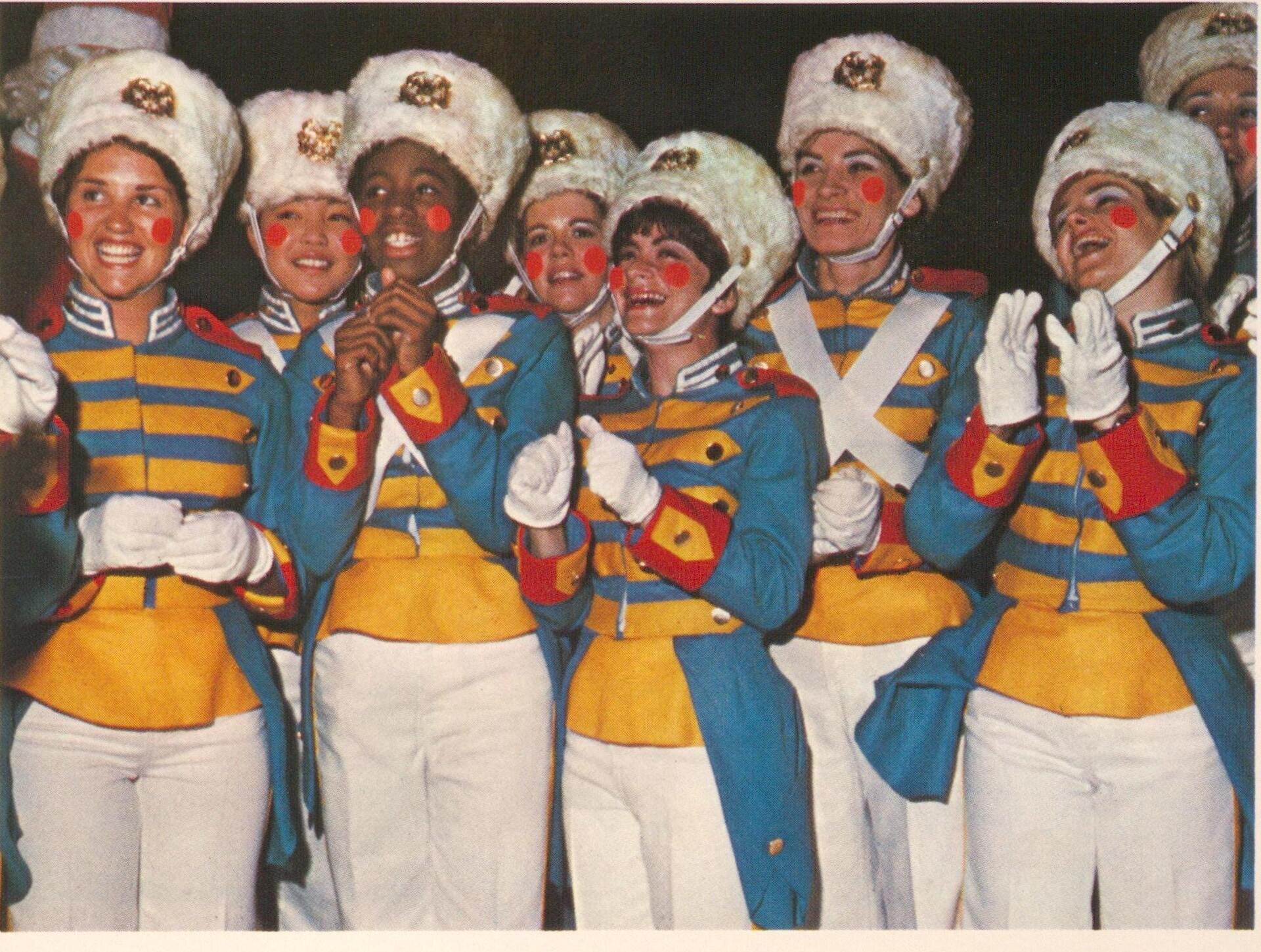

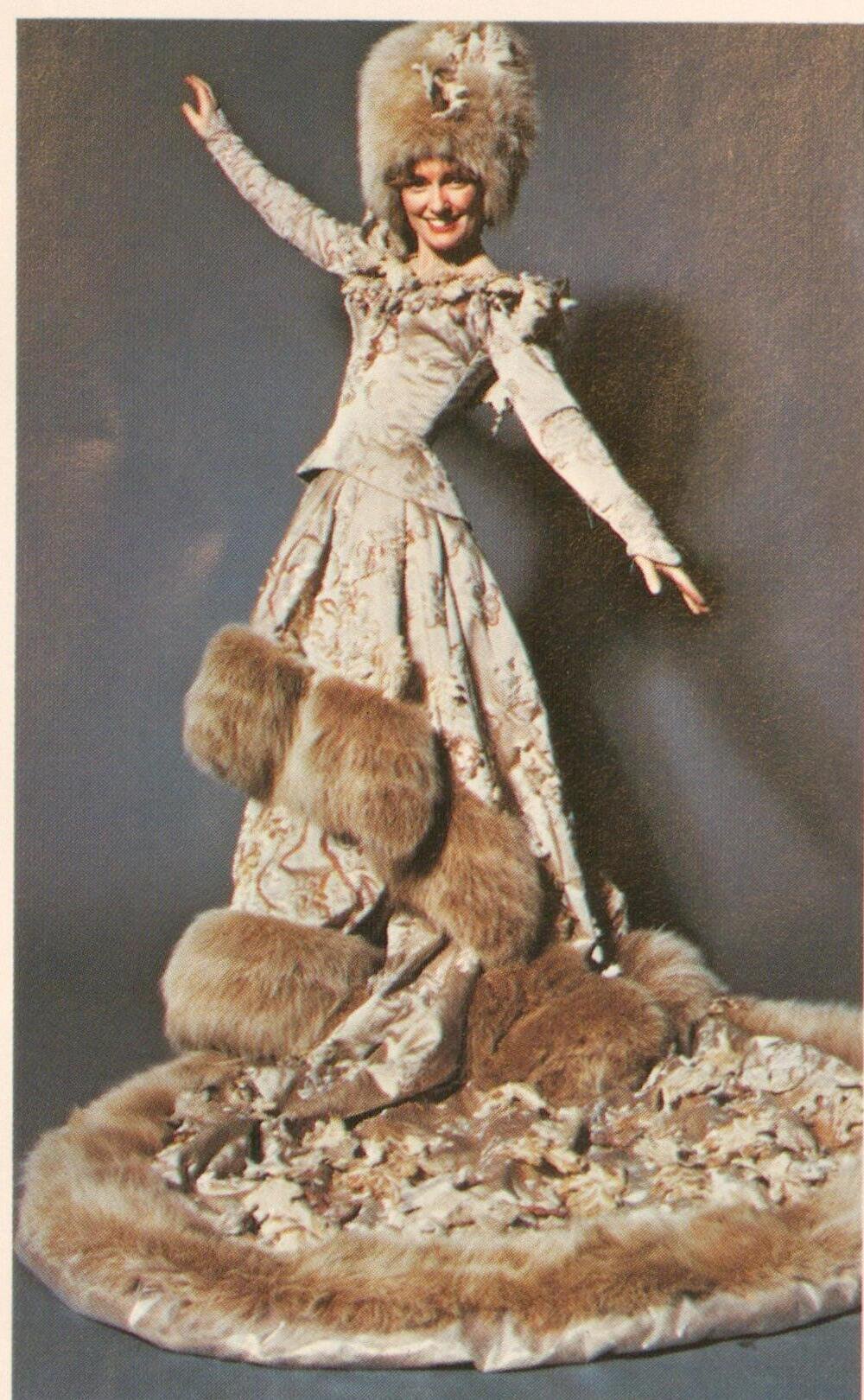
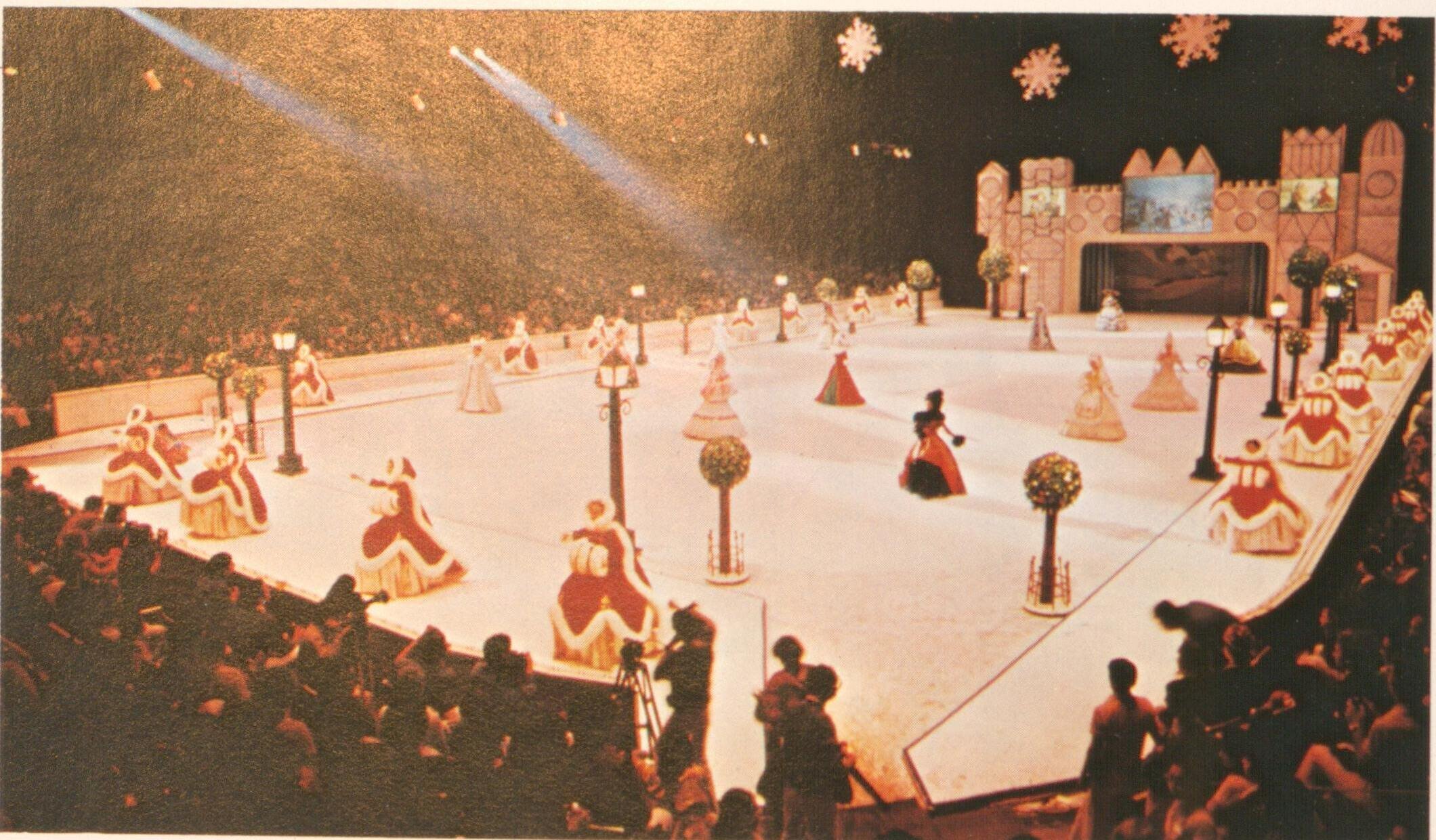
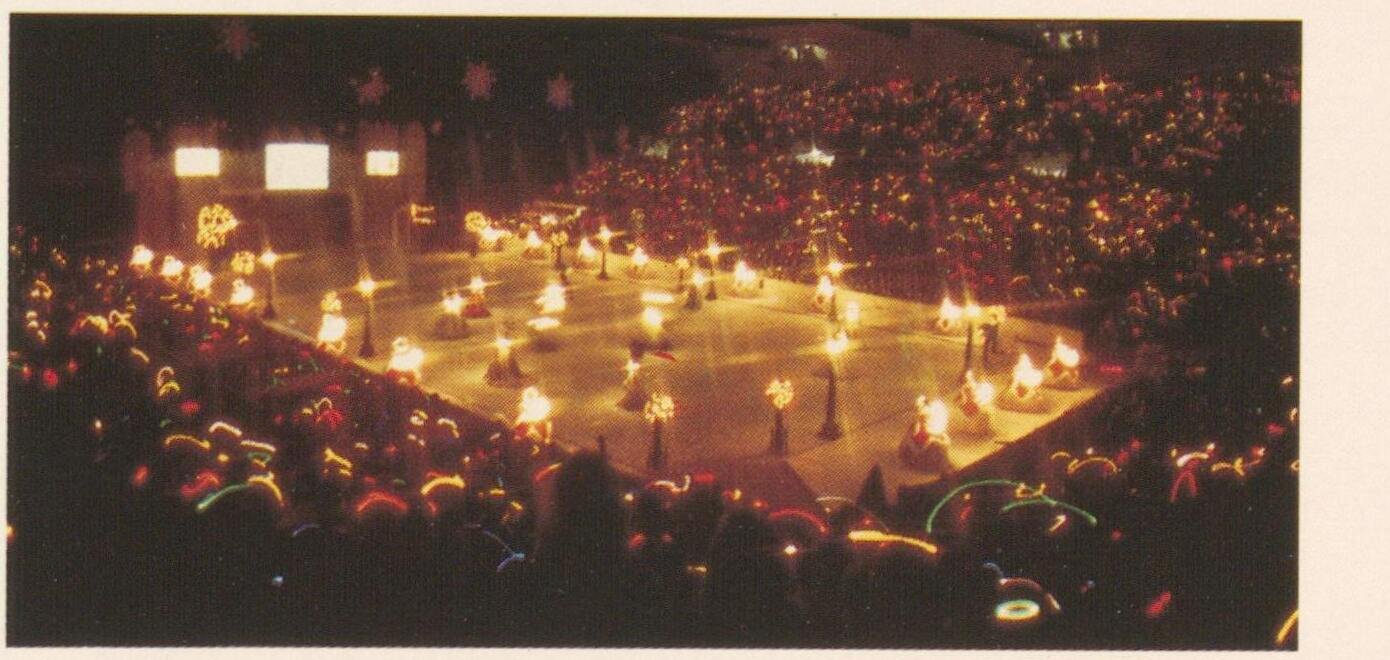
A climactic moment involved the participation of everyone in the Sports Arena. The fine line between audience and performers dissolved as Christmas trees lit up and viewers responded by lighting a shimmering multitude of red, green, blue and yellow penlights.
A human lightshow, unrehearsed, showered every corner with a gallactic display of stellar beauty.
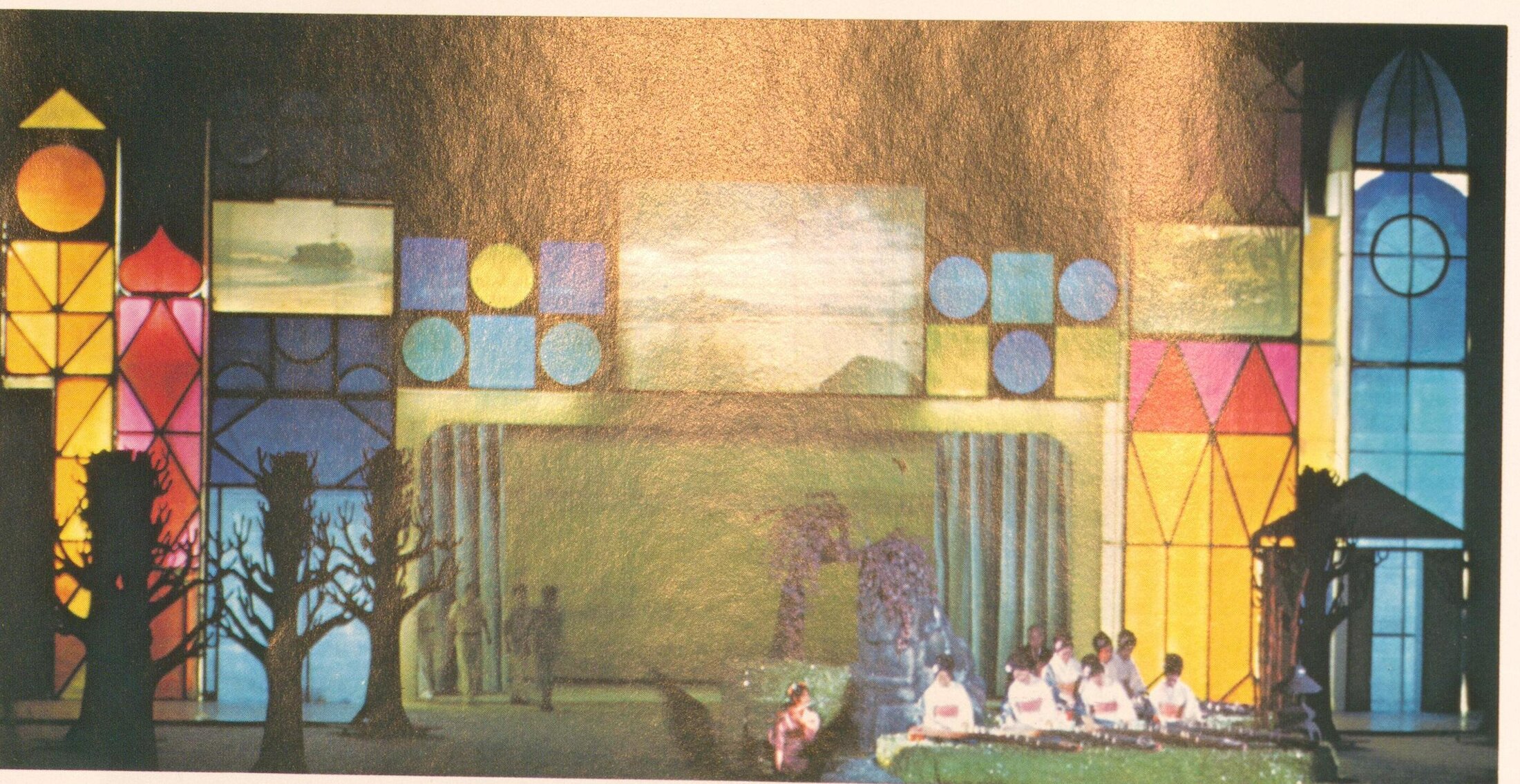
. . . And soon spring must come. Every man can find his dream. No matter how long the winter, the gentle cherry blossoms and soft breezes eventually appear. The stormy sea is calm again — life begins anew.
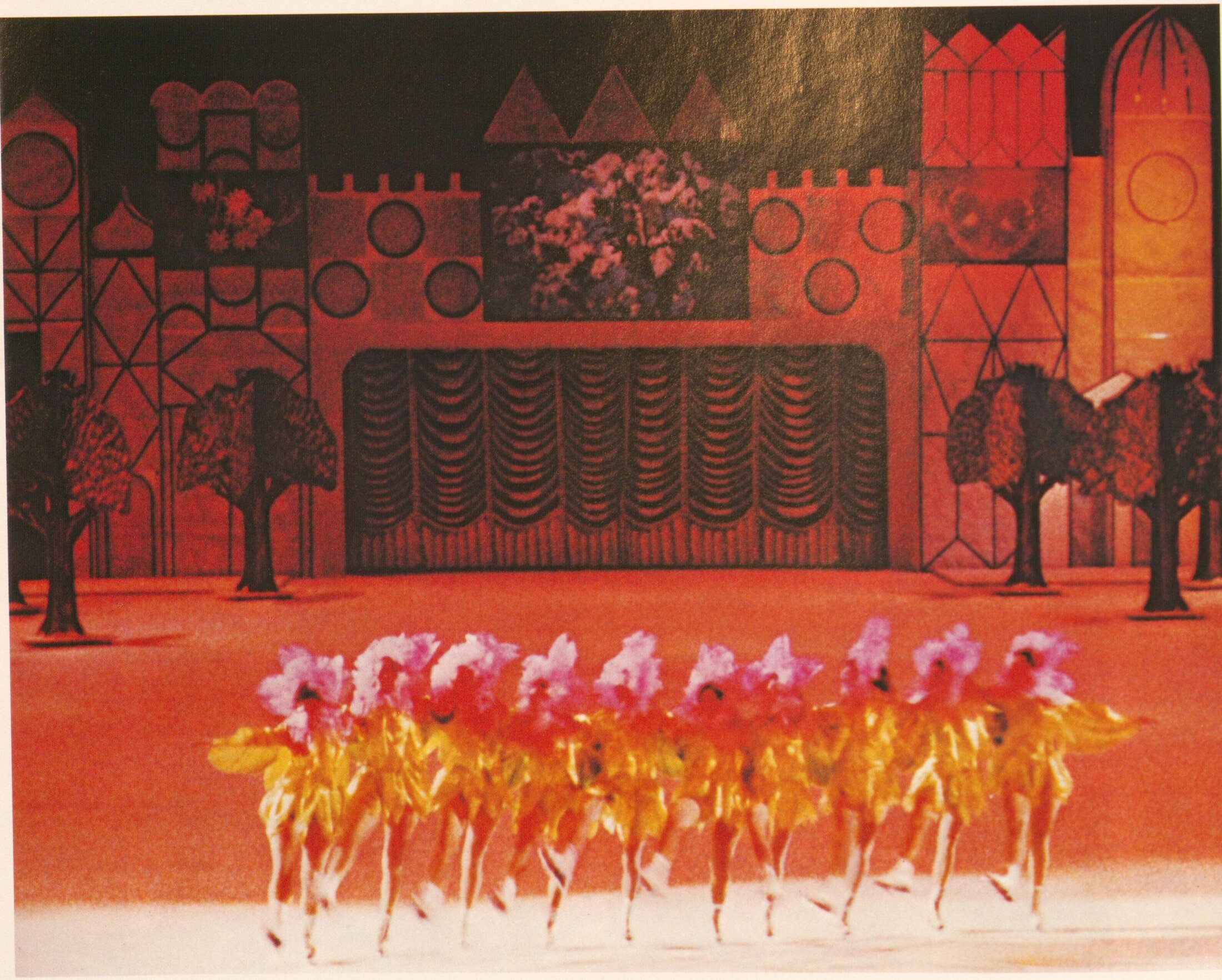
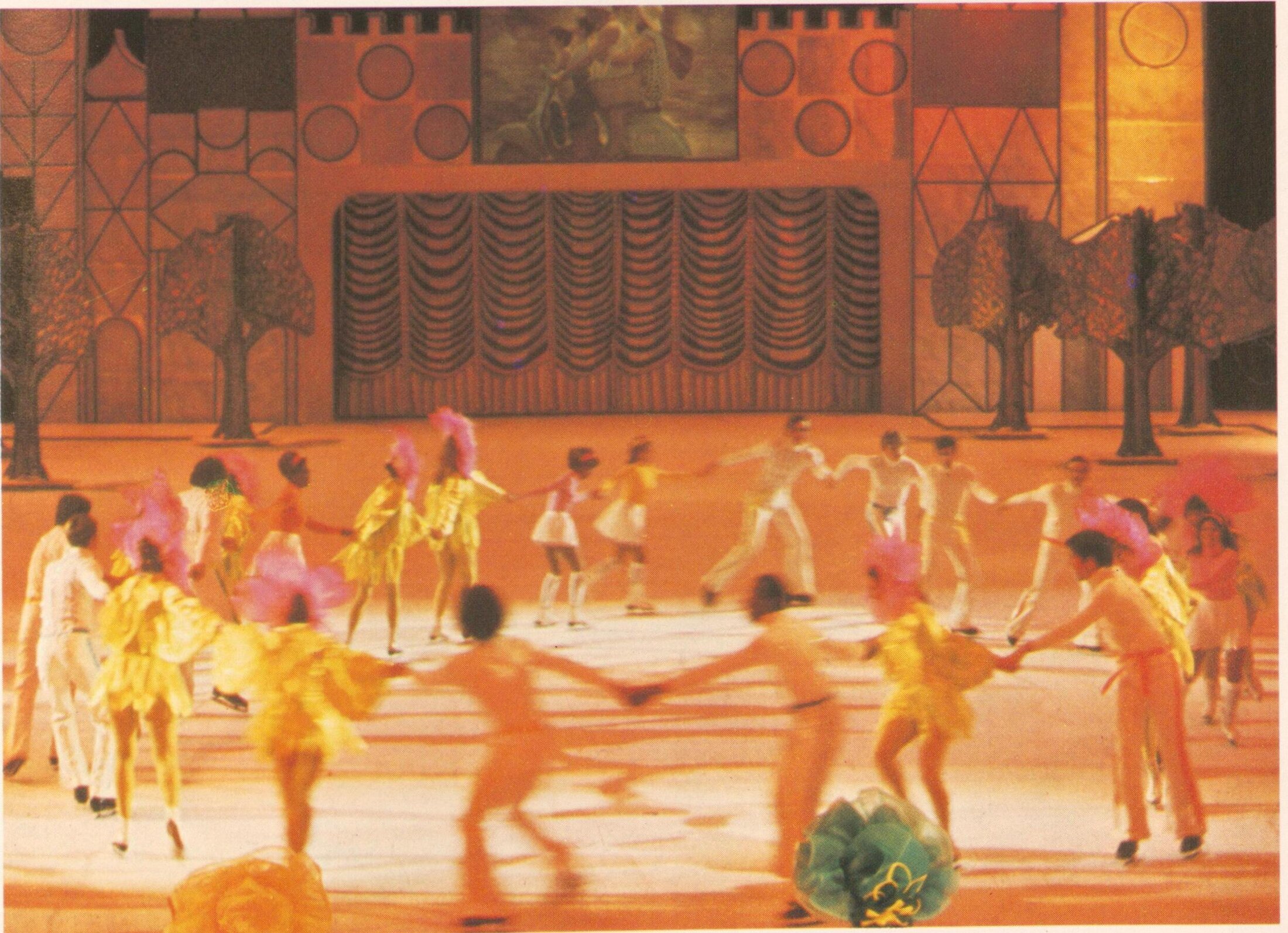
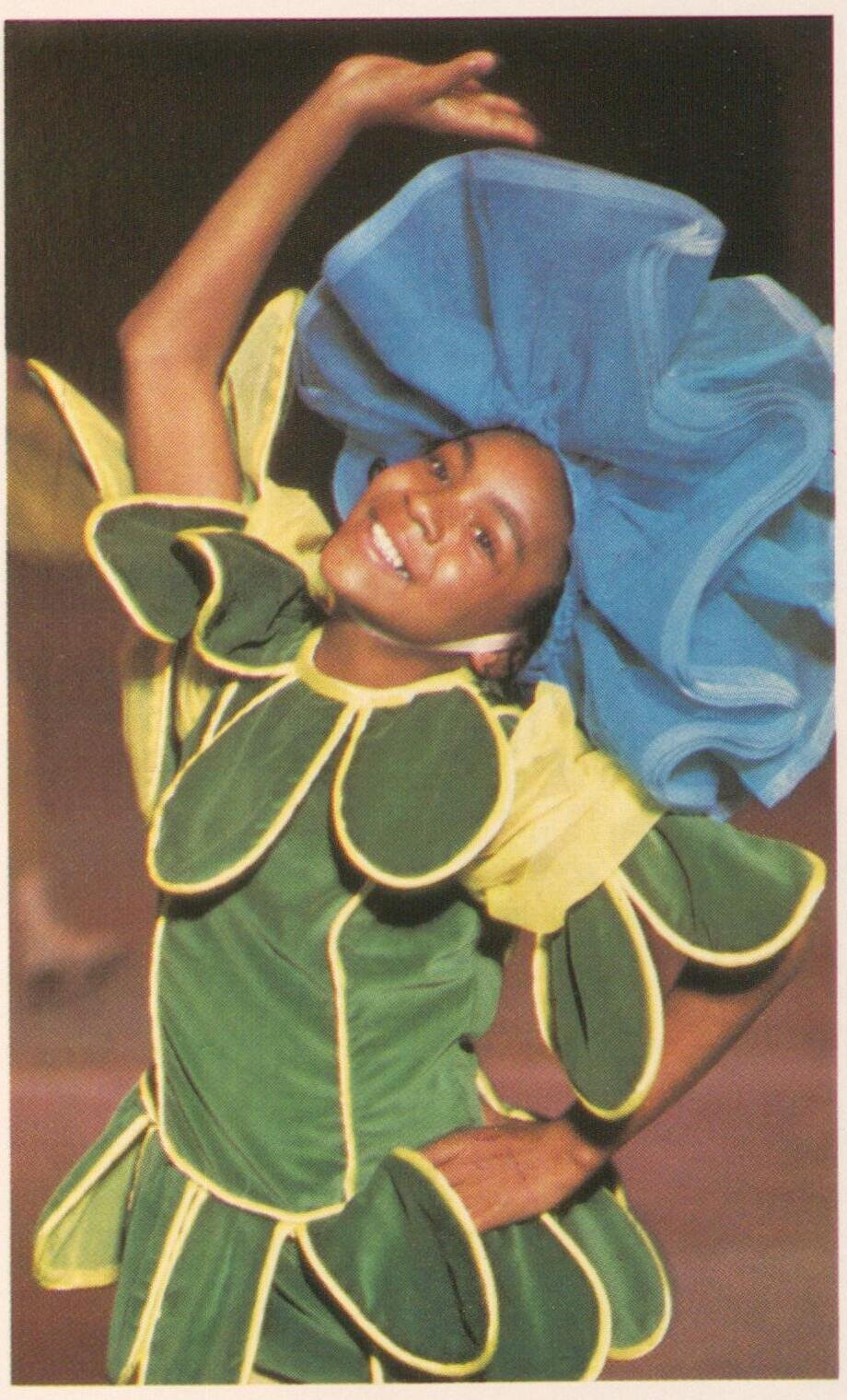
Only through the dedicated contributions of countless individuals working together in every phase, could this undertaking have been accomplished. Costuming was certainly no exception and perhaps one of the most difficult challenges. Twelve hundred different garments were required to meet the demands of the show.
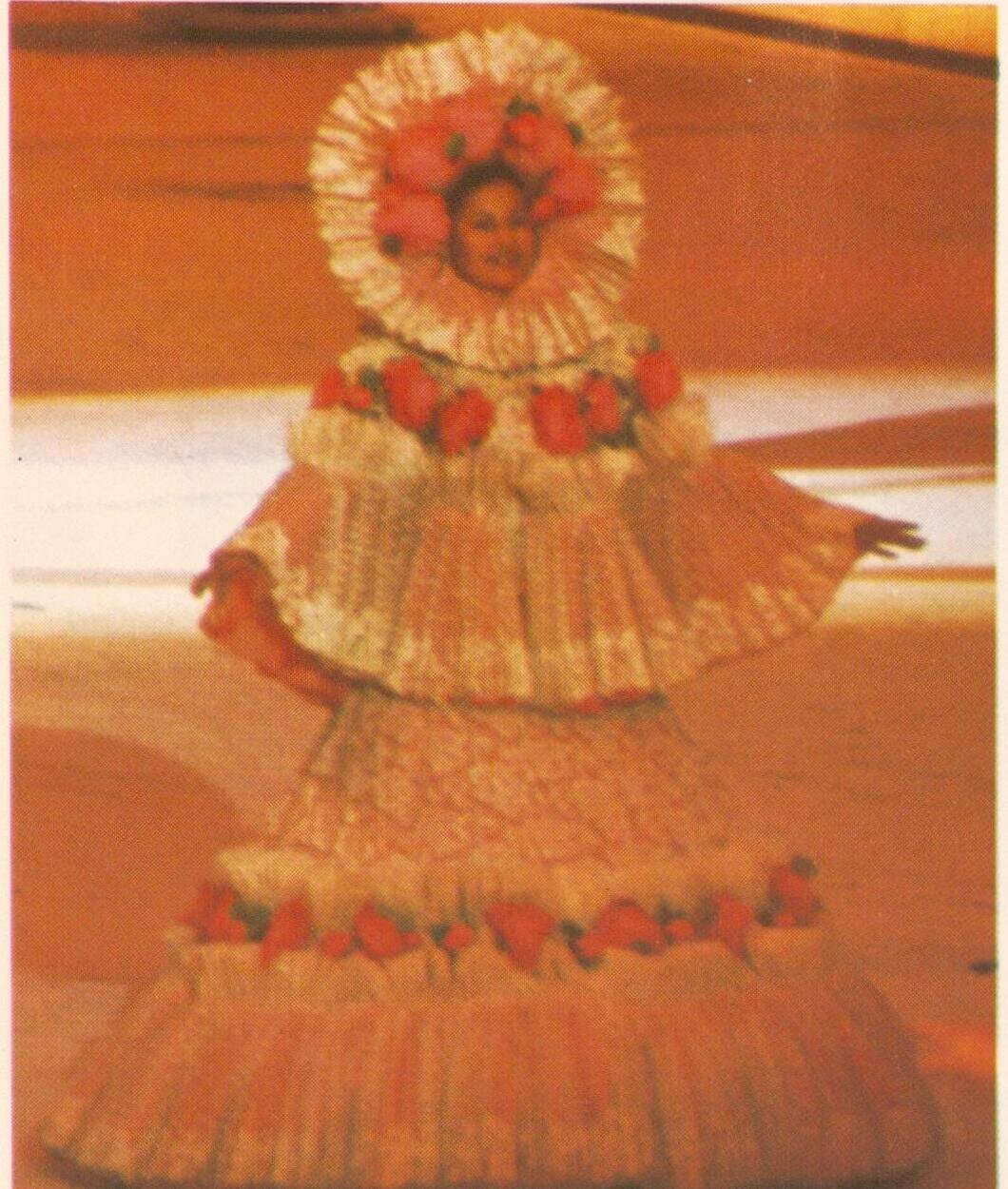
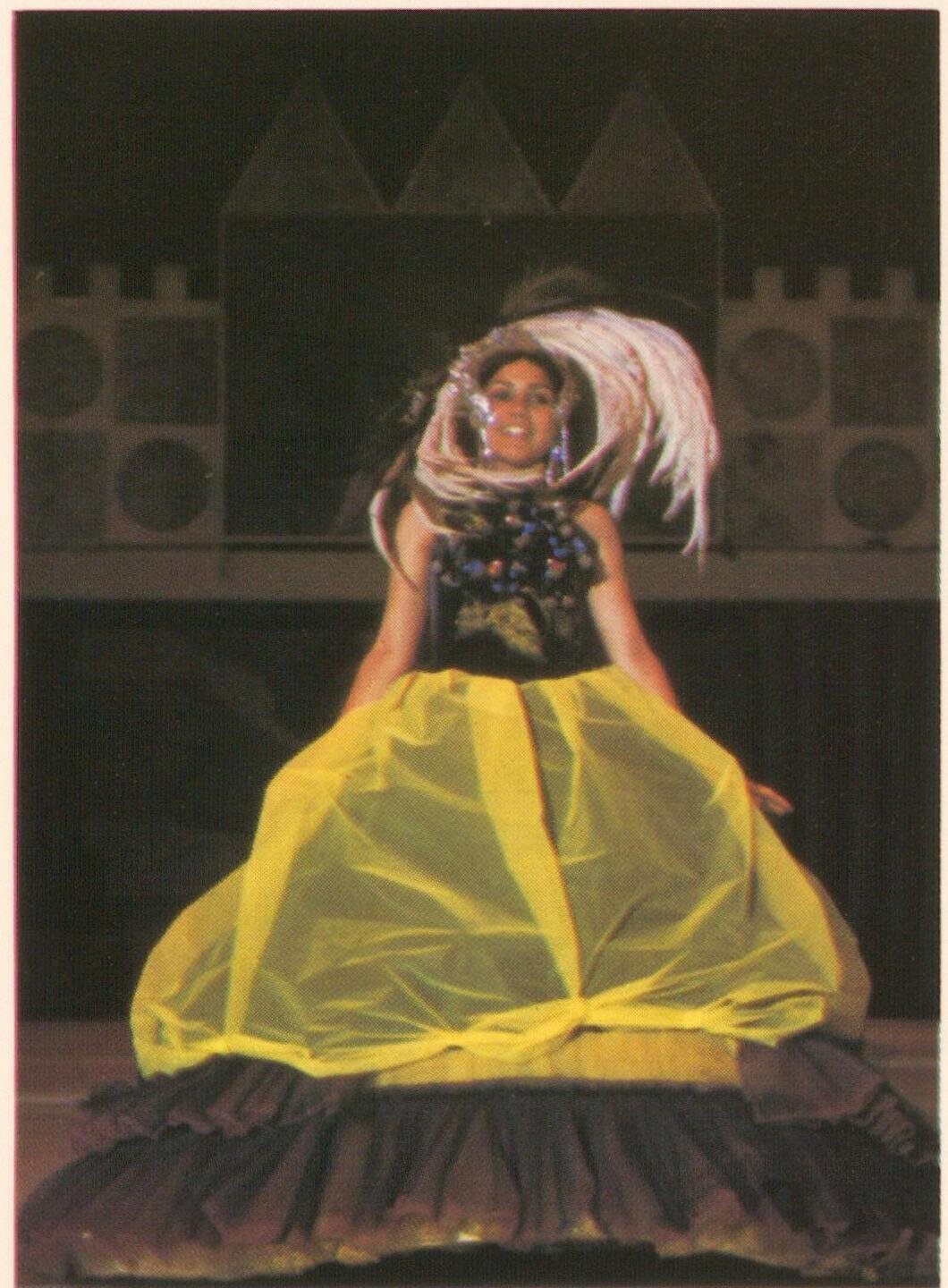
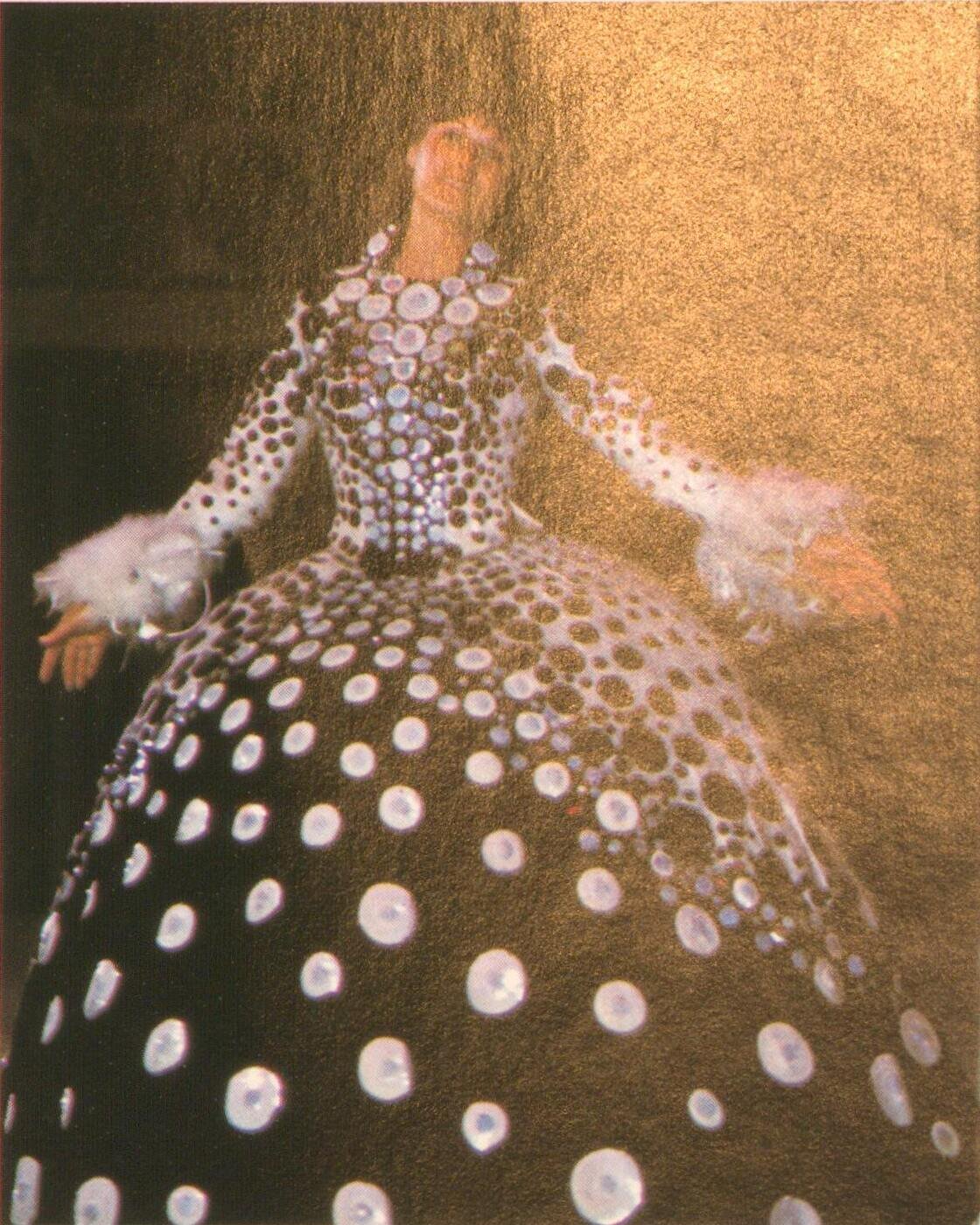
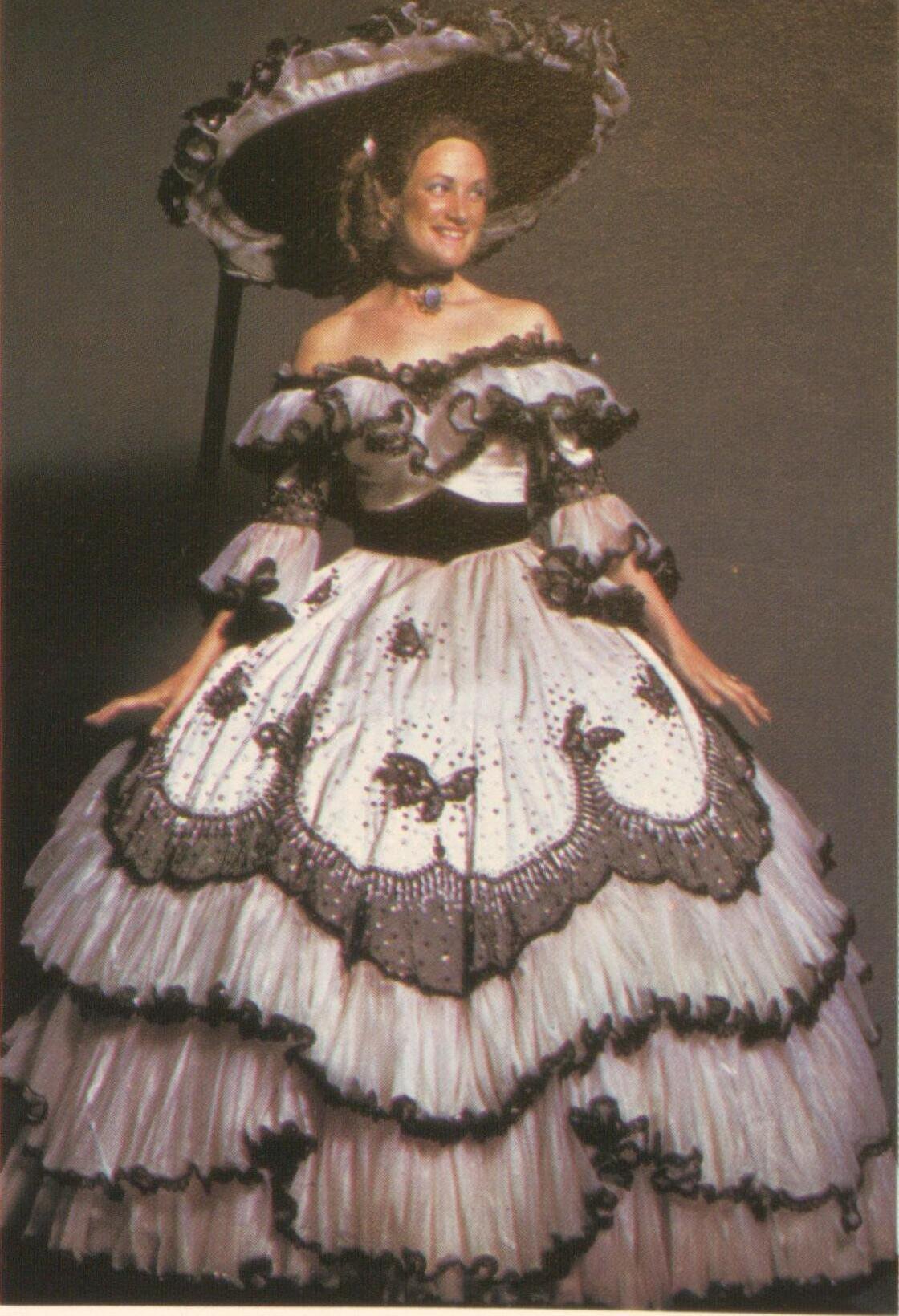
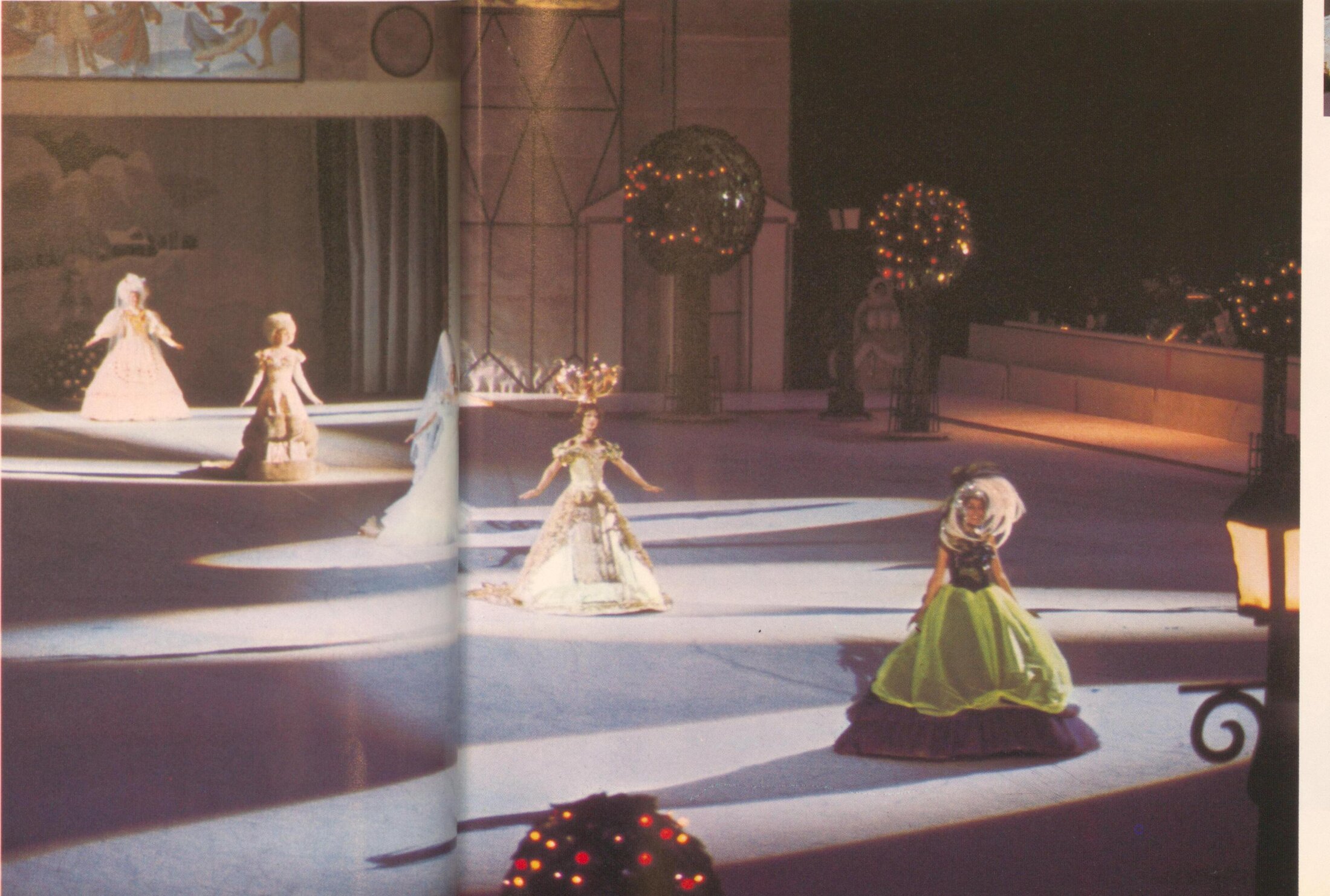
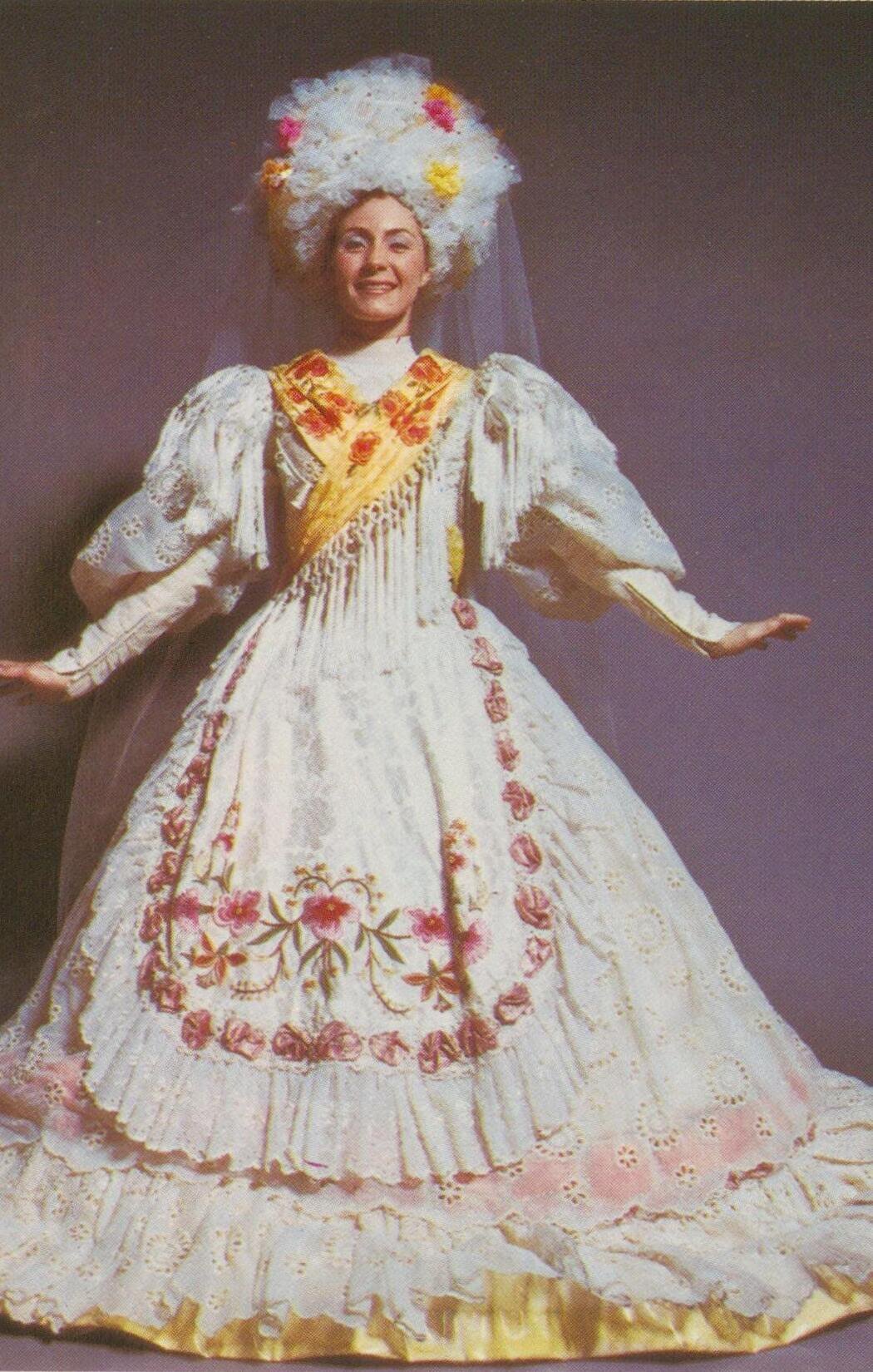
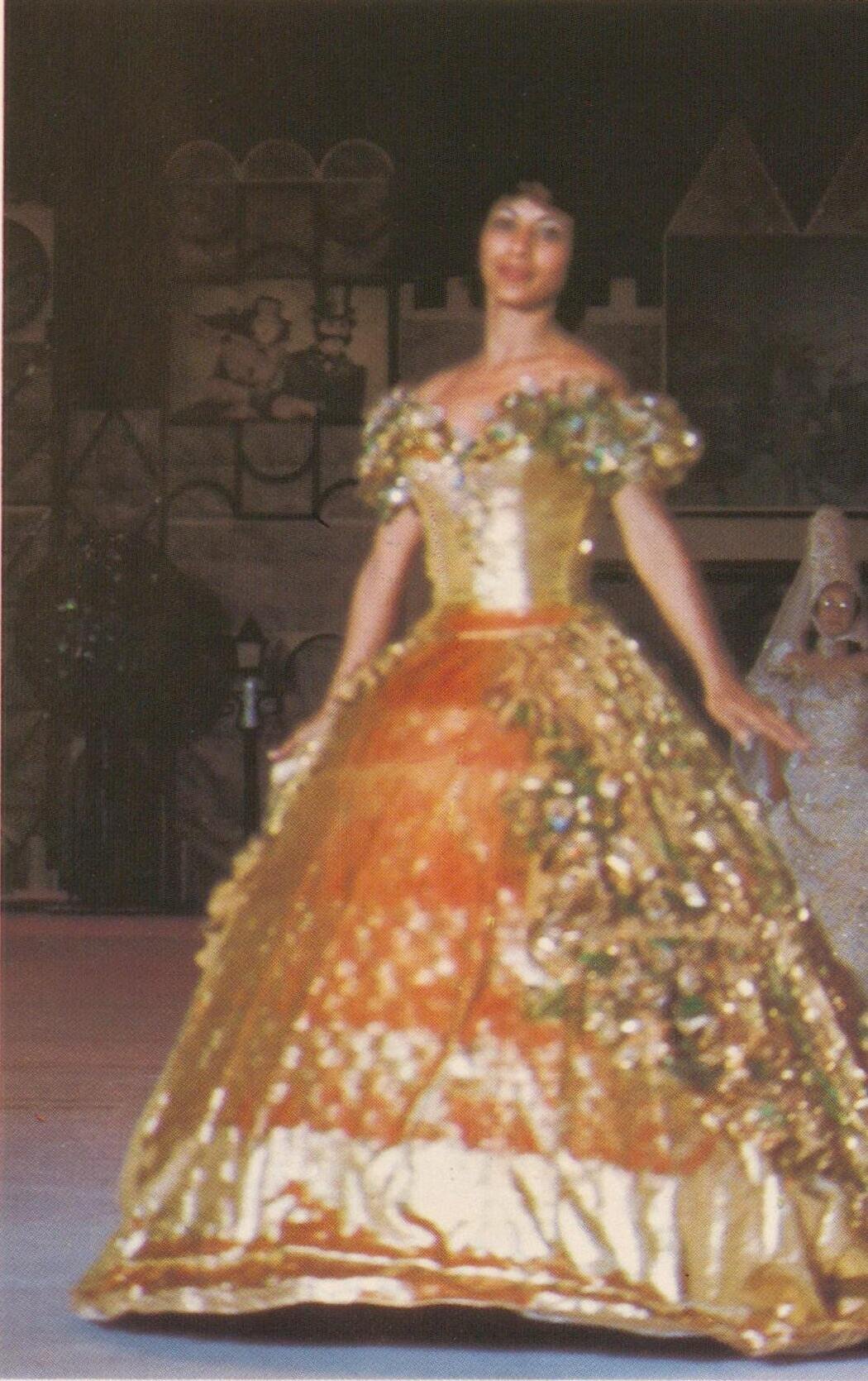
A costume committee, comprised of three hundred men and women, put in forty-seven full days of work, ringing up a total of 200,000 man-hours. Together they cut, sewed and crafted 7,000 yards of material into everything from grass skirts to gorgeous winter gowns. Lending a dramatic effect to the darkened sequences, 1,750 small lights were secured to many of the suits, to be switched on or off at high points in the script.
What was only a dream one-and-a-half months before, was materialized in that brief moment of history April 7, 1974.
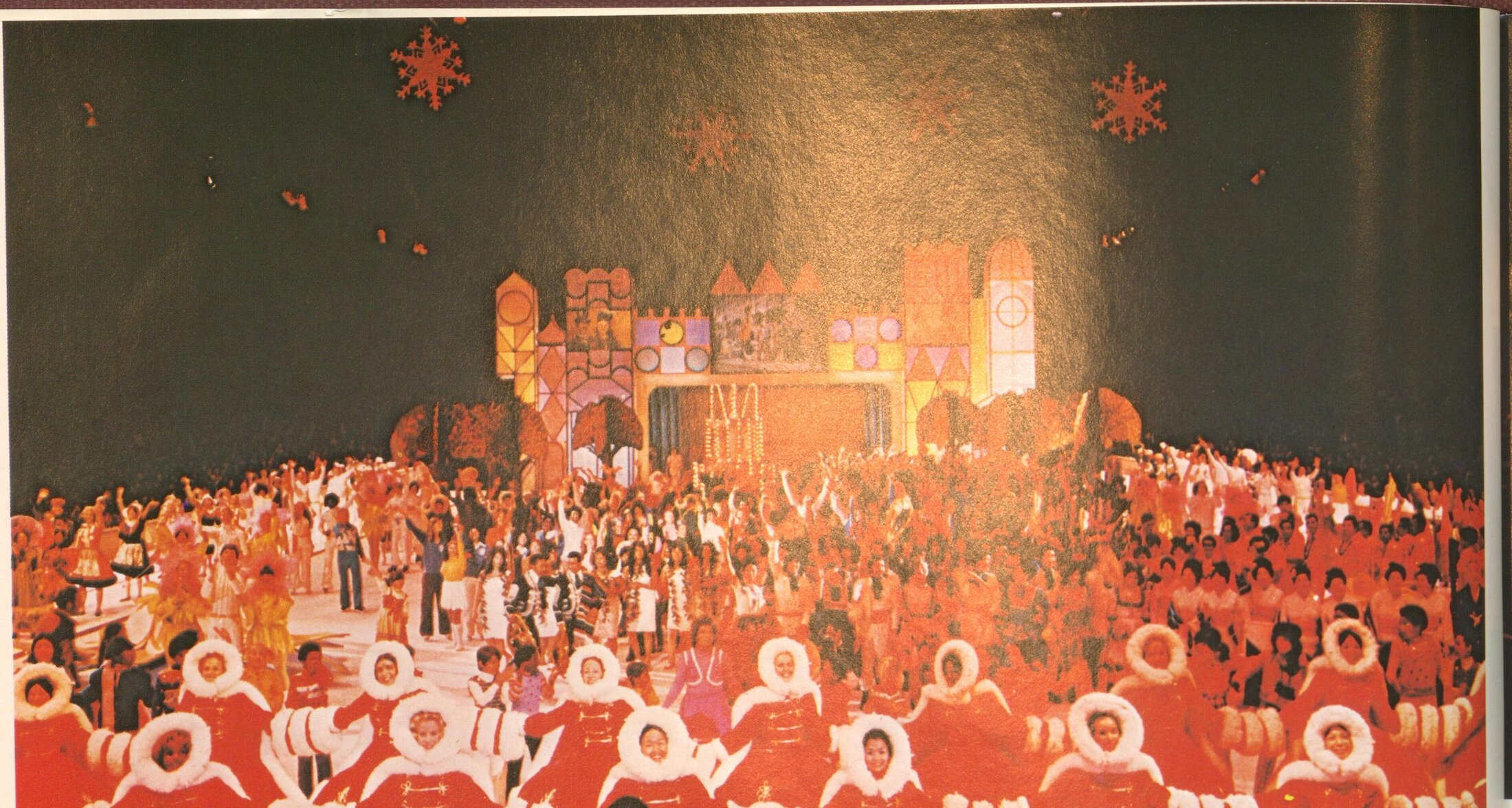
To the elated cast and supporting crews President Ikeda praised their efforts: “Your culture festival marks the dawn of the 21st century. It moved me deeply. From the bottom of my heart I say CONGRATULATIONS.”
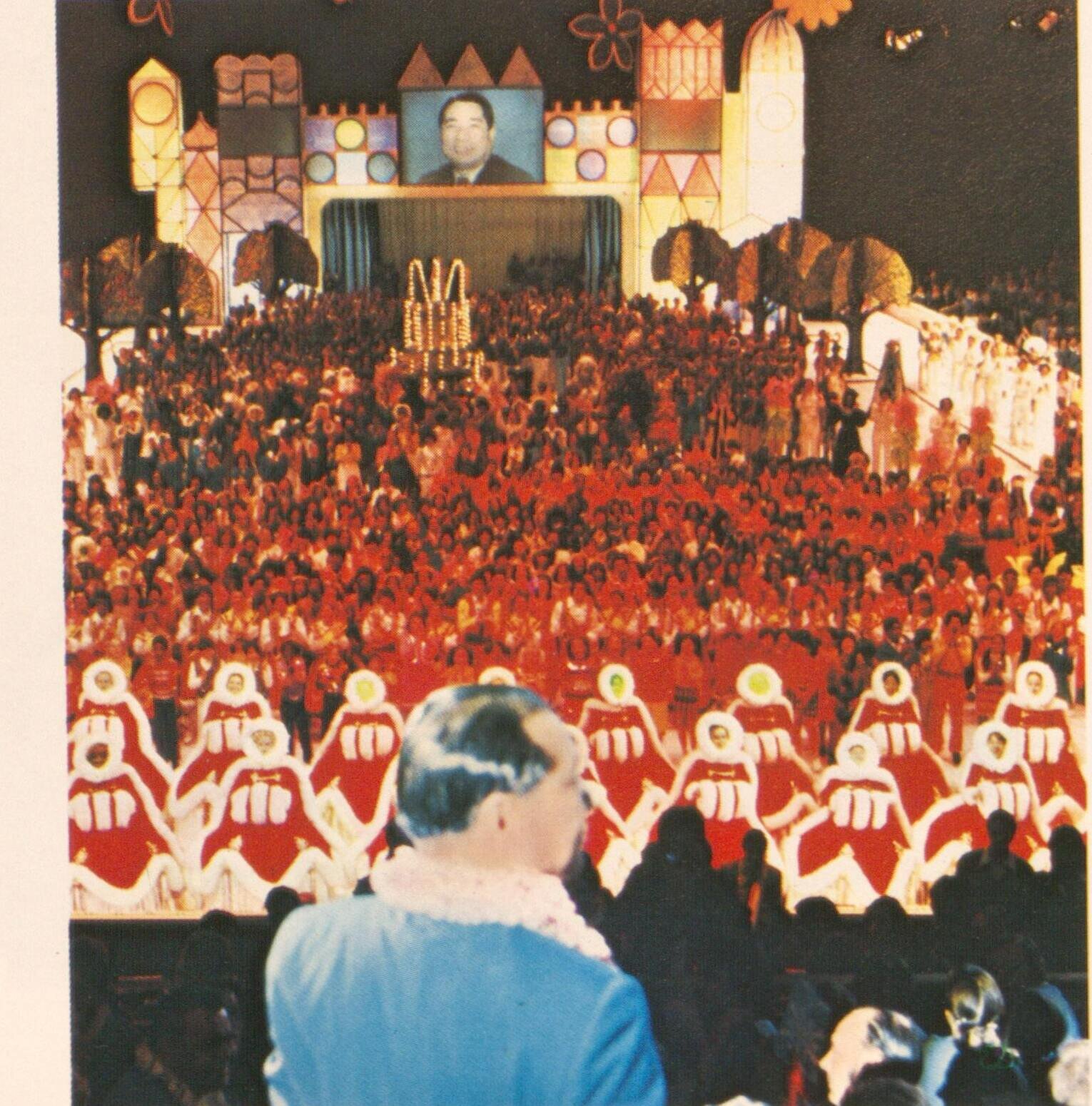
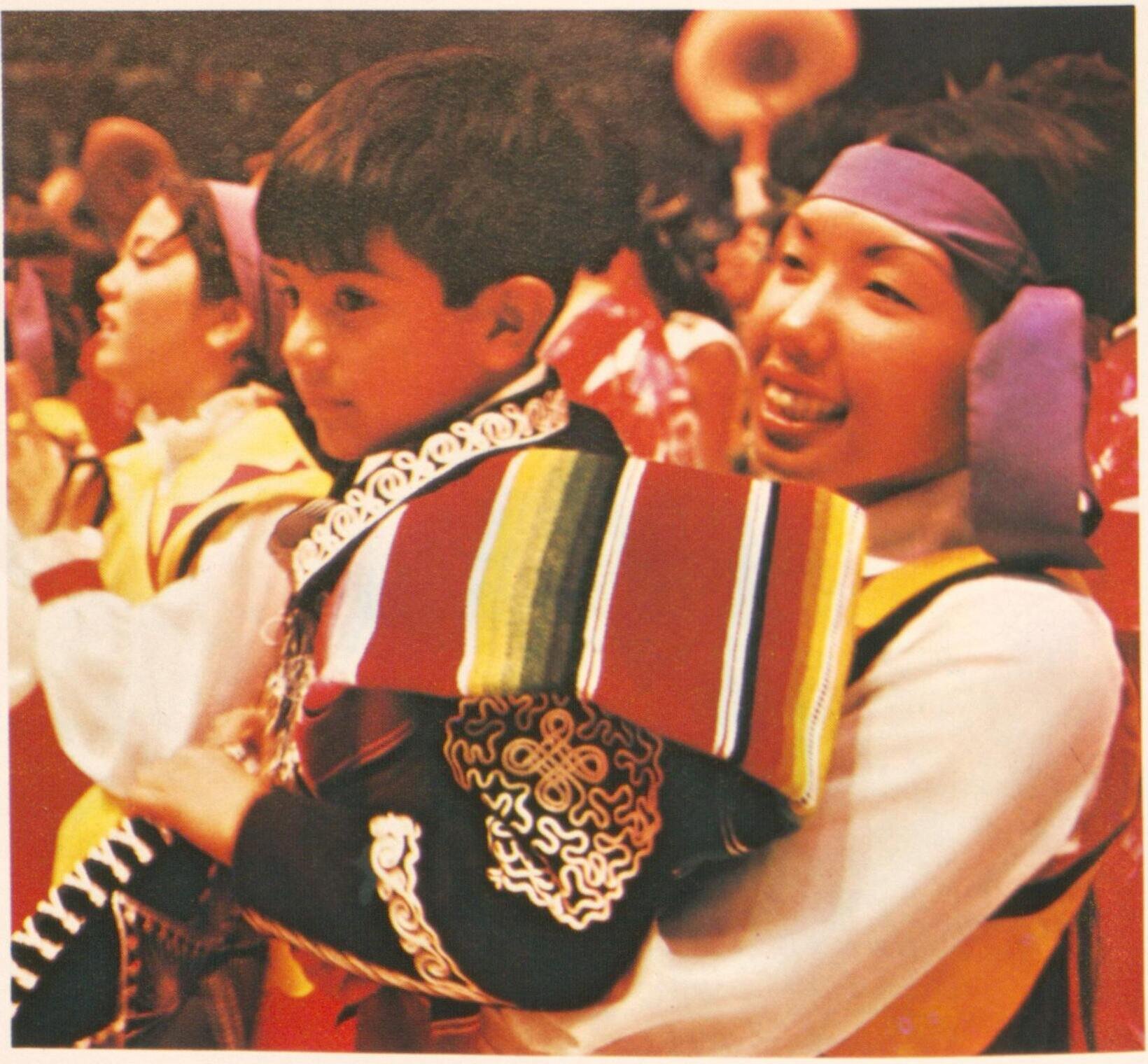
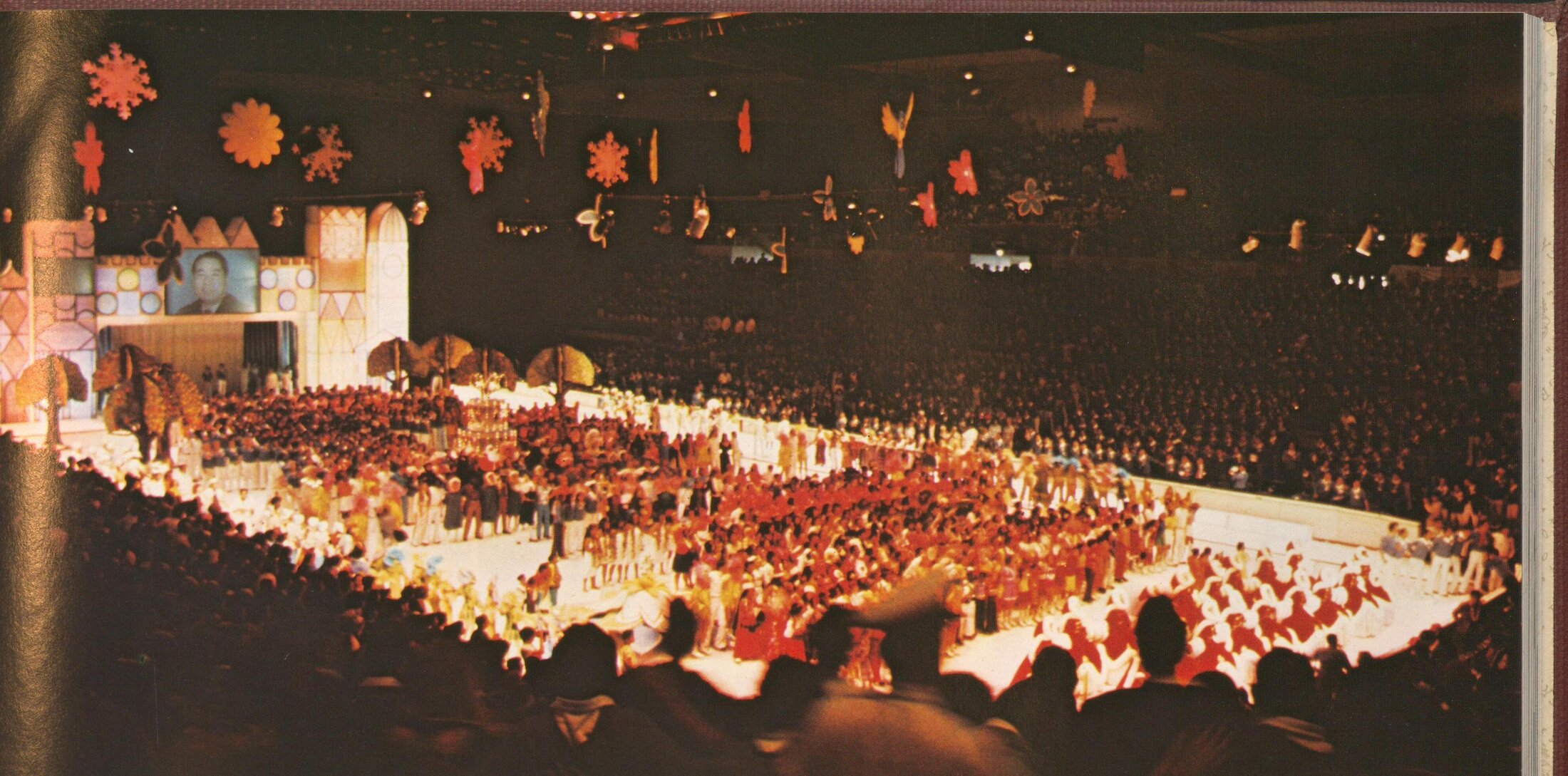
Overwhelming in scale, “The Spring Festival On Ice” was truly the voice of the people, as thousands expressed their conviction for a peaceful world and hope for mankind.
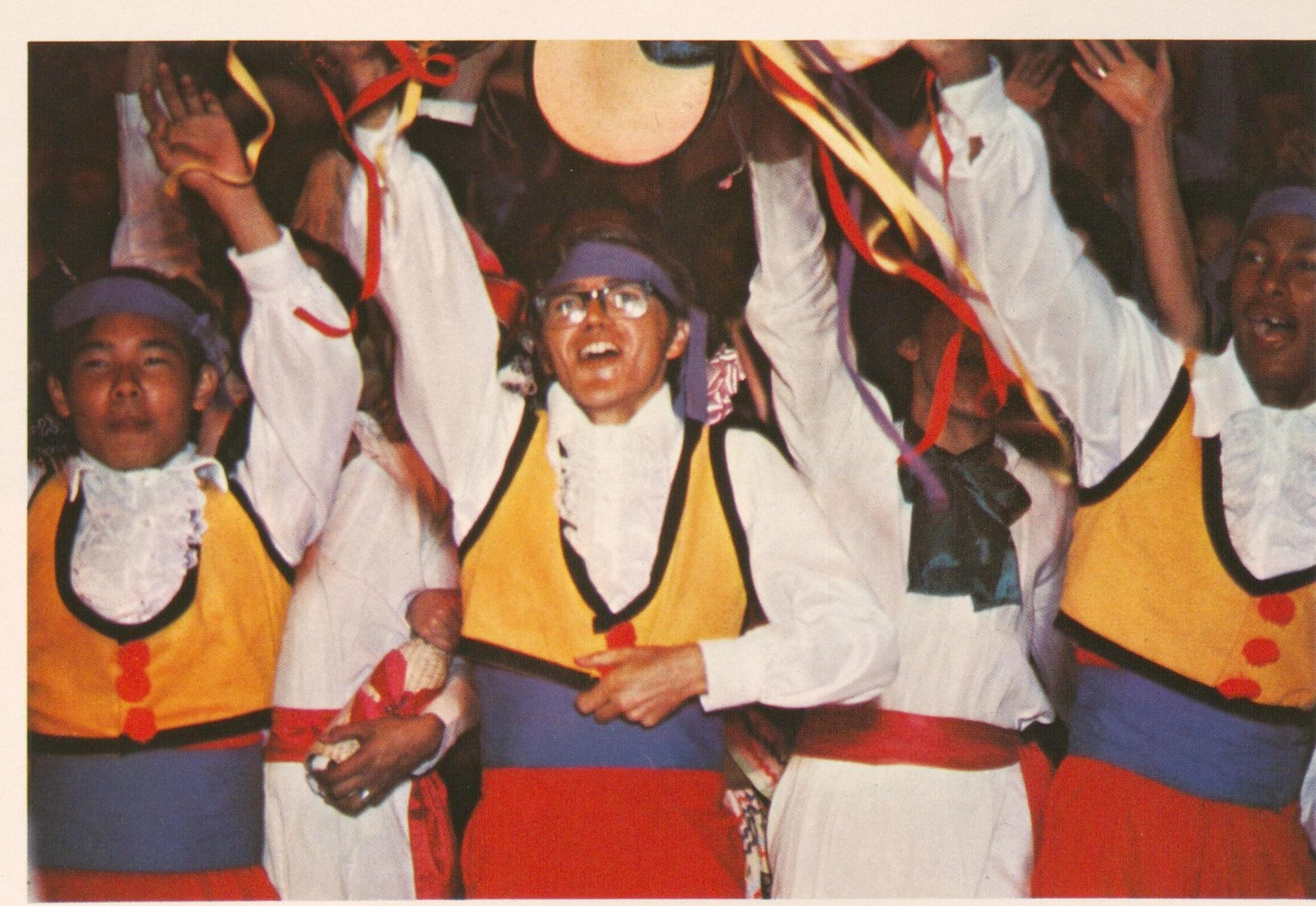
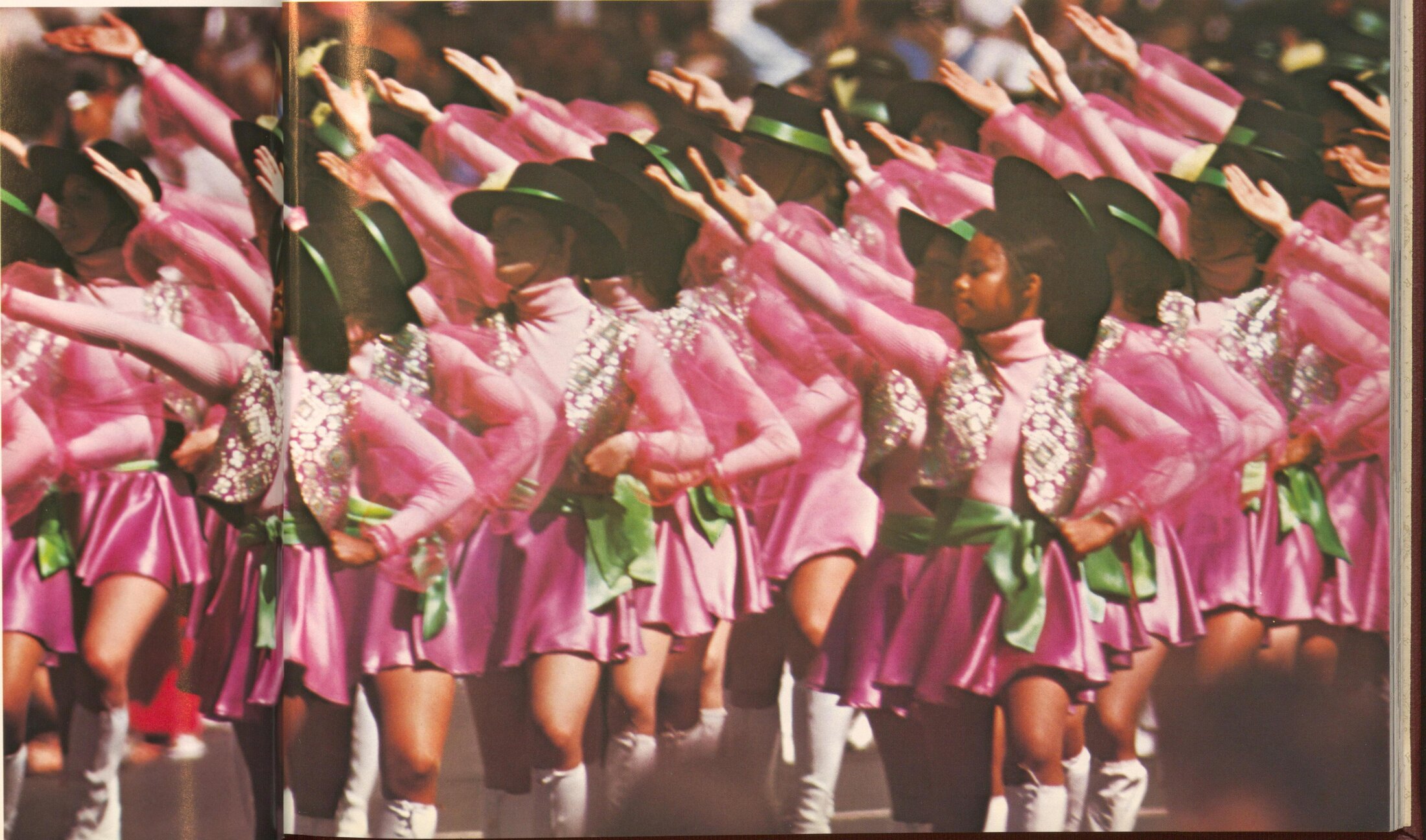
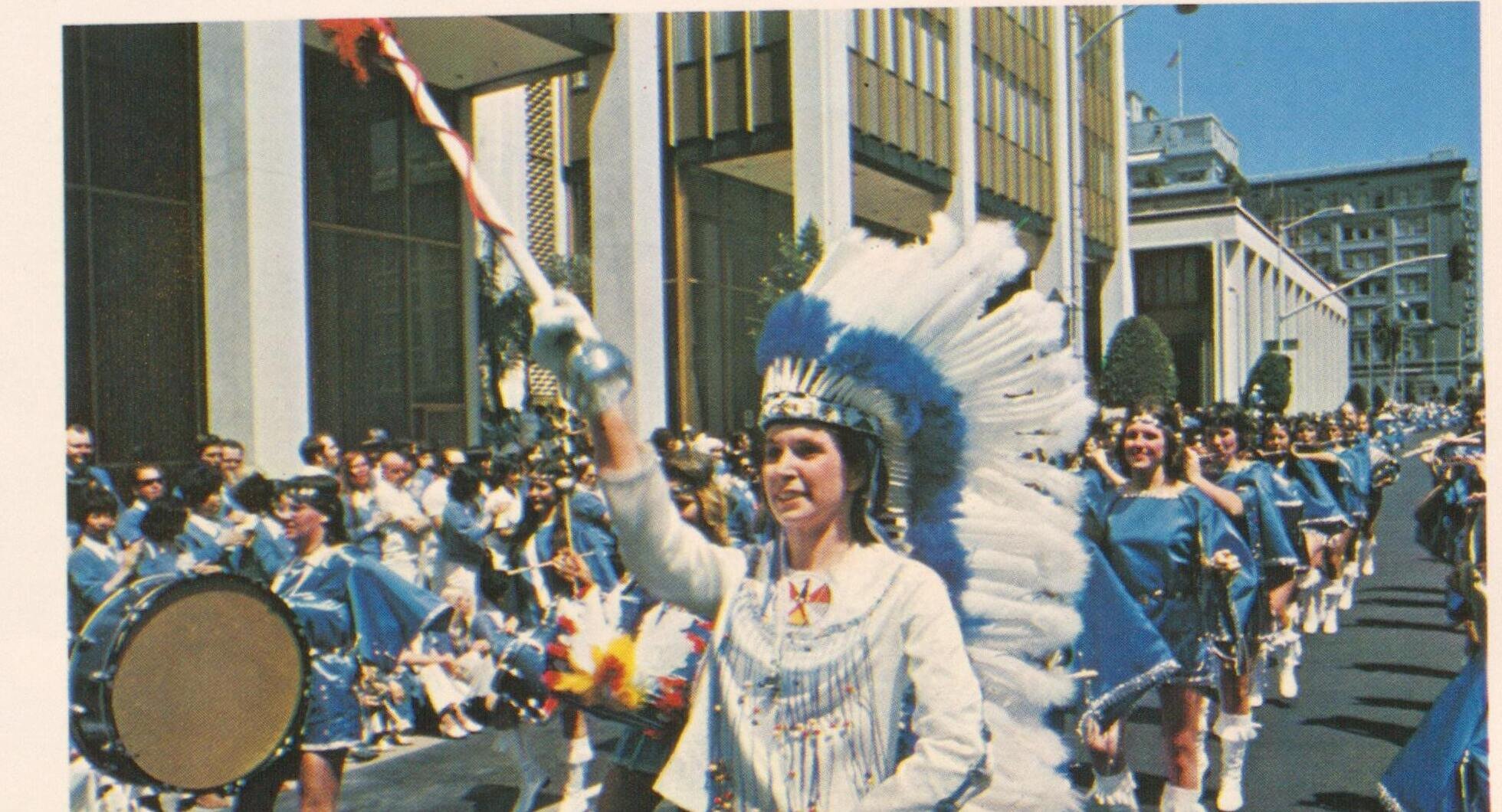
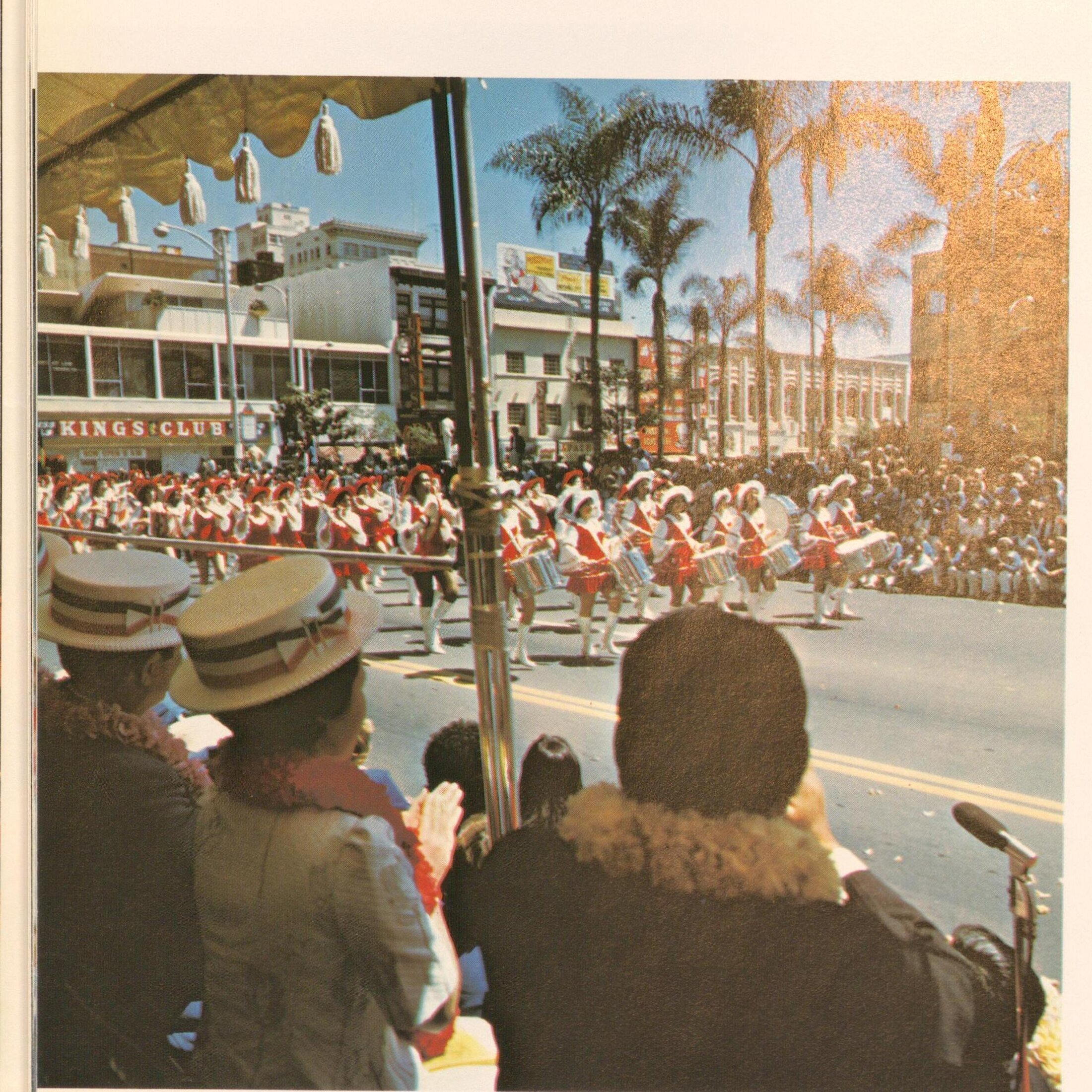
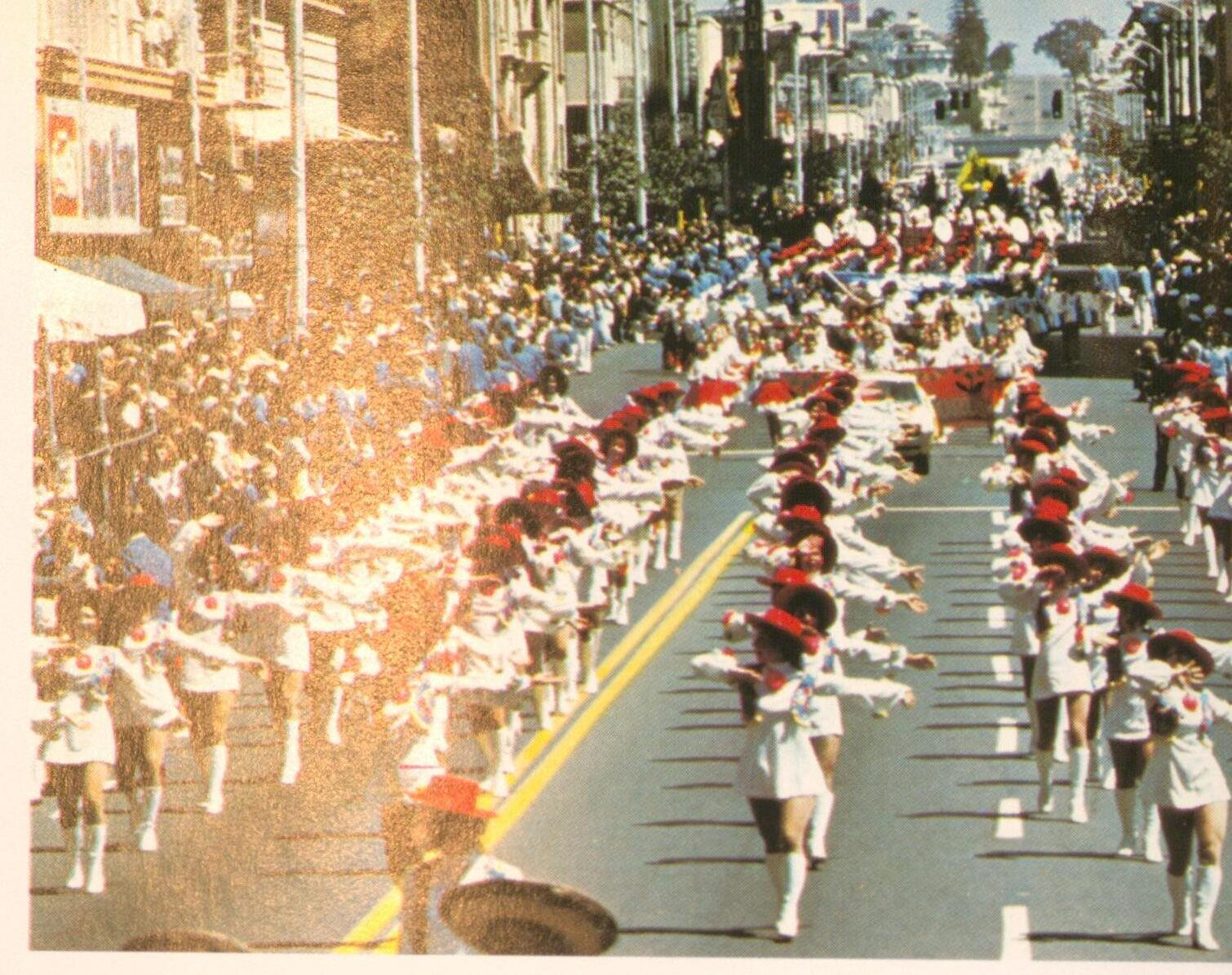
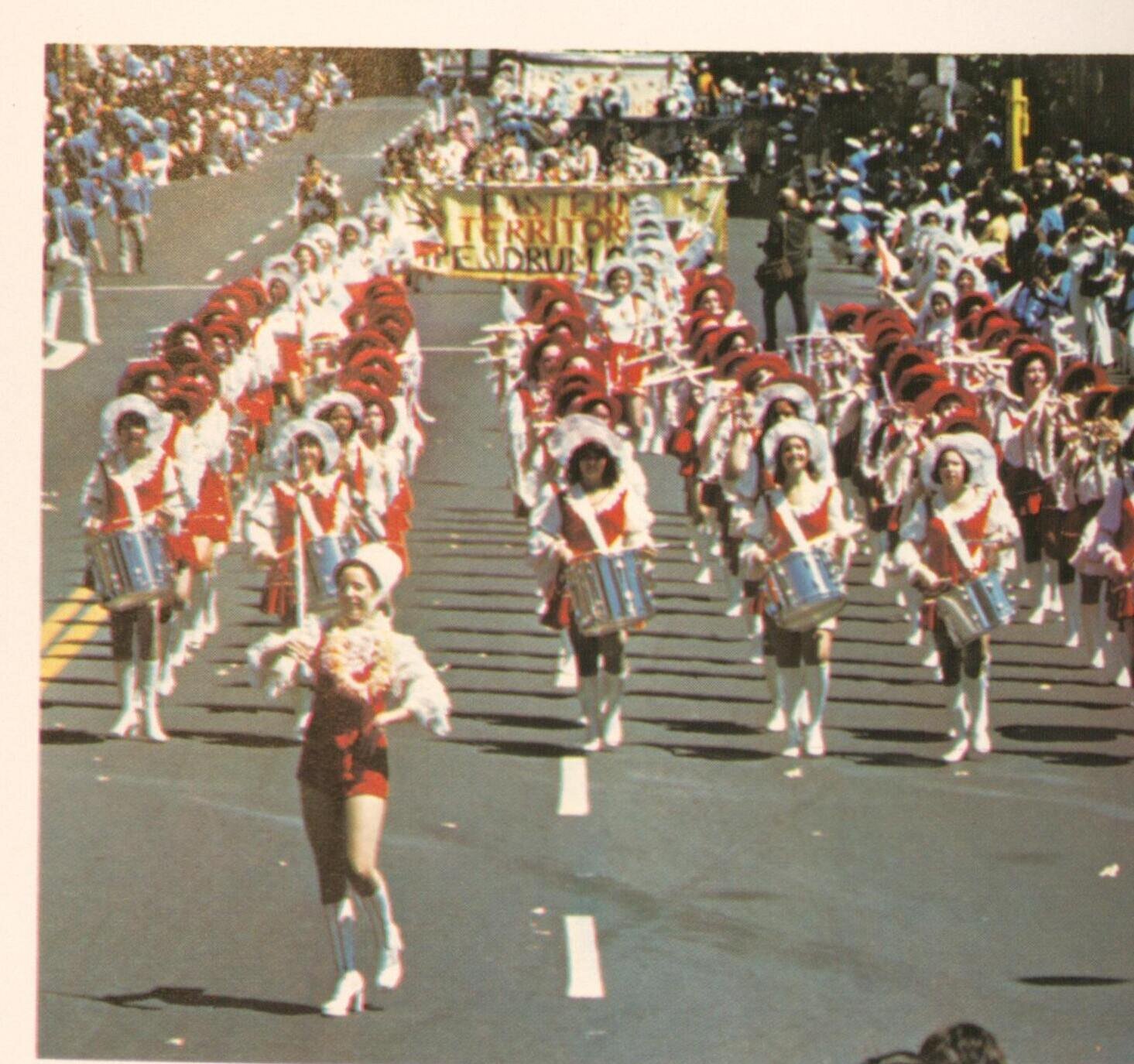
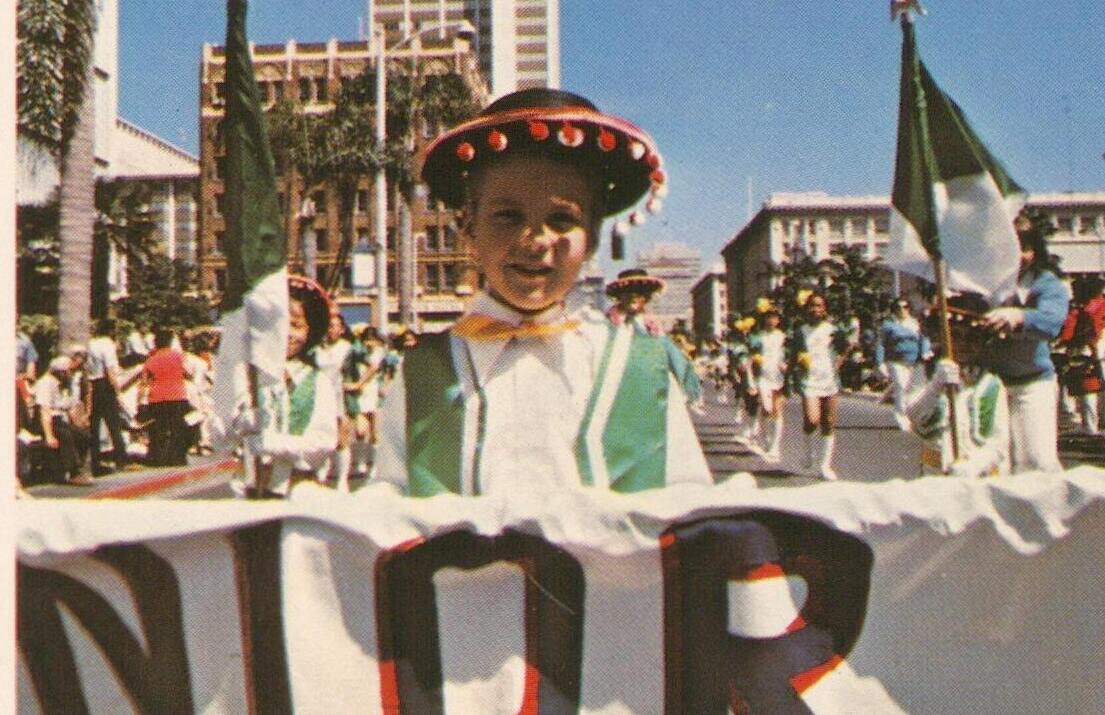
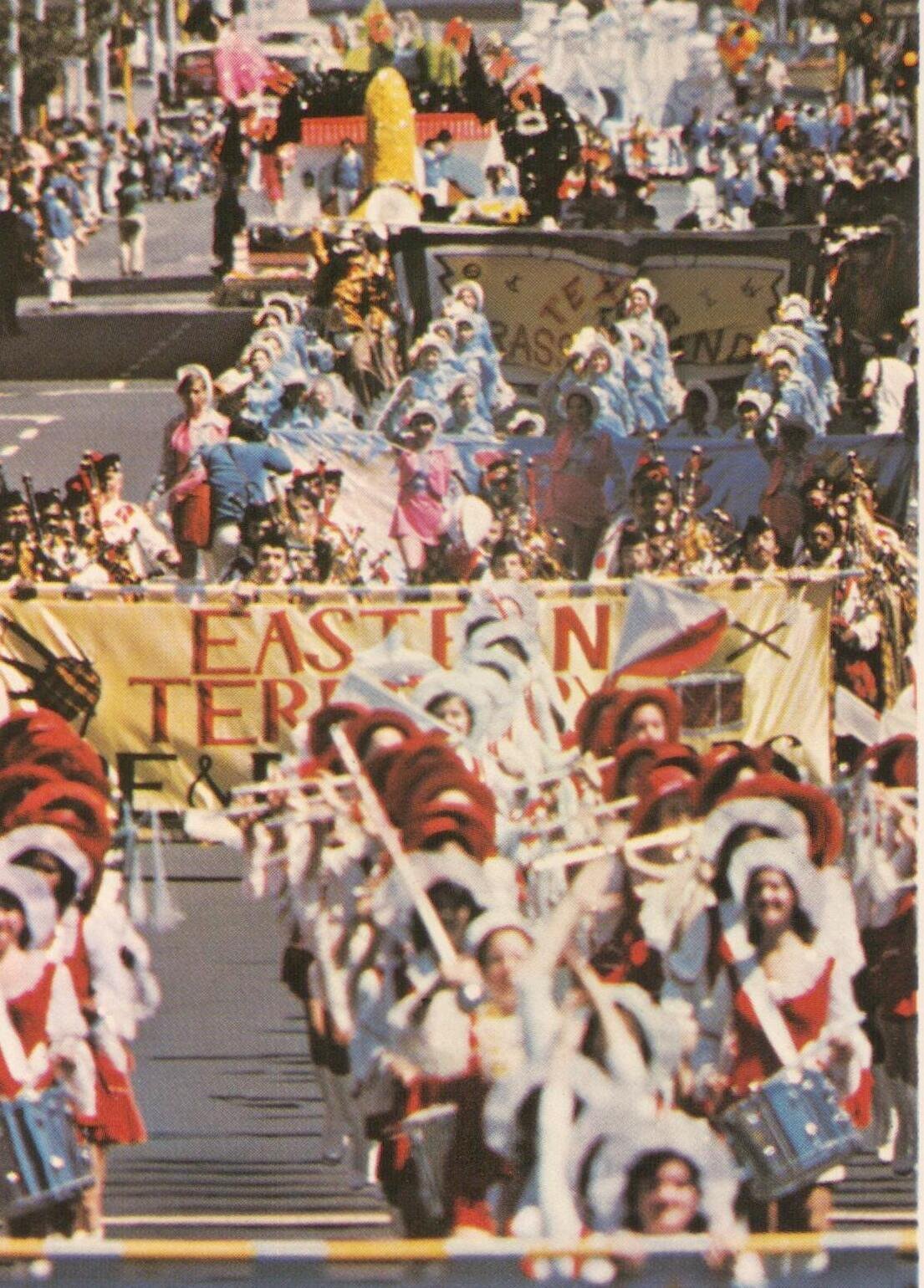
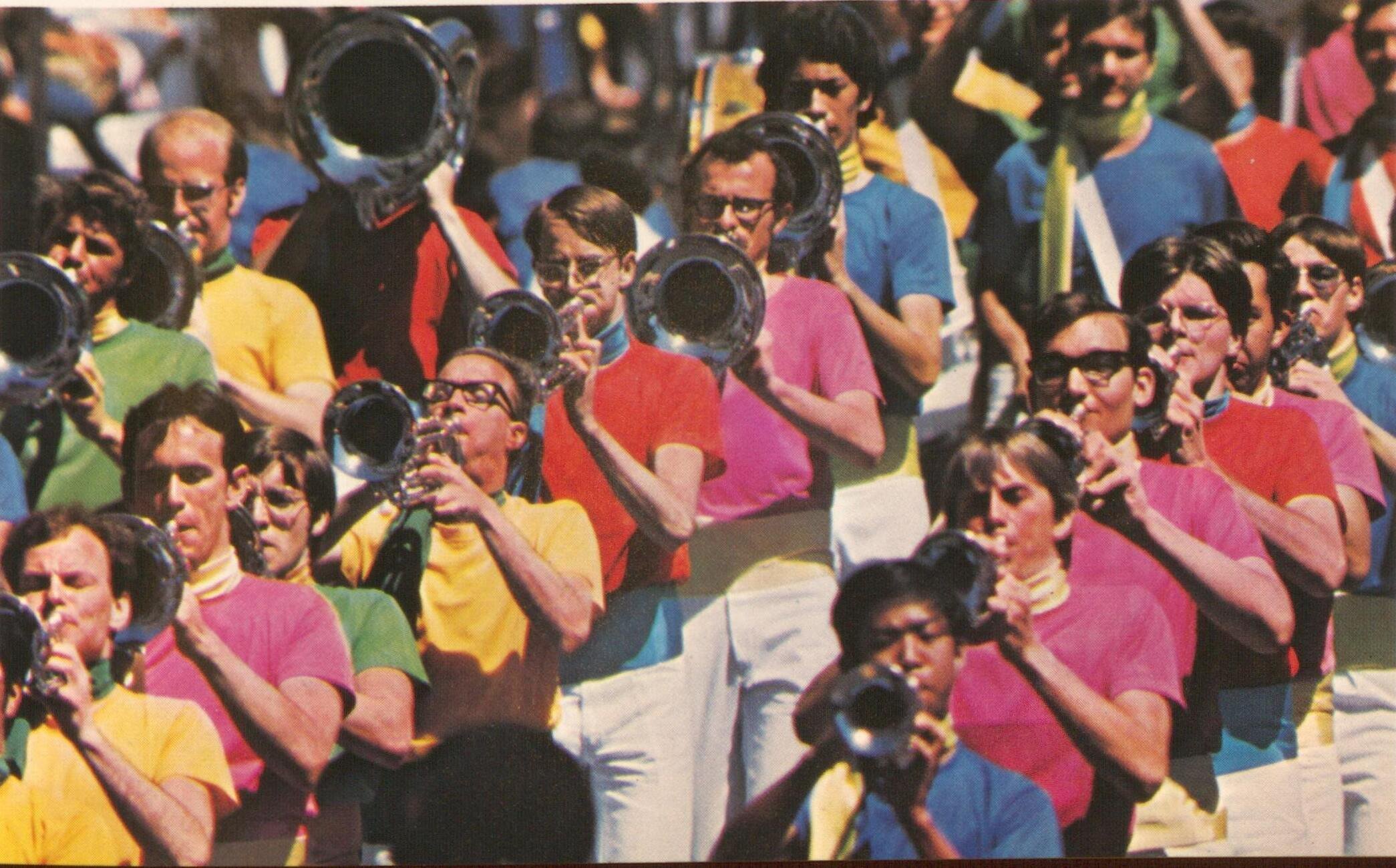
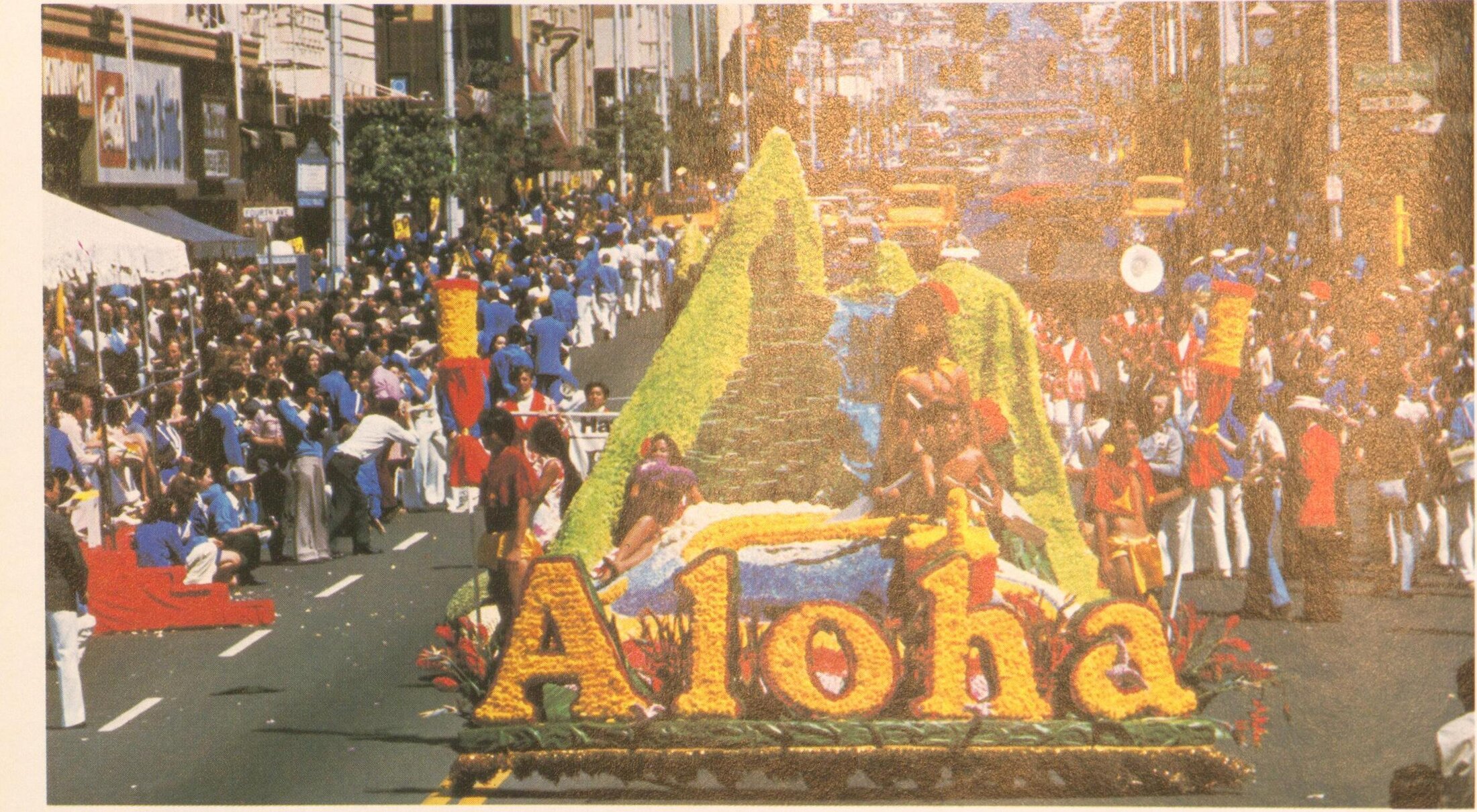
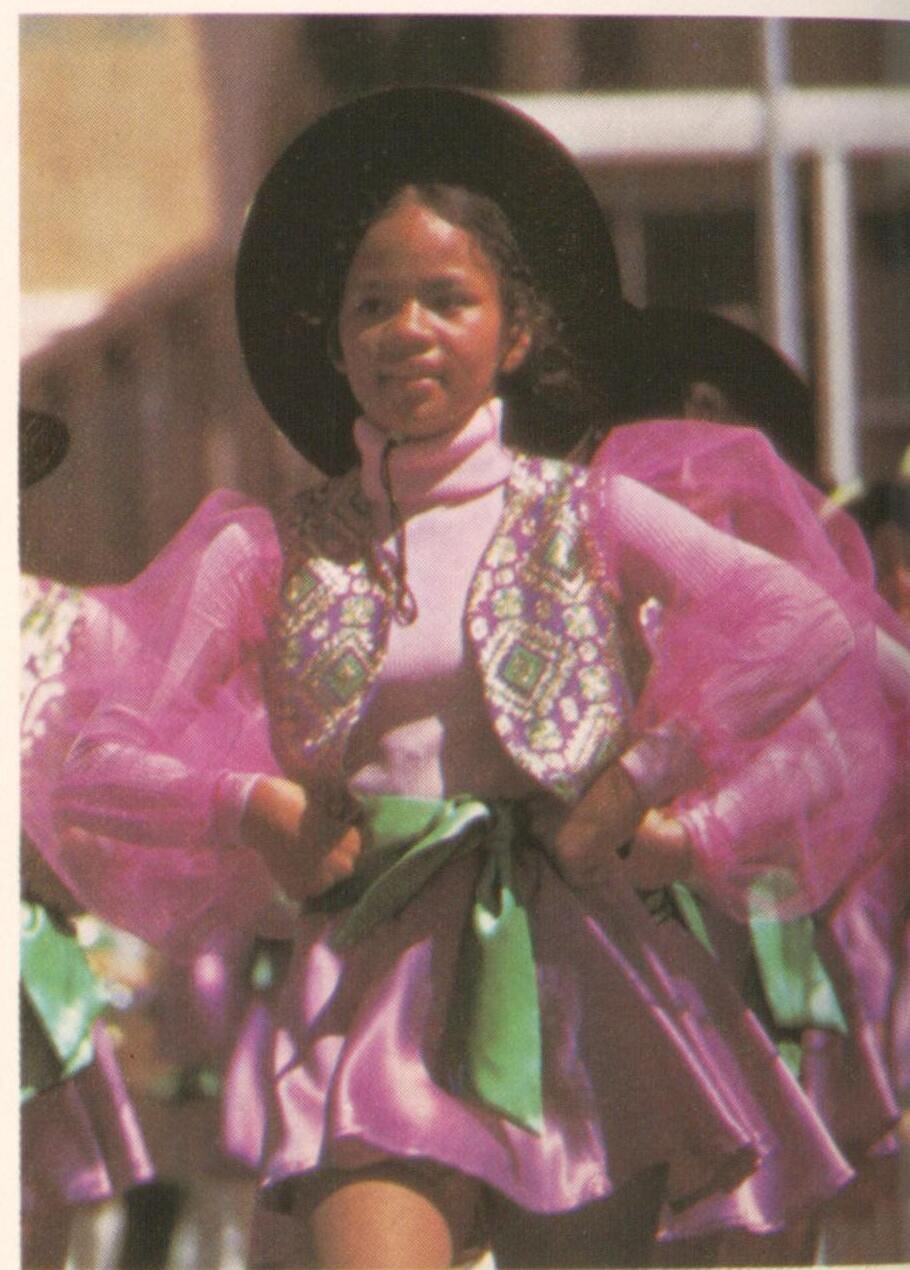
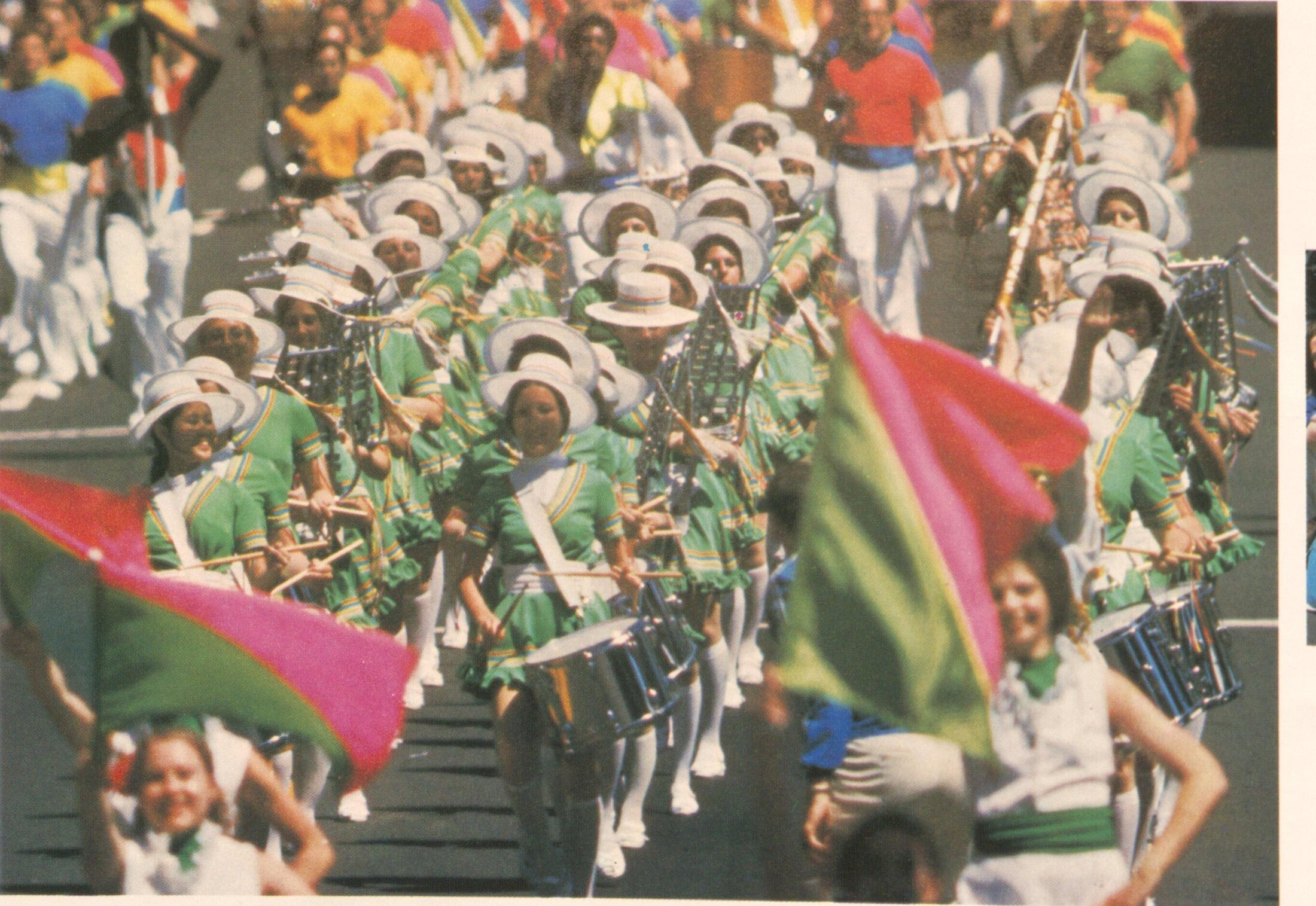
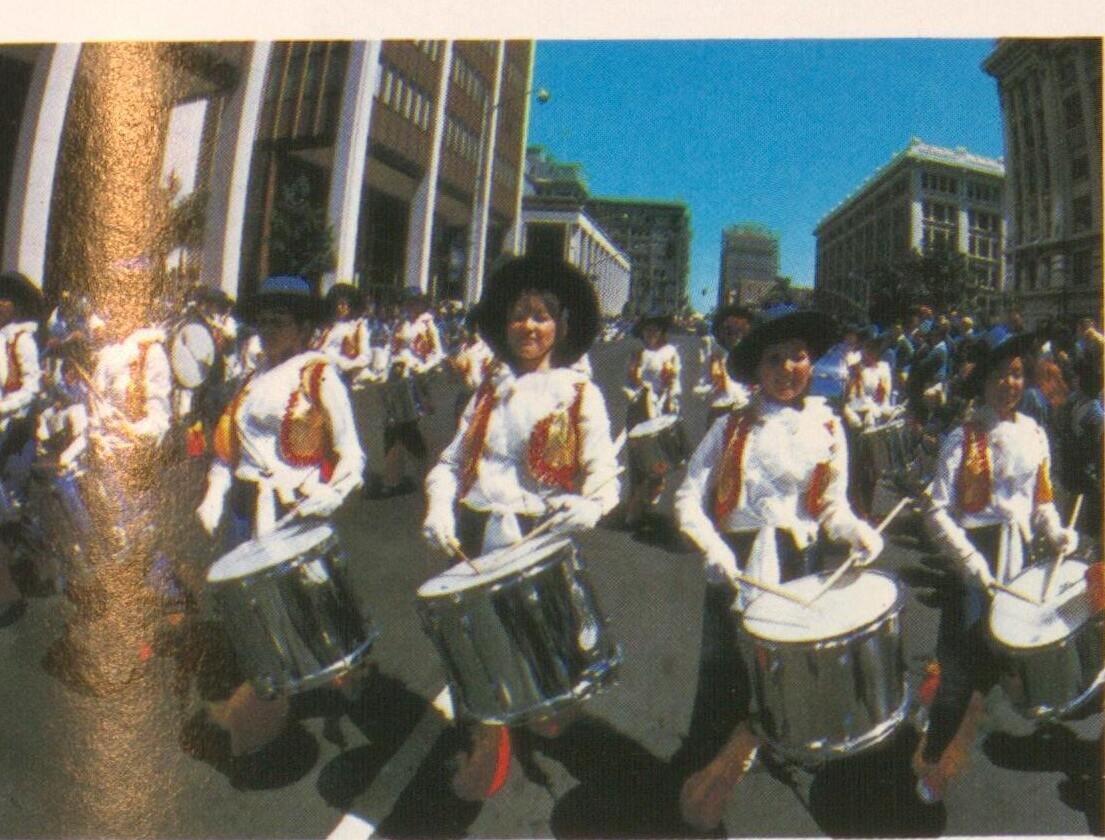
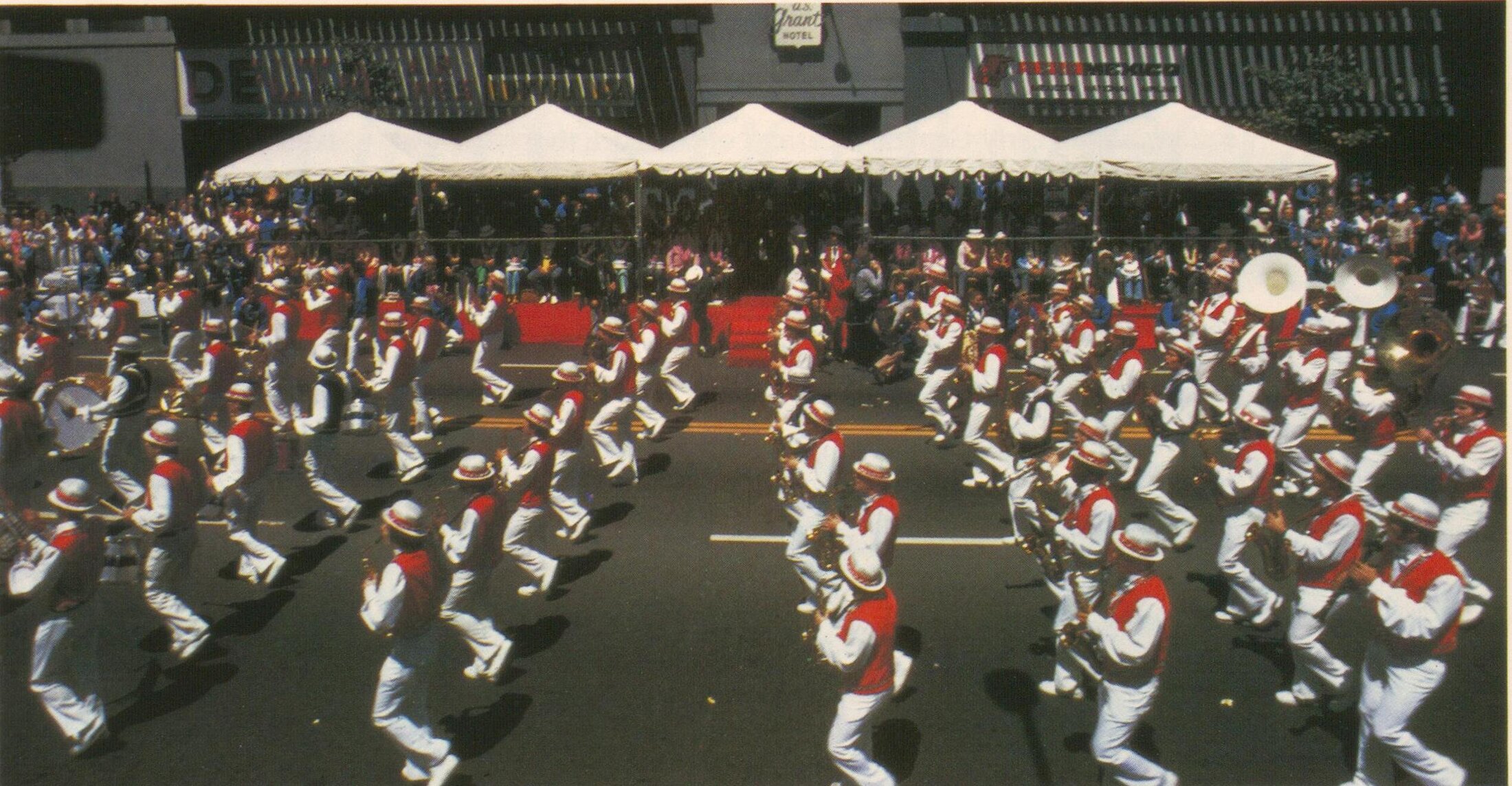
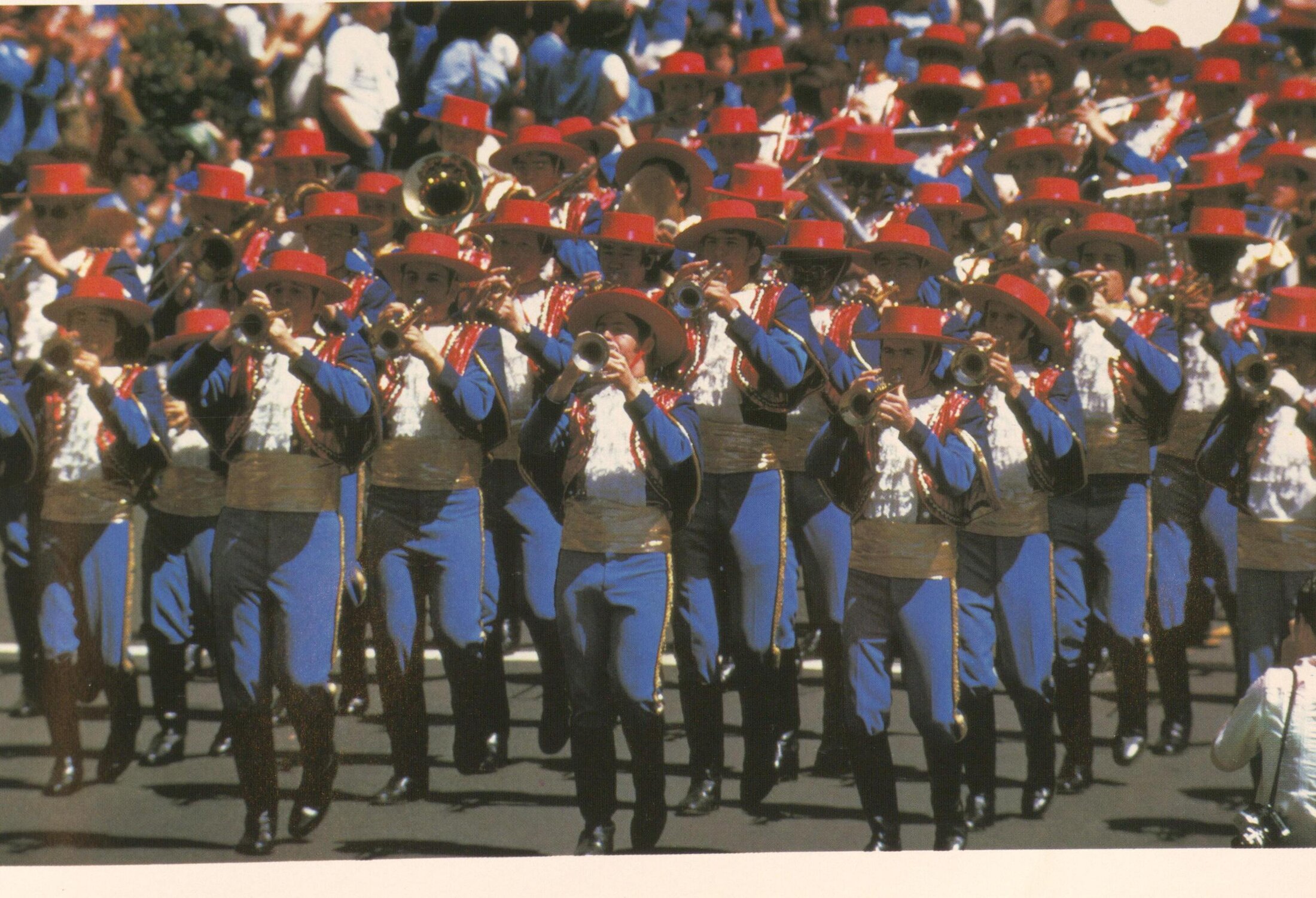
No NSA convention is complete without a parade. This yearly tradition is the product of months of tireless effort and gives many people the chance to participate in a positive statement of peace. Brass bands, fife and drum corps, bagpipes, floats and countless other units file along in festive processions thrilling spectators with their sparkle and energy.
Speaking to one of these youthful groups, President Daisaku Ikeda said that their music was helping sow the seeds of a great new culture: “Through your performances, I hope you will move people to jubilation and inspire them to find true happiness.” With this motto in their hearts, NSA members presented this beautiful Spring Fiesta Parade to the city of San Diego.
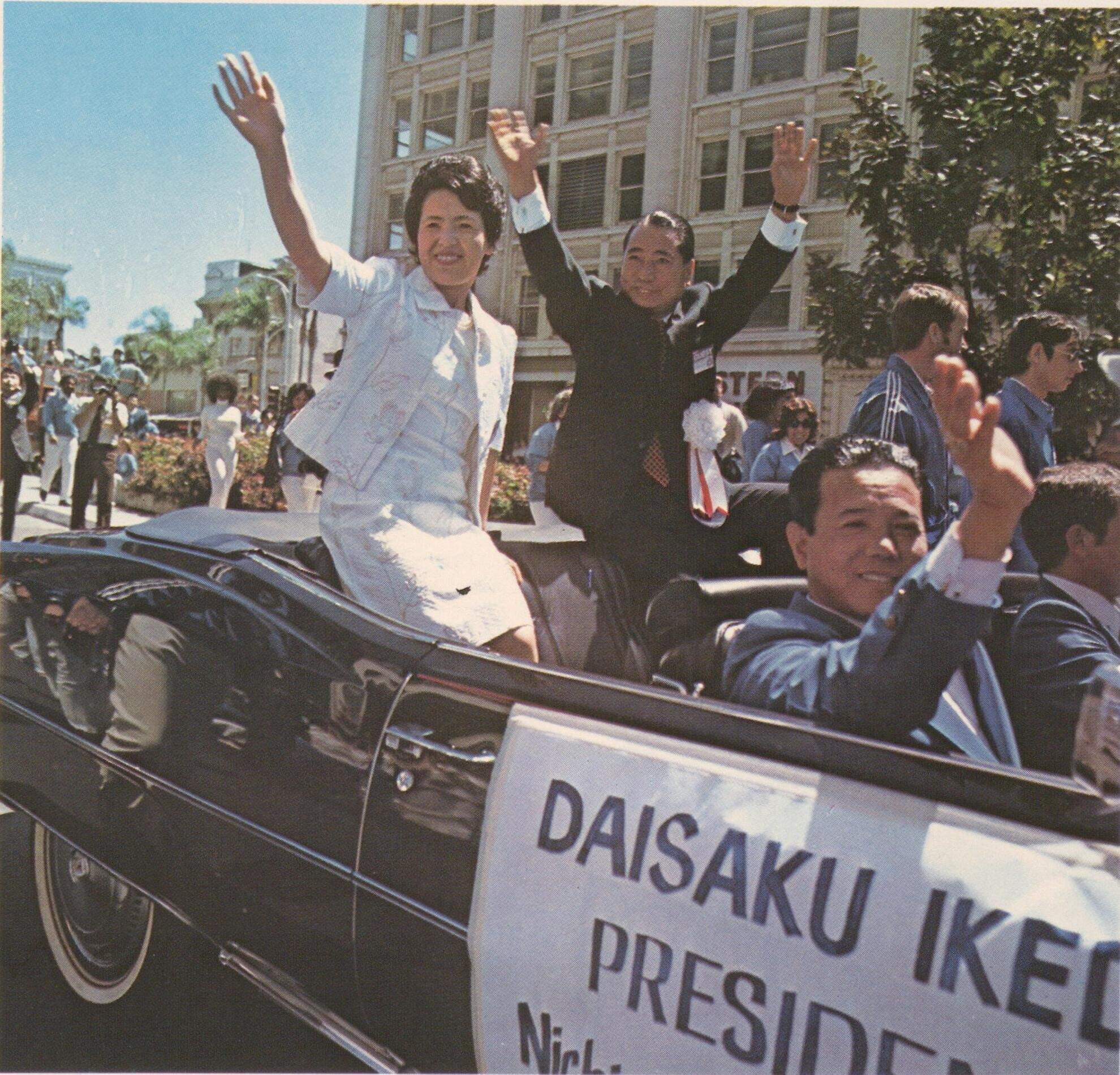
Beneath a brilliant April sky, fifty thousand people crowded along San Diego’s Broadway Avenue. Three thousand participants, comprising thirty-six marching units, waited anxiously for the step-off. President Ikeda sent cheers rippling through the crowds as he drove along the palm-lined parade route.
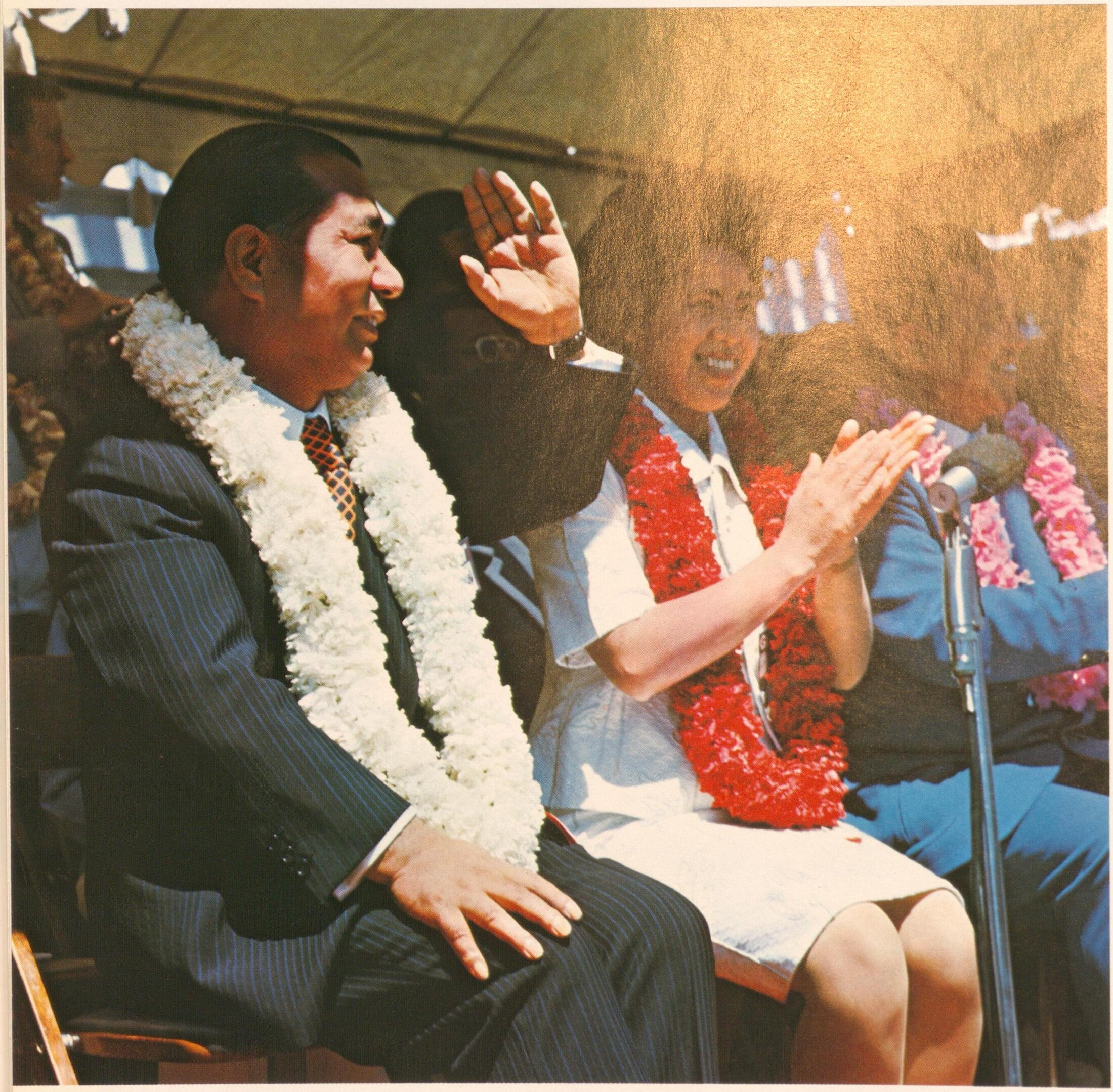
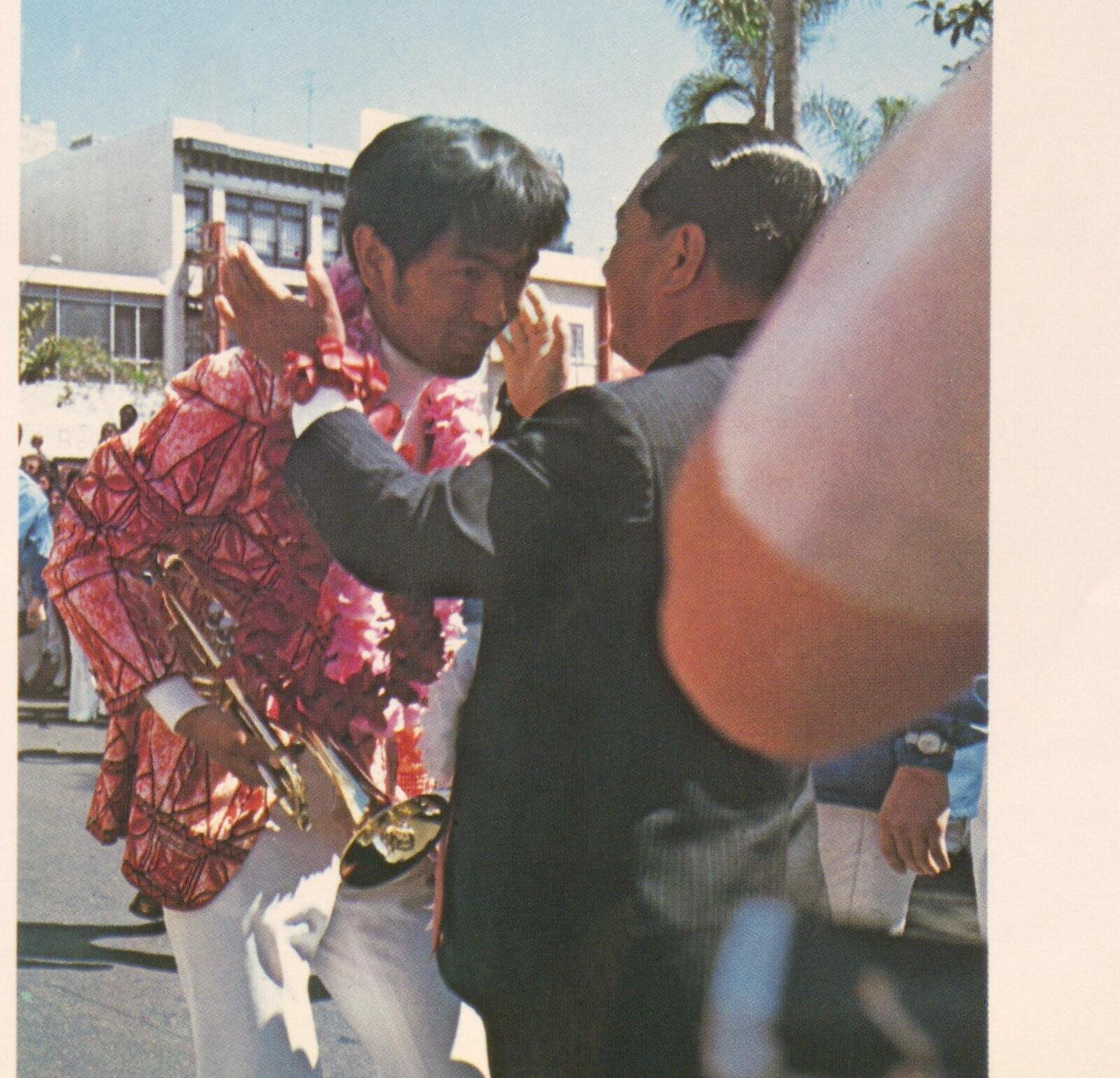
From an open-top convertible he waved to on-lookers. At the reviewing stand President Ikeda gave special congratulations to the groups parading by. Parade Grand Marshal, Mayor Bolaños Cacho of Tijuana, Mexico, presented the President with an award of merit. Praised for his humanistic service to mankind, he was made an honorary citizen, and Mayor Pete Wilson bestowed upon him the key to the city.
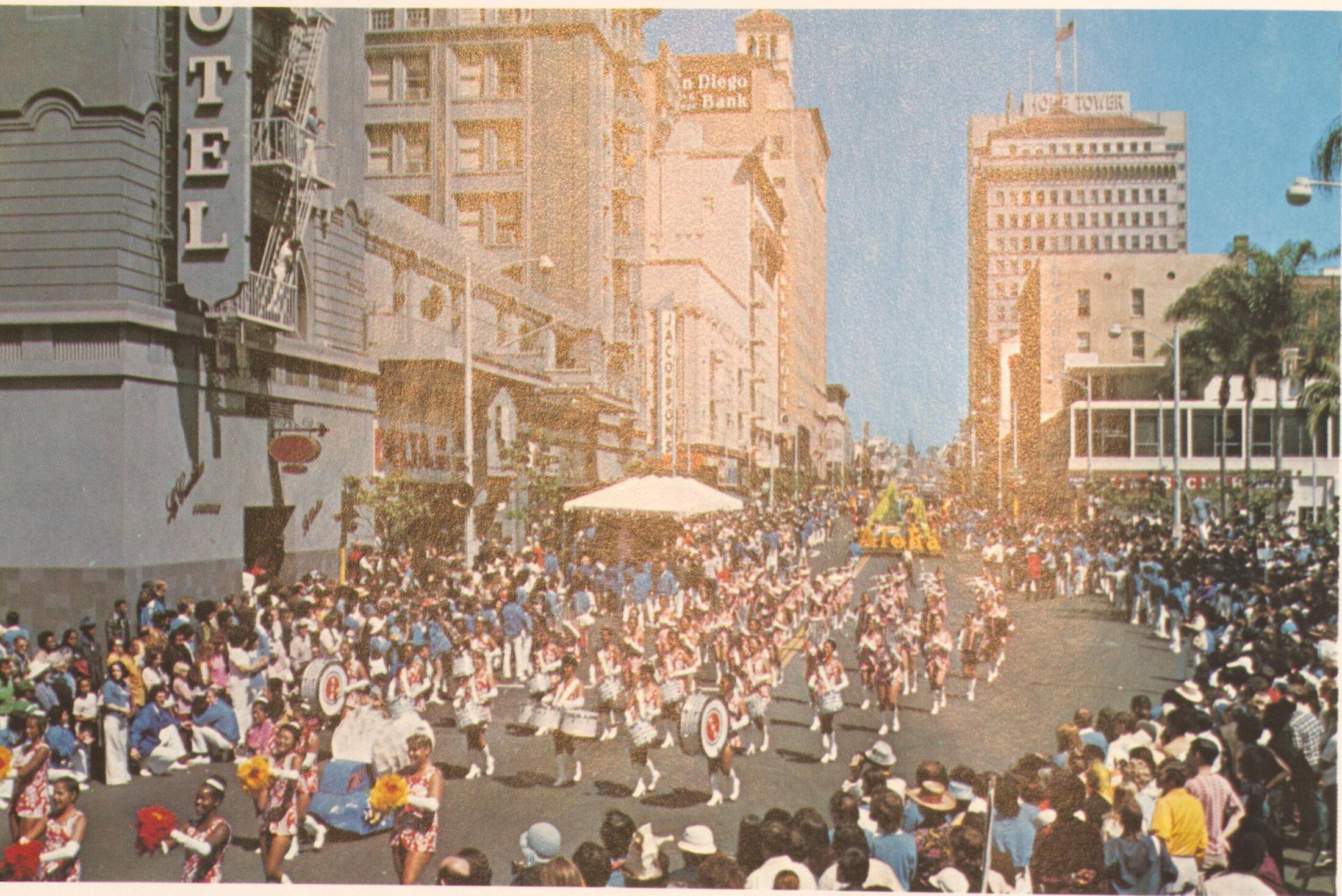
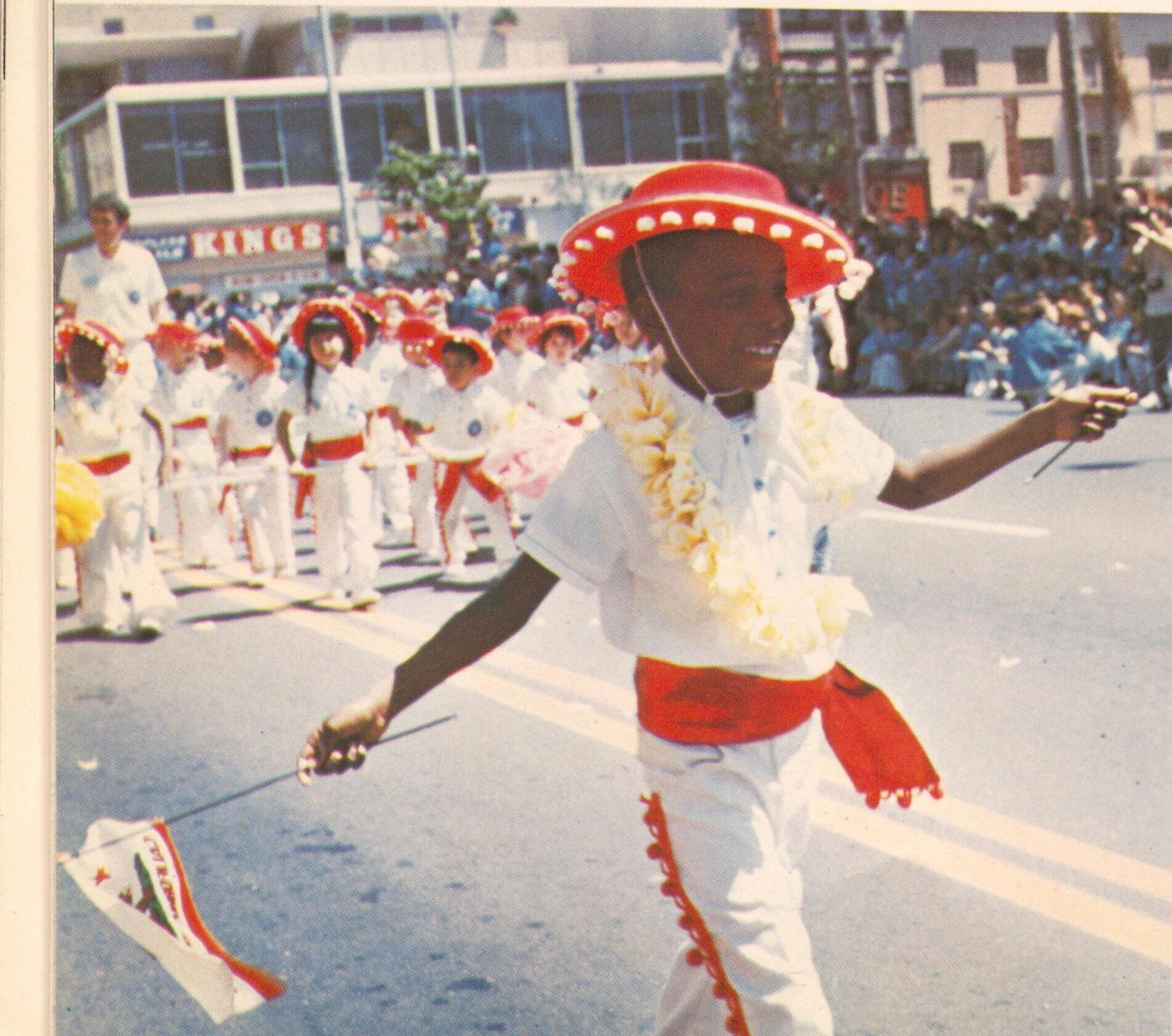
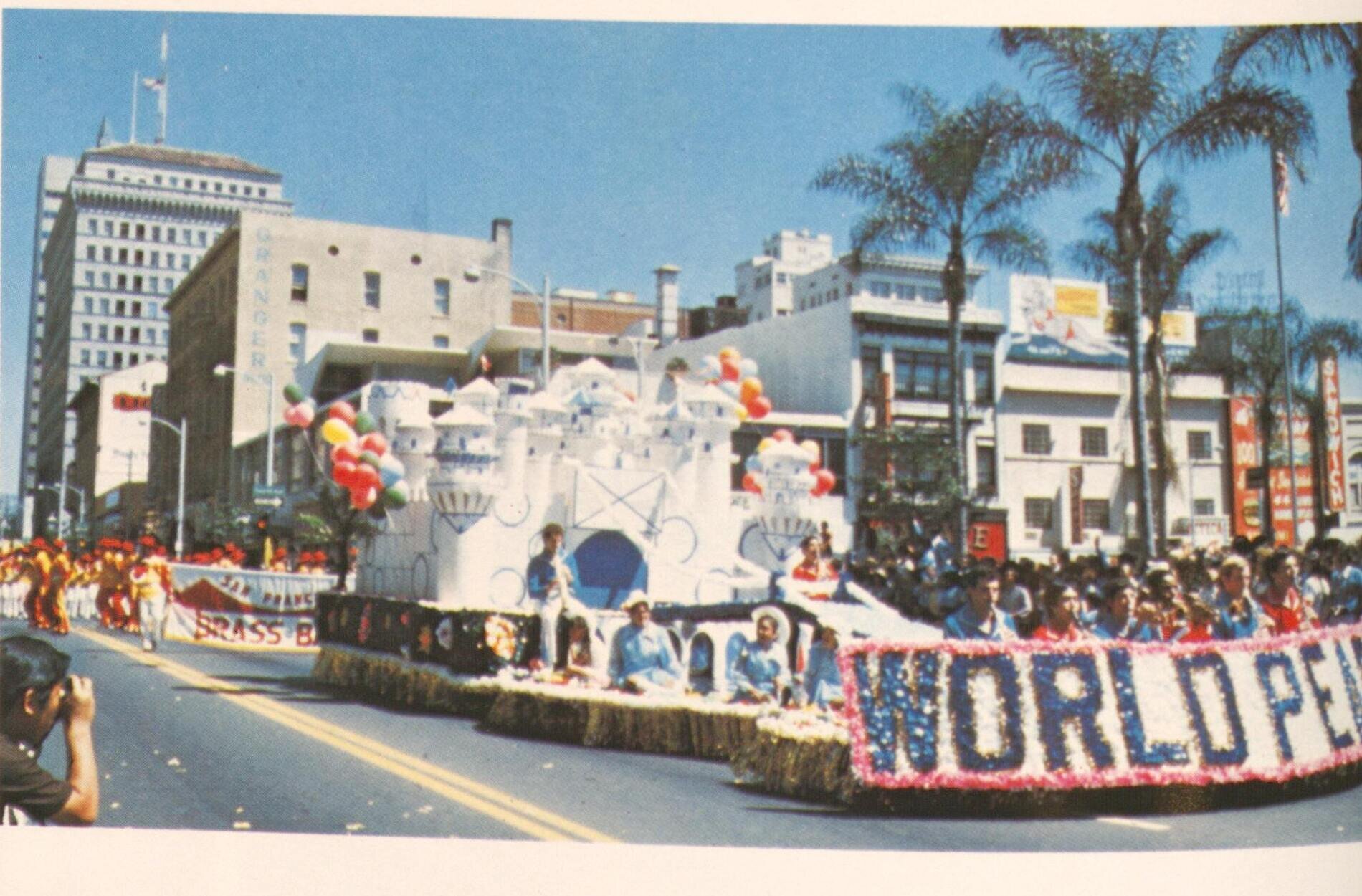
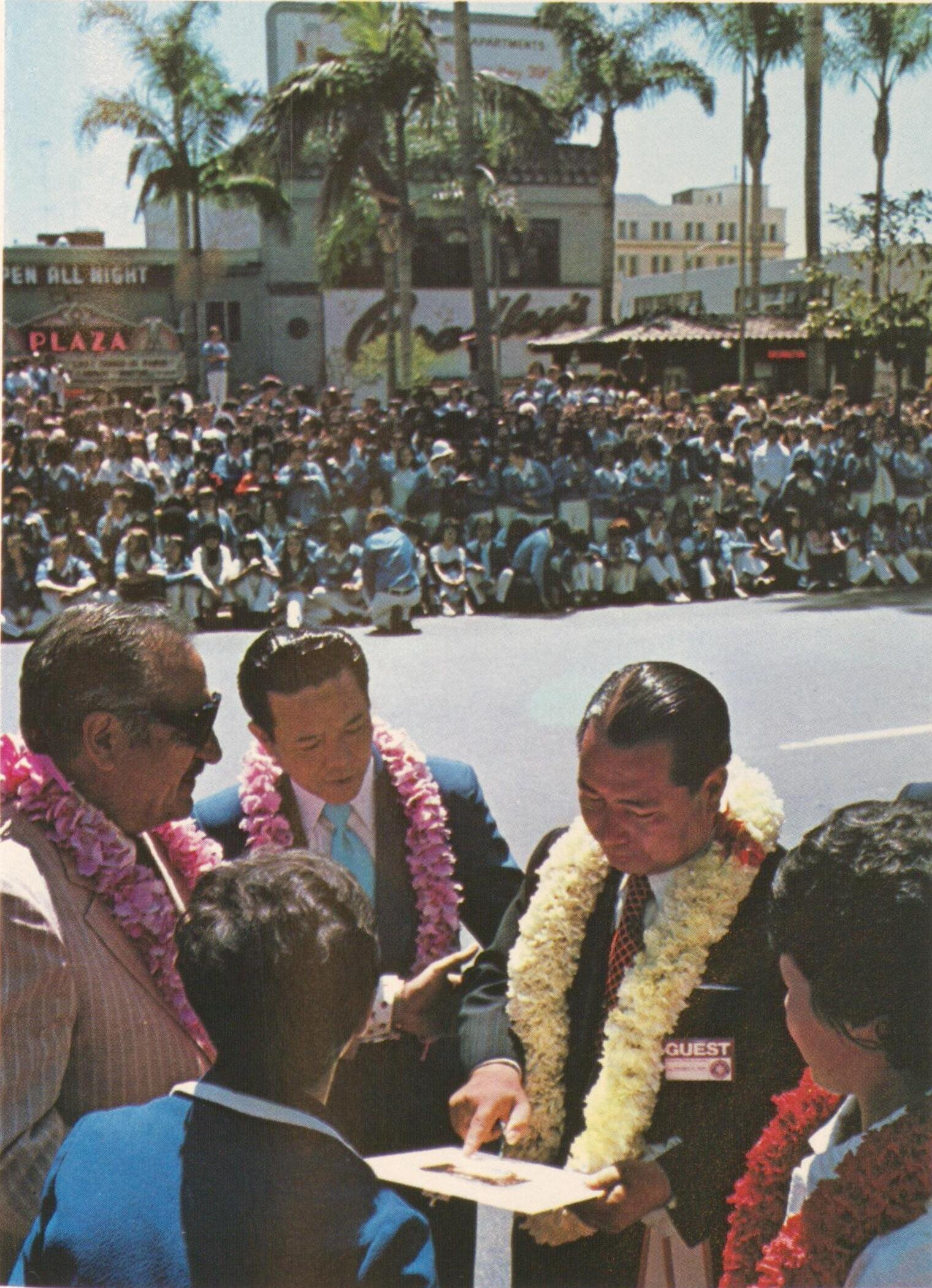
President Ikeda accepted a special award of merit from the parade Grand Marshal, Mayor Bolaños Cacho of Tijuana, Mexico.
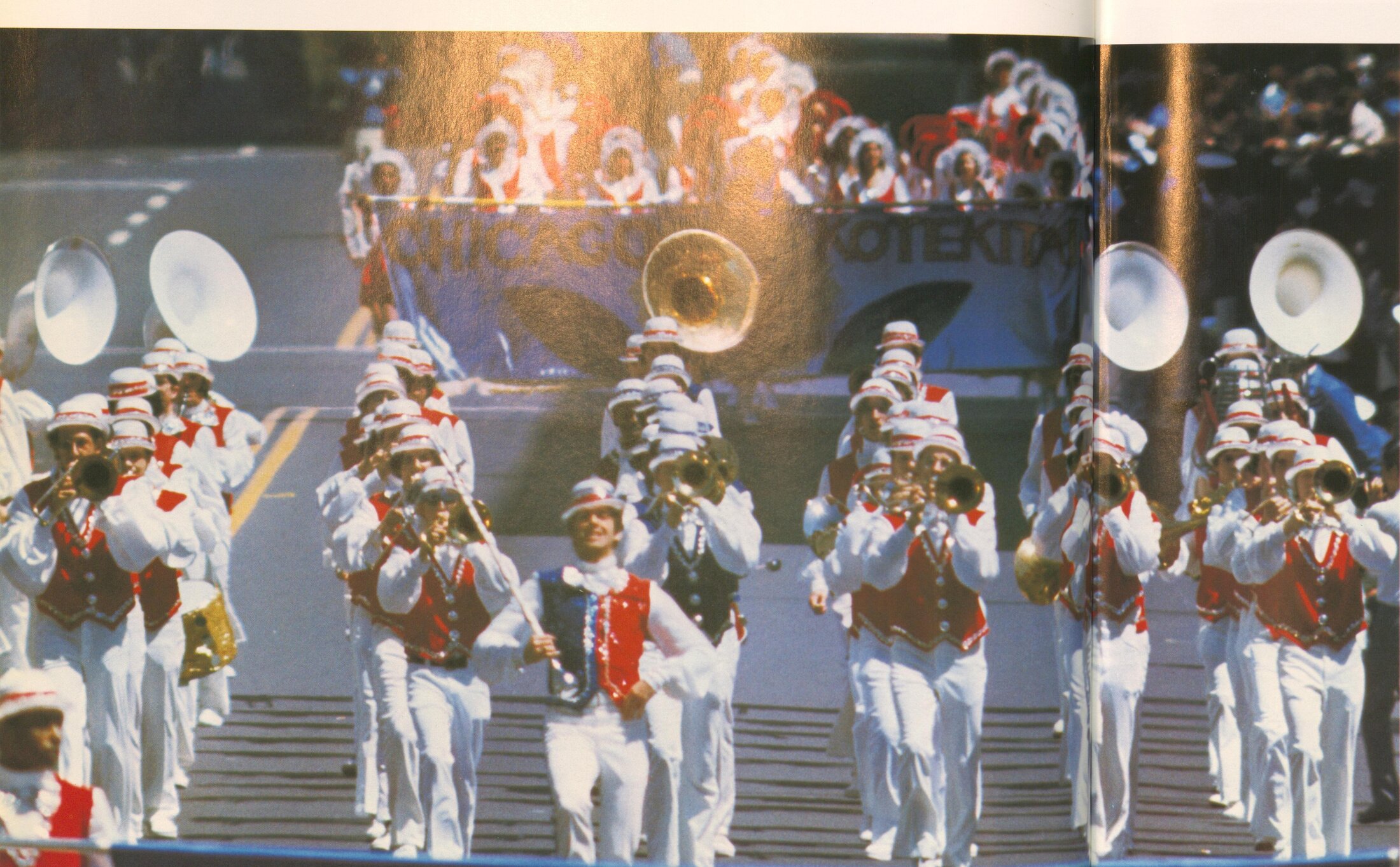
With all the flair of the Roaring Twenties, the Chicago Jazz Band strutted their way to first place in the Brass Band Division. They belted out a snazzy rendition of “St. Louis Blues,” sporting old-time bowler hats with sequin-studded red, white and blue uniforms.
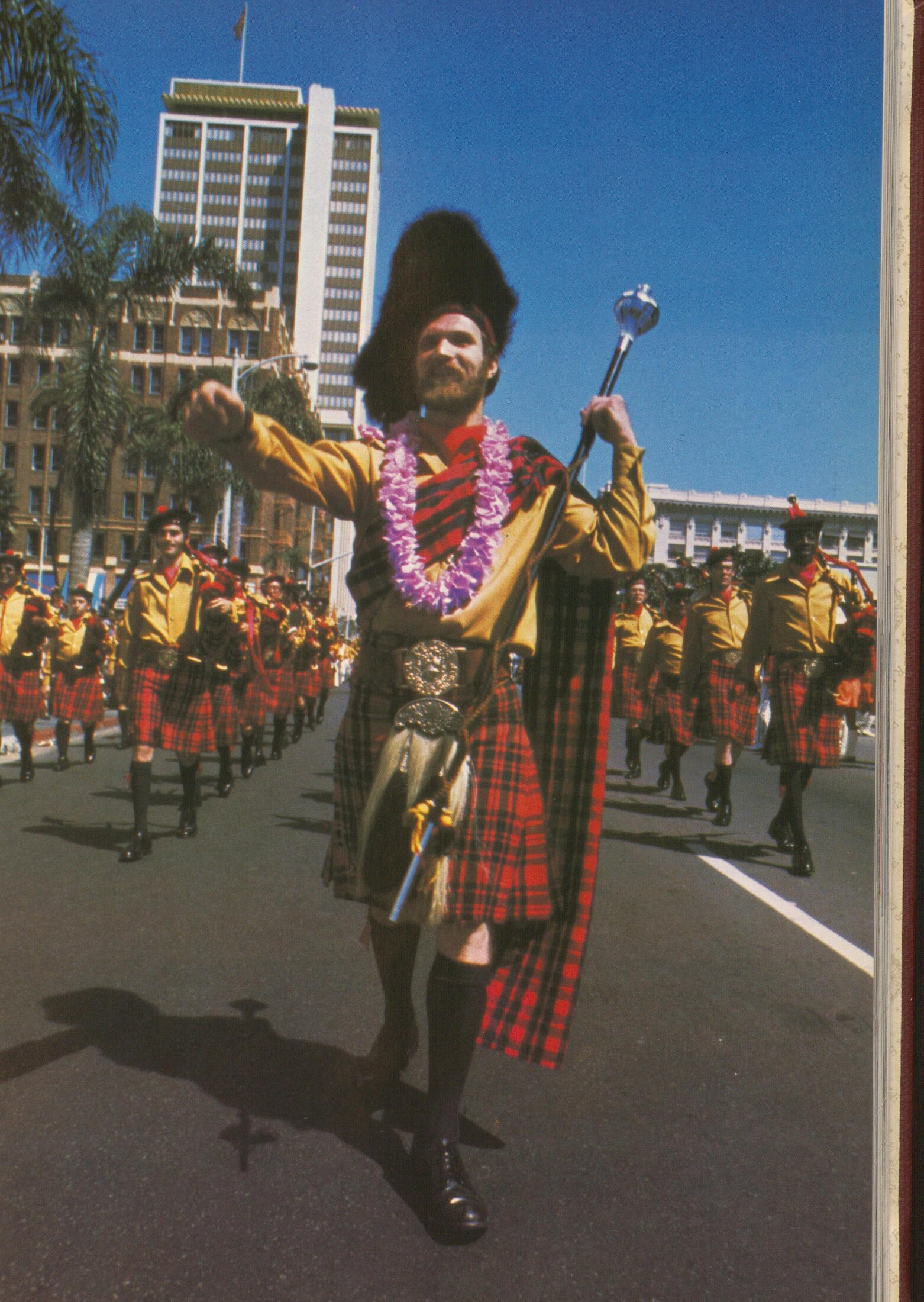
The San Francisco Lions Bagpipe Corps captured second place in their division. They marched in stately procession, piping a medley of Scottish favorites.
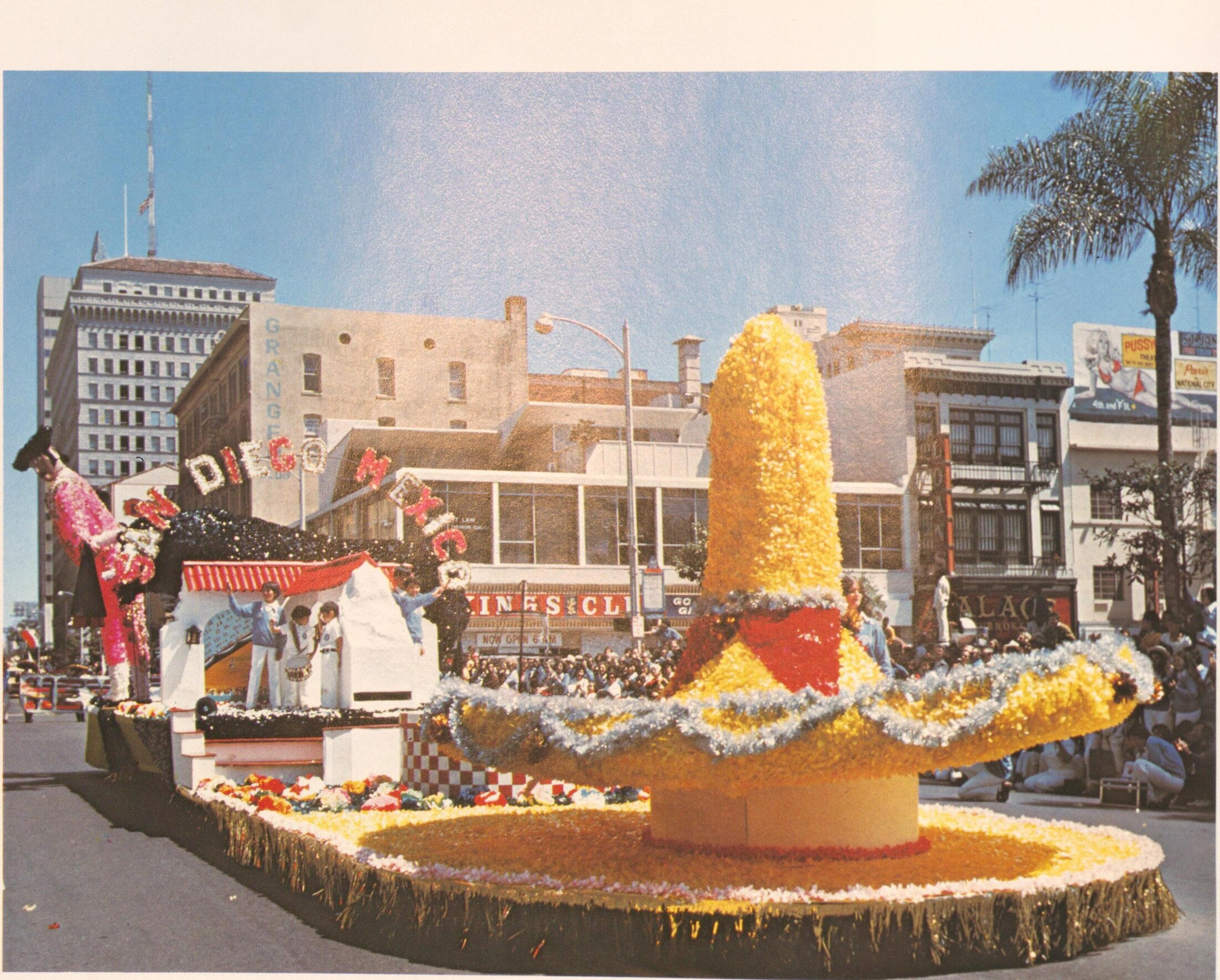
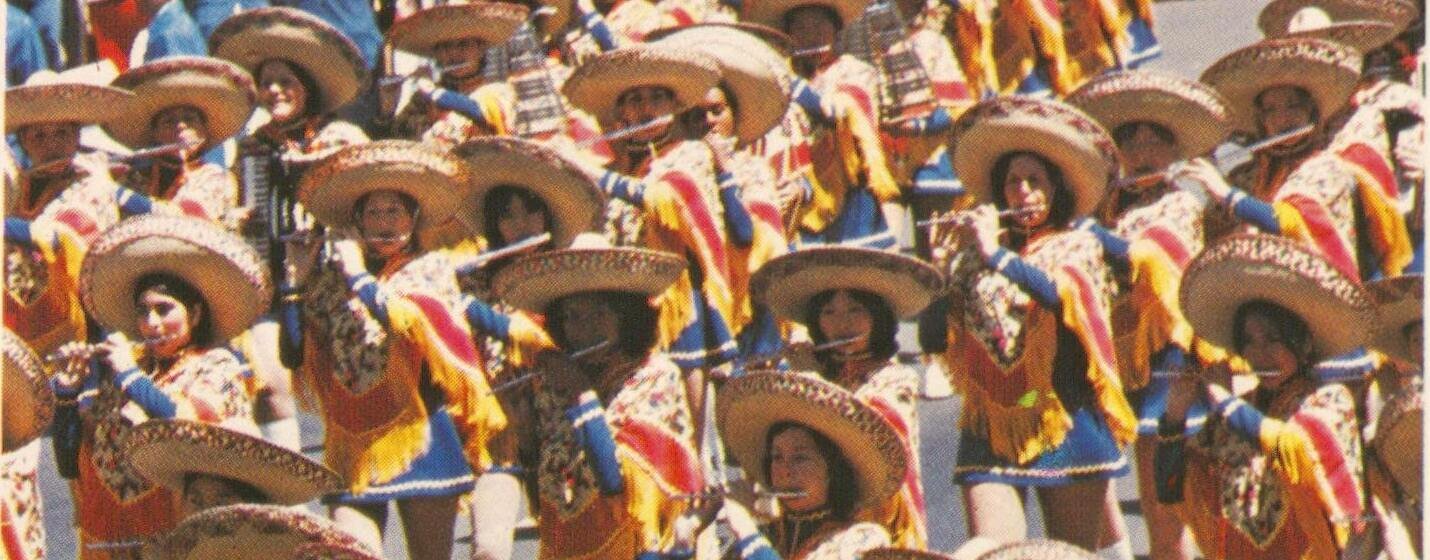
The Mexico float displayed the charm of the Latin countries with a giant floral sombrero, a Spanish hacienda and a towering bull and matador (top). With glowing uniforms a Southern California Fife and Drum Corps (below) added south-of-the-border flavor.
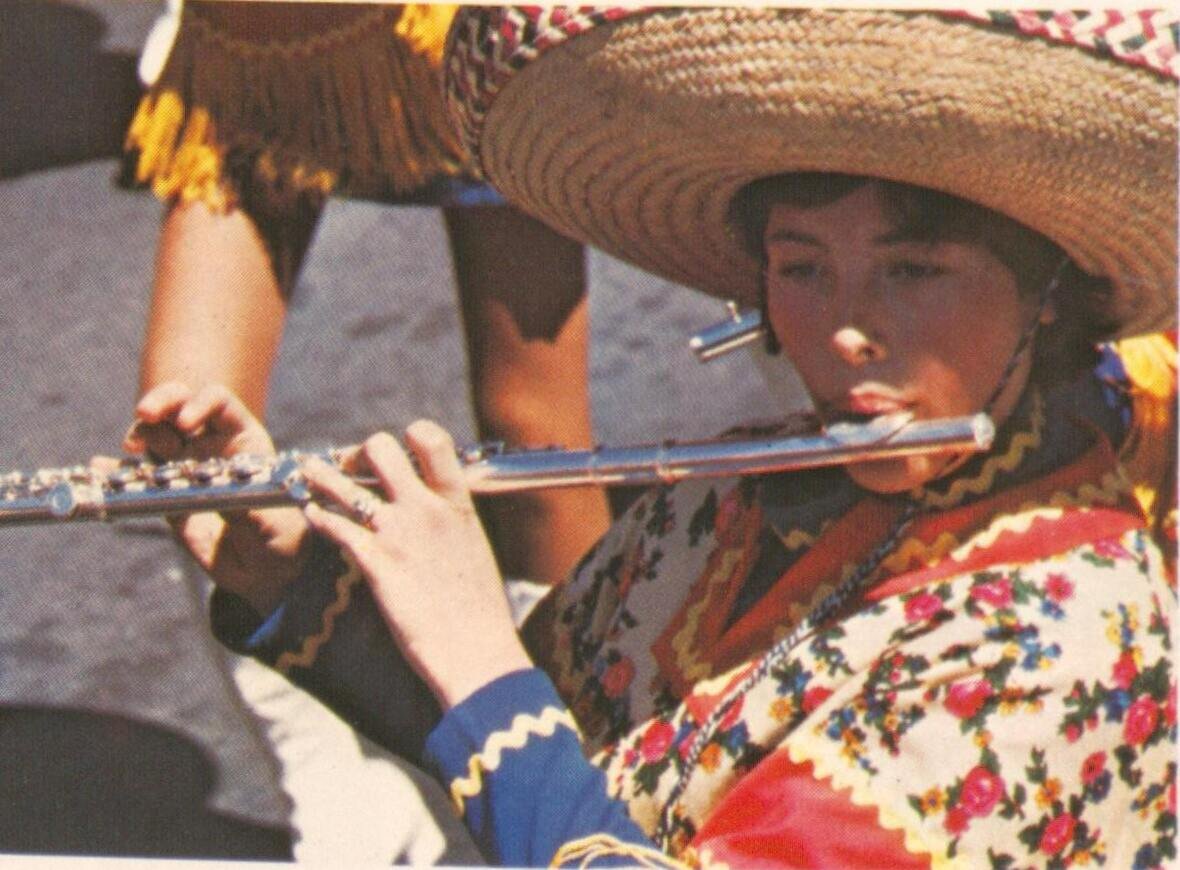
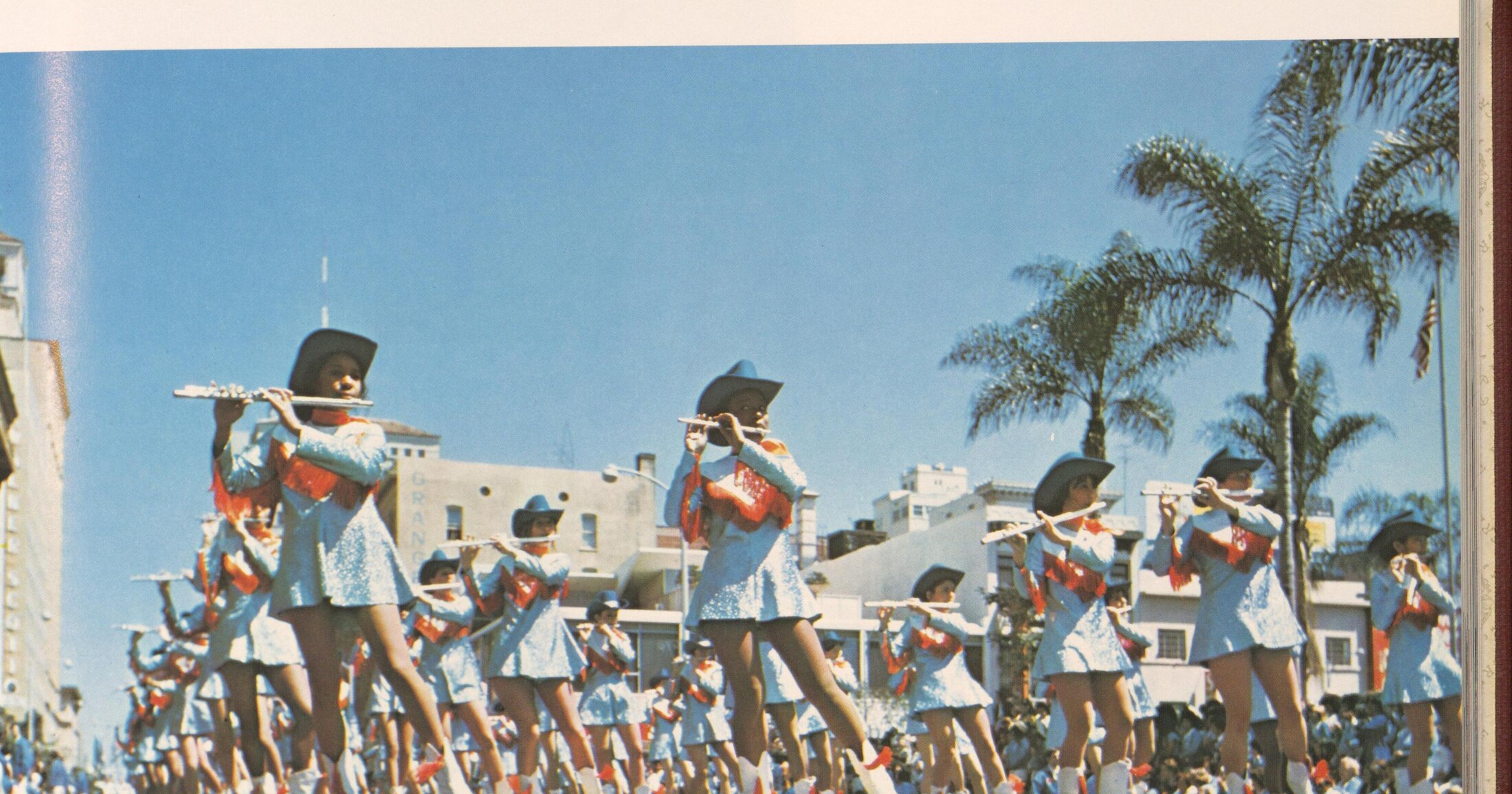
Portraying the spirit of the old frontier were the cowgirls of the Texas Fife and Drum Corps (above), while the Arizona Corps were clad as lovely Indian Maidens (below).
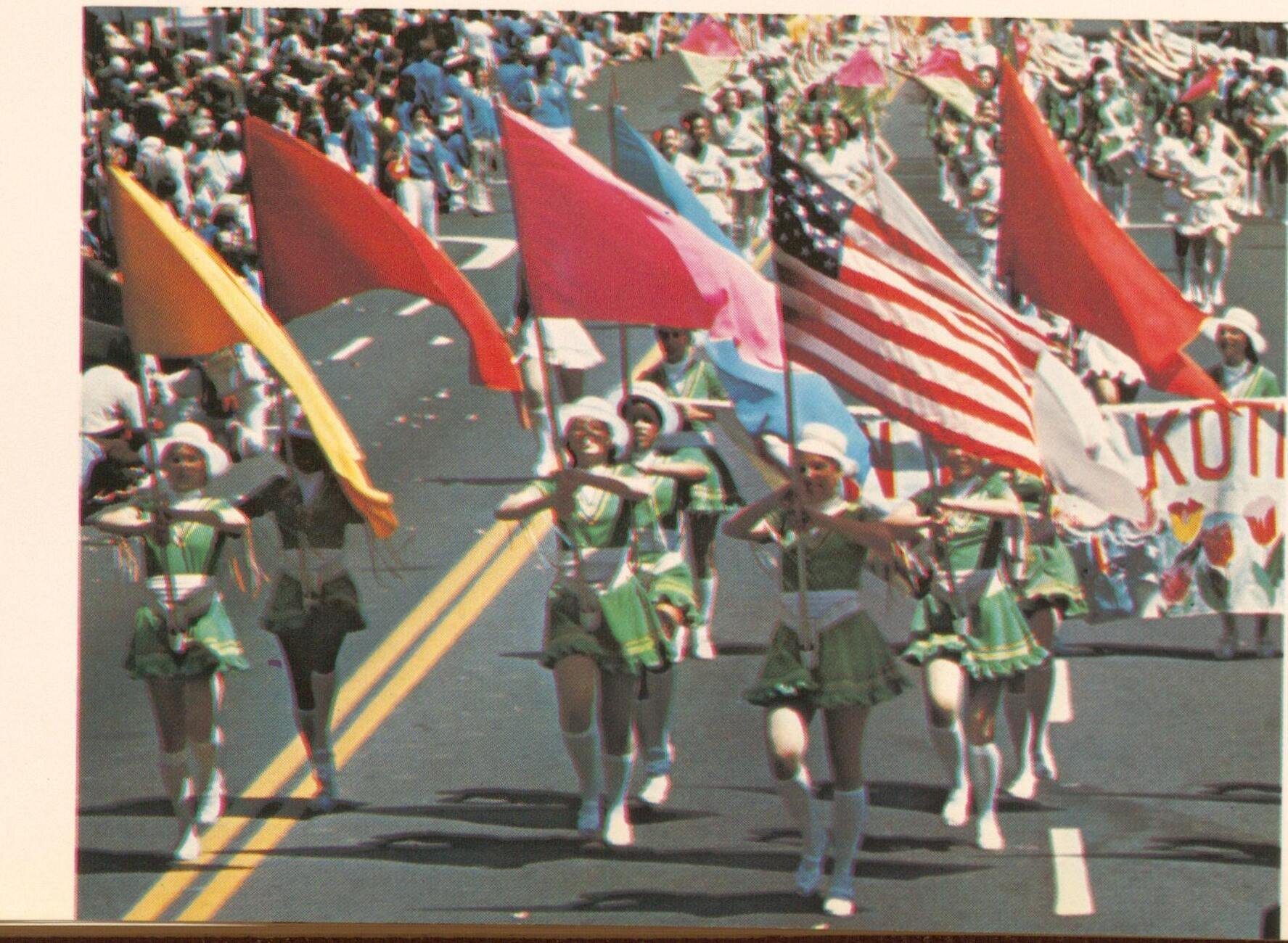
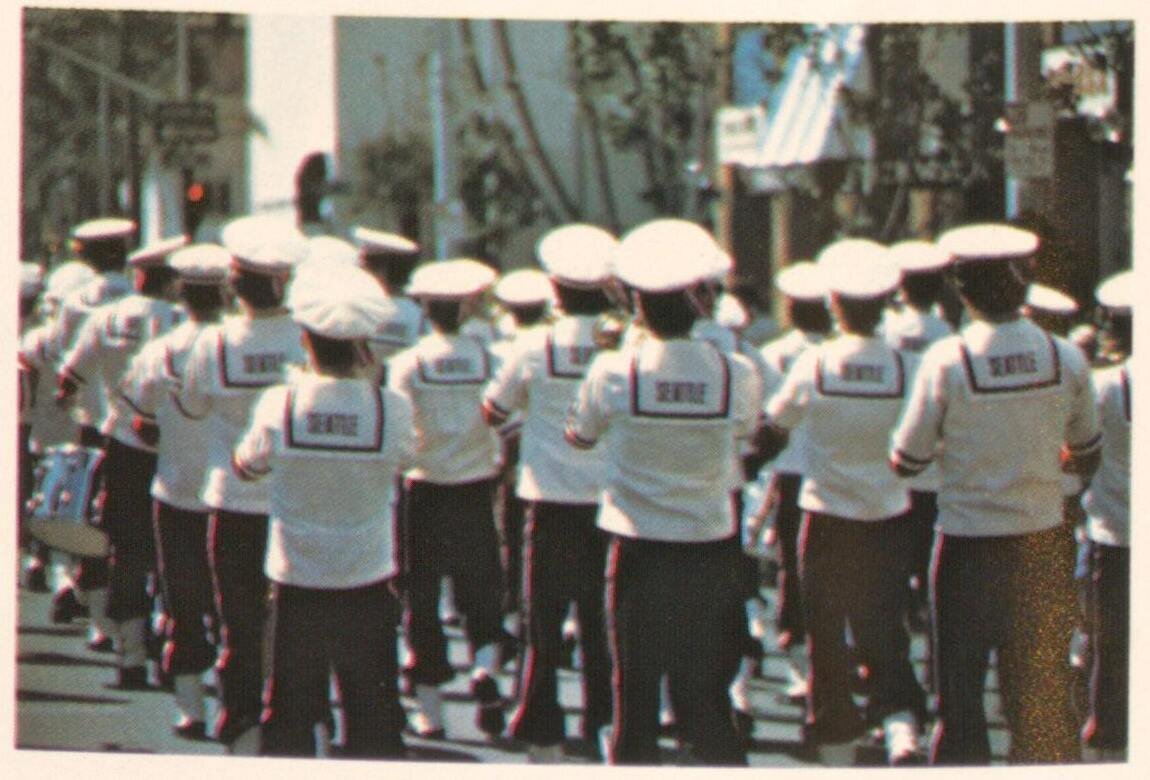
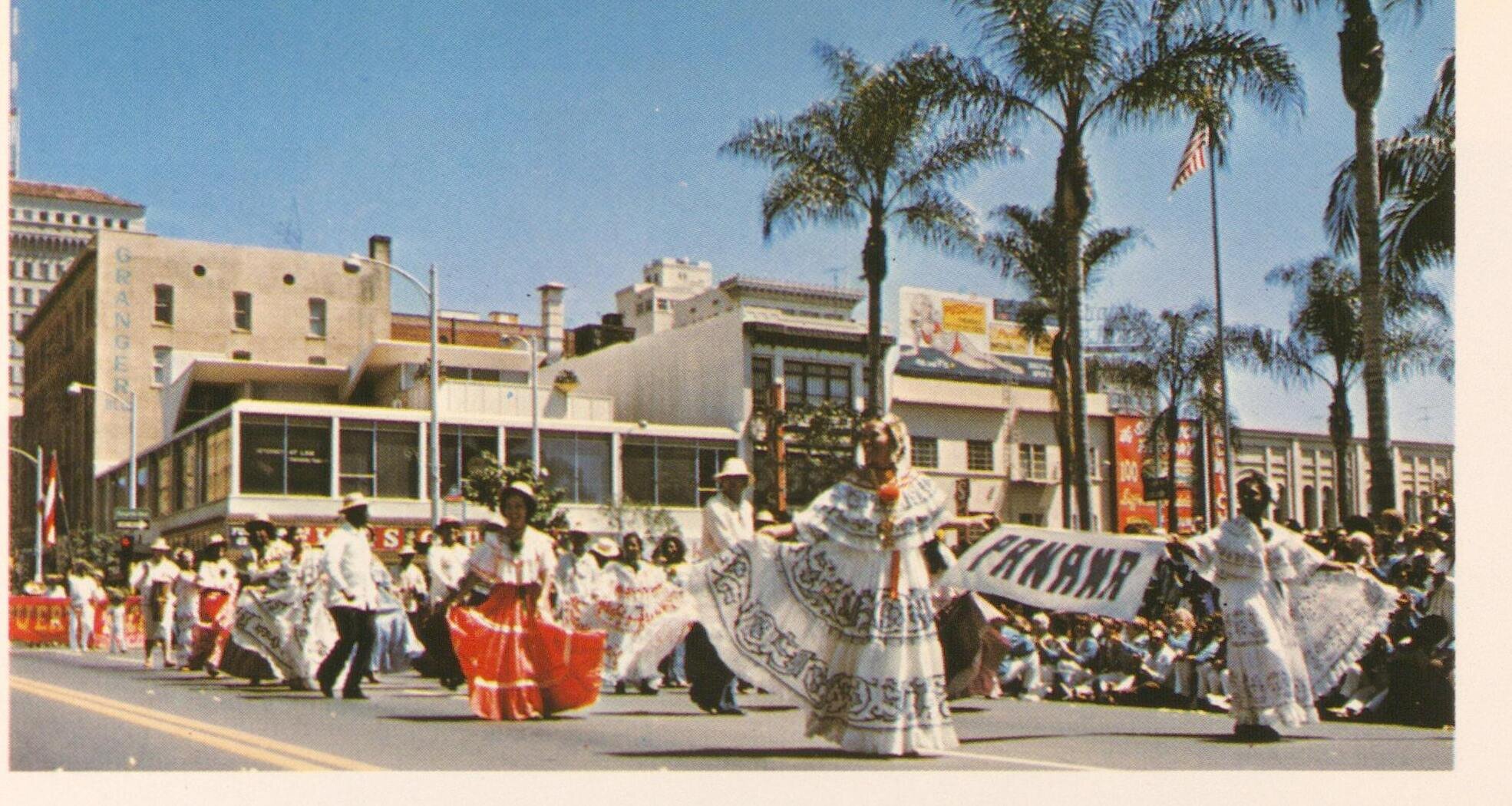
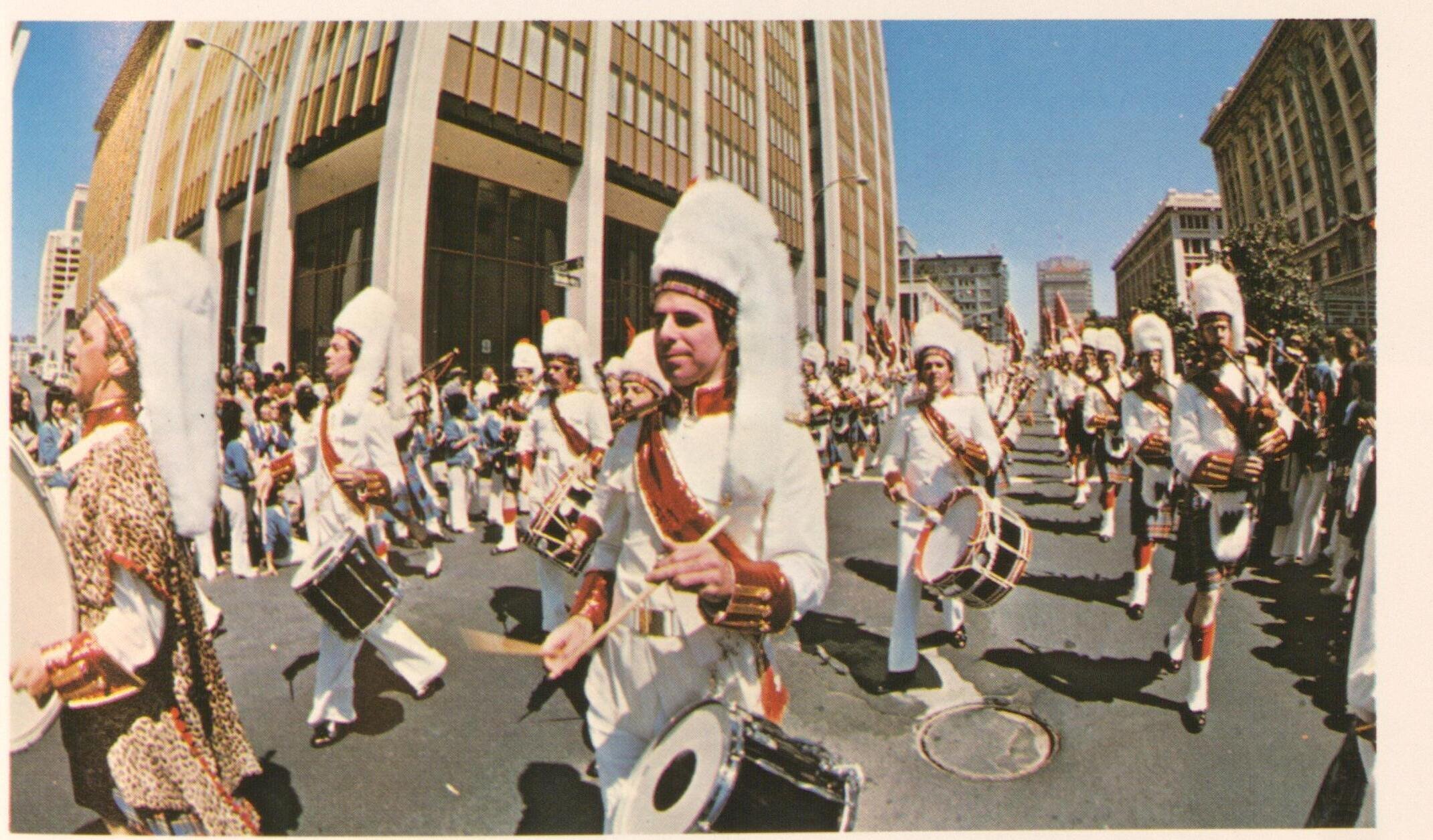
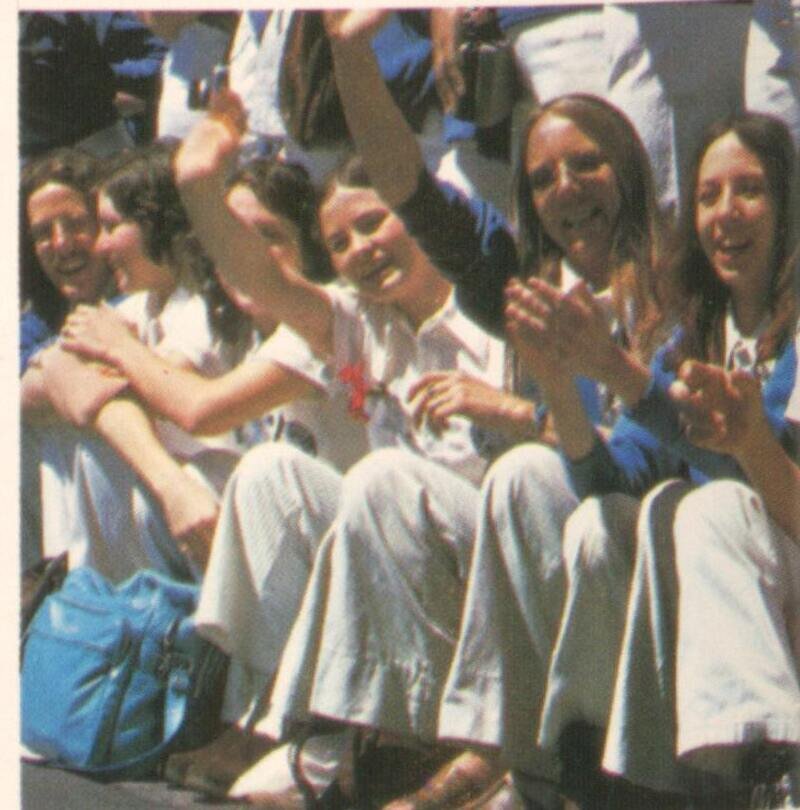
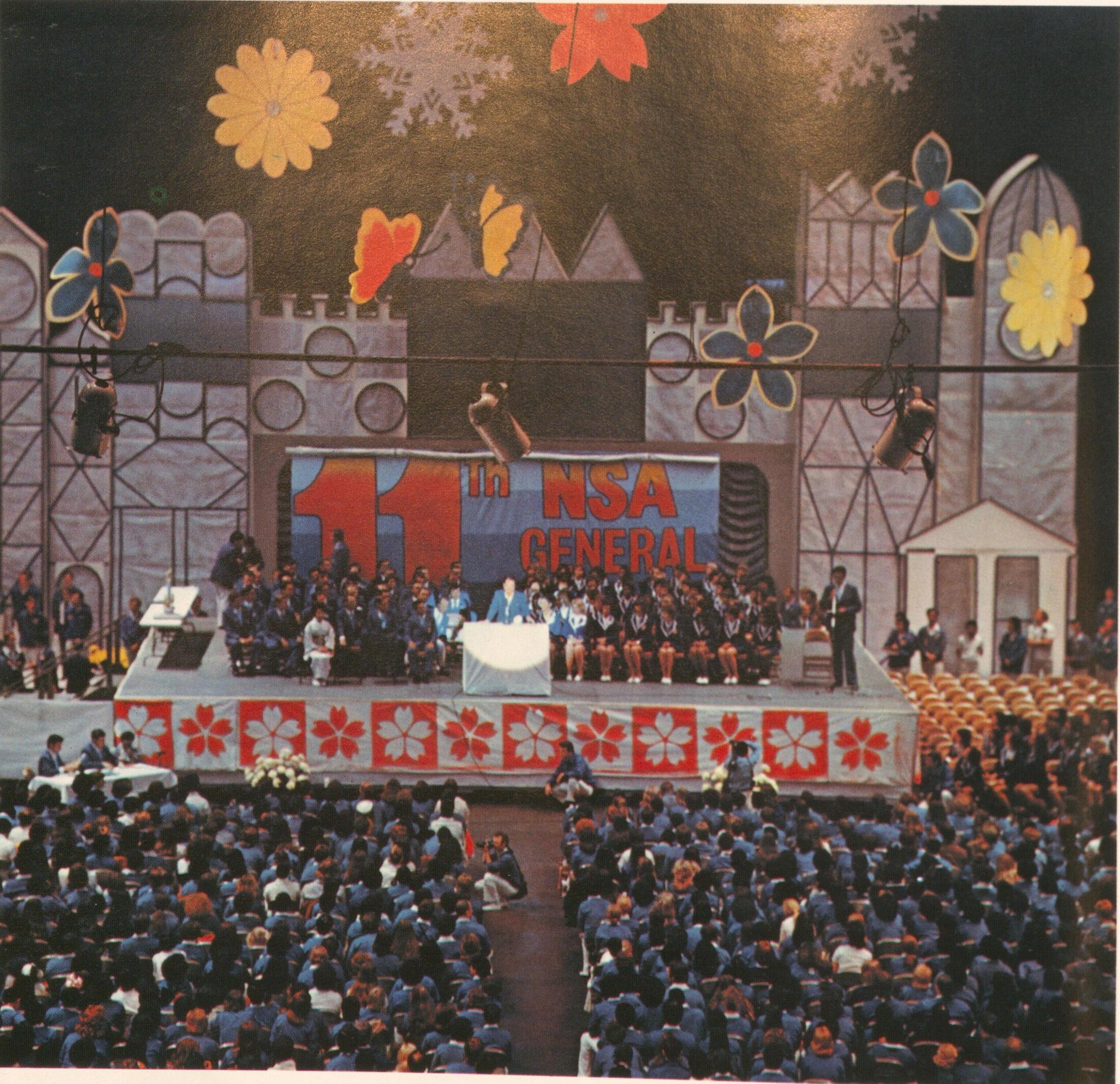
The yearly General Meetings of NSA are the highlight of any convention. They give representative leaders a chance to review the progress of the year and chart the course for years to come. These historic gatherings, starting with one in Chicago in 1963, have signalled the opening of new chapters in NSA’s growth. President Daisaku Ikeda has attended the three most recent General Meetings and has given addresses on humanism of a truly international scope. Once again in San Diego, delegates from scores of nations took home with them the burning hope and determination to contribute to the revitalization of their communities.
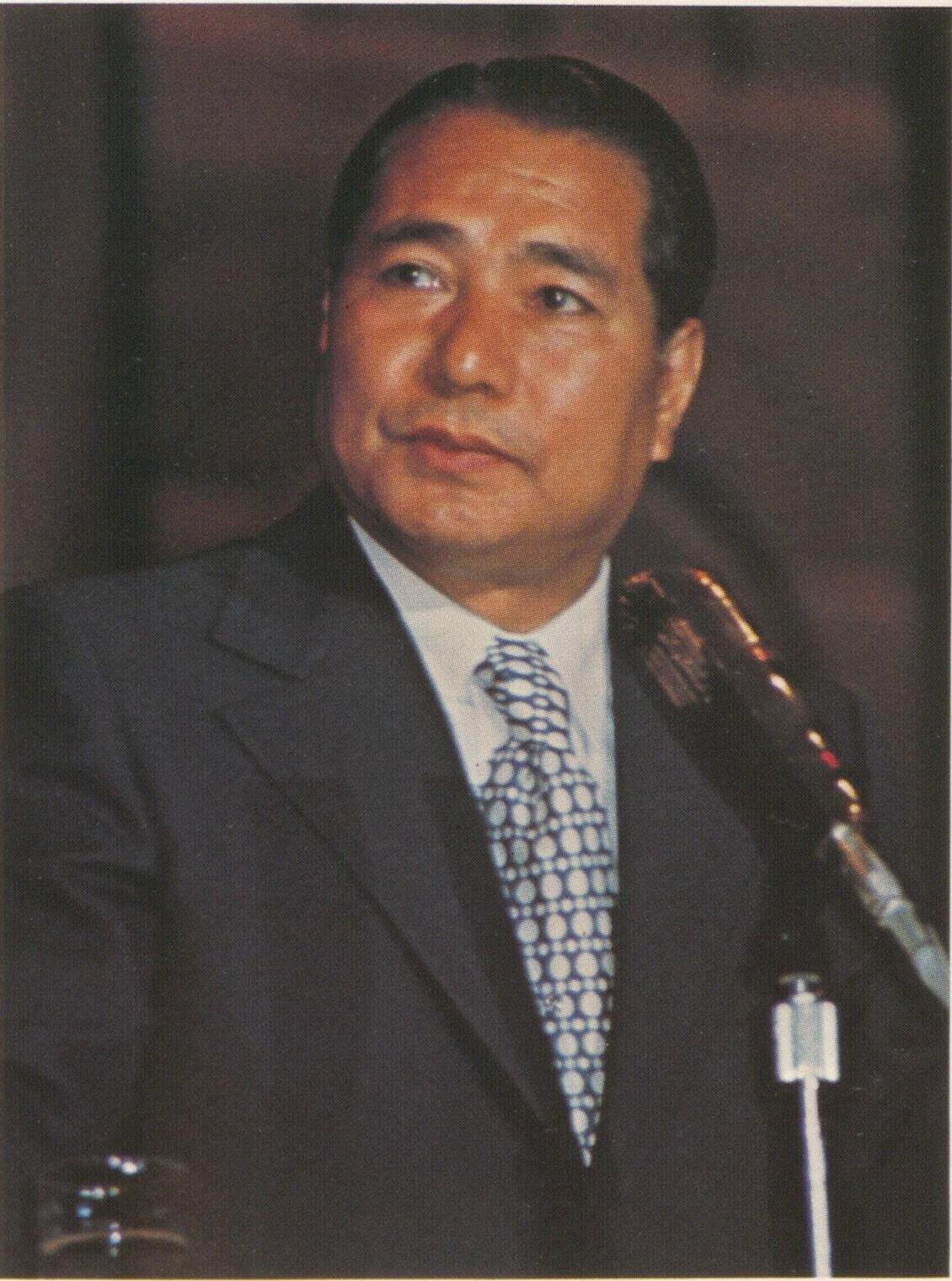
“I would like to offer to all of you my most sincere congratulations on the occasion of this great convention! It is like the most beautiful flower of humanity blooming in San Diego.
“Never in my twenty-seven years of practice have I so deeply felt the greatness of true Buddhism as it is evident here today. Never have I felt the excitement and passion of world peace actually happening as I feel today.
“The supreme Law contains great wisdom. It also has the quality of deep mercy. Moreover, it contains philosophy, good fortune, justice, humanism and reason. As entities of the supreme Law, we must ourselves display proof of these qualities by always uniting through our proud and courageous practice.
“No matter what may happen, never give up! Never hold ill feelings towards others, because you will always be the loser.
“By following your General Director, Mr. Williams, and armed with justice for others, good fortune and a true philosophy, I hope you will work hard to become fully developed individuals and will construct a peaceful society here in America, the land of freedom.
“Your happiness is truly my happiness. I have watched your joyful progress and NSA’s growth through your annual conventions. As a leader of Buddhism, I wish to shout out to you that I am the happiest man in the world!
“As long as I live, I will do anything I can to help you. Together with you, I will keep running toward Kosen-rufu. I hope that you too, with great confidence, will run together with me on this wide road of happiness throughout every precious year of your life.”
President Daisaku Ikeda
April 7, 1974 San Diego
Presidential Address
“Today I had planned to give a lecture with various guidelines on the future growth of NSA. However, due to time limitations, I thought it better to have these guidelines translated and printed in the World Tribune. I would now like to present this manuscript to your General Director, Mr. George M. Williams.
“Good afternoon ladies and gentlemen. On behalf of all the members of NSA, I’d like to extend my most heartfelt welcome to all distinguished guests, and also, many guest members from Japan. For NSA’s 11th General Meeting here in San Diego, I’d like to say, ‘Welcome home President and Mrs. Ikeda.’
“All of us, members of twenty nations of NSA were with President Ikeda yesterday and today. This is our impossible dream come true. Springtime has surely come!
“Yesterday President Ikeda viewed with great satisfaction the fantastic Spring Fiesta Parade. Then in appreciation for all your efforts he gave as a gift to all of you and to all the citizens of San Diego his most brilliant display of fireworks ever seen in the United States. Now, after watching the dazzling Spring Festival on Ice, all of NSA is eagerly waiting for President Ikeda to ring the bell for the second round of Kosen-rufu. However, before we take that next step, it is wise to take a brief look at the progress we have achieved to now, and how we have achieved it. The first round for NSA began in May 1957, when President Ikeda encouraged me to come here to the United States. Following his guidance, over three hundred people began to practice true Buddhism throughout the United States in the next three years. Finally, in October, 1960, we were able to welcome our master to America for the first time in history. At that time, President Ikeda established the first Nichiren Shoshu organization in this country by announcing the formation of one chapter and seventeen districts.
“President Ikeda has visited NSA a total of ten times during the first round. The major thrust of his guidance has always been to chant Nam-myoho-renge-kyo and to practice true Buddhism without hesitation. As we enter the historic second round, it is my earnest hope that we will be able to reply to President Ikeda’s great mercy by a more joyful practice than ever before.
“Therefore, true Buddhism exists solely to establish a peaceful world from each individual’s struggle for absolute happiness. Only through the practice of true Buddhism can we ever hope to wipe out war and misery, solve problems and give hope and courage to every human being. The human revolution achieved by practicing the life-philosophy of Nichiren Daishonin can change a tired life into a brilliant and glorious one. This philosophy is for all of the people, regardless of race, income or education. We must make sure that NSA will always be dedicated to the same principles upon which this nation was founded, that it will be truly of the people, by the people and for the people. NSA must always be a shining beacon of hope. This is our sacred mission.”
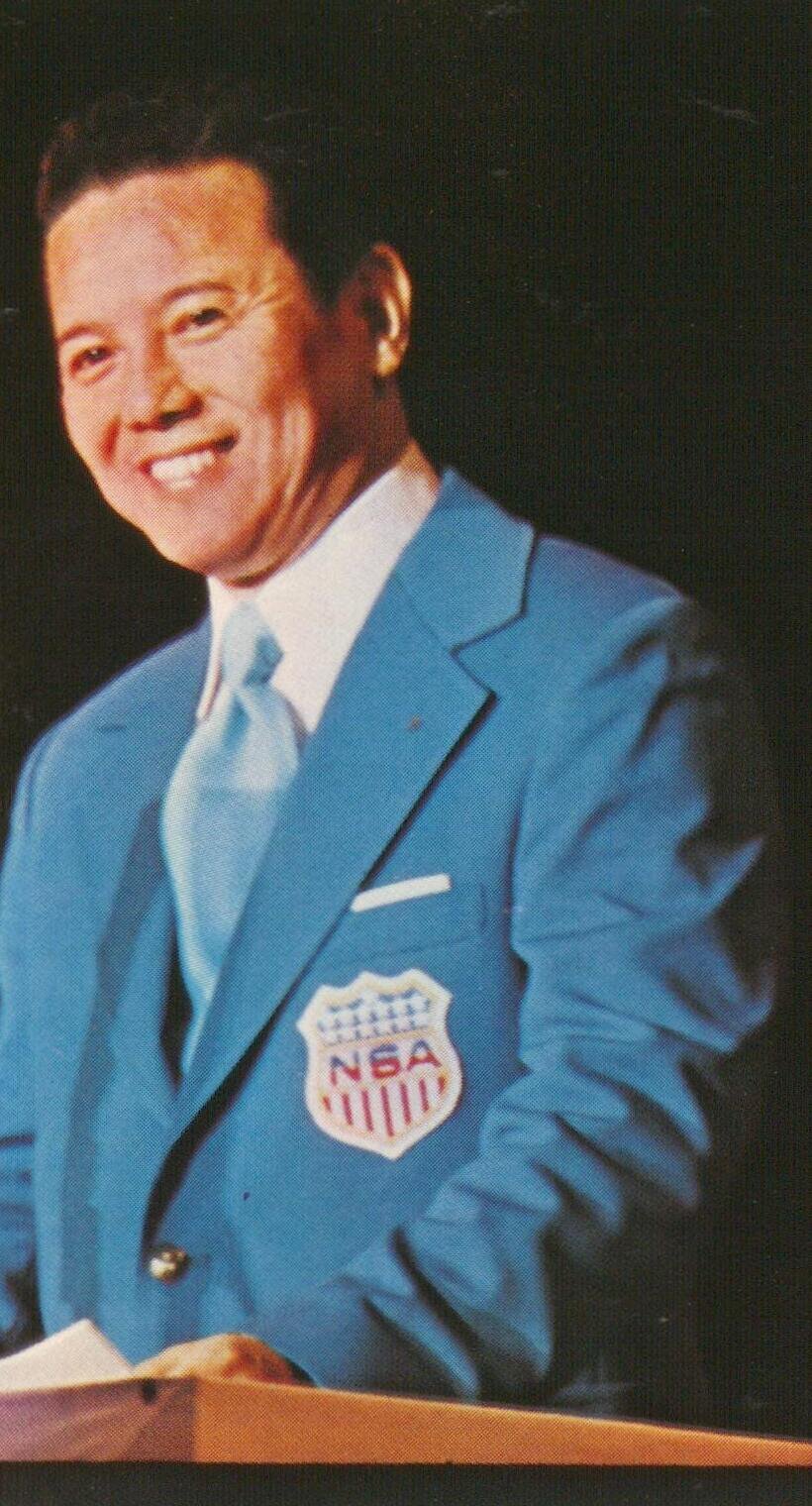
Mr. George M. Williams
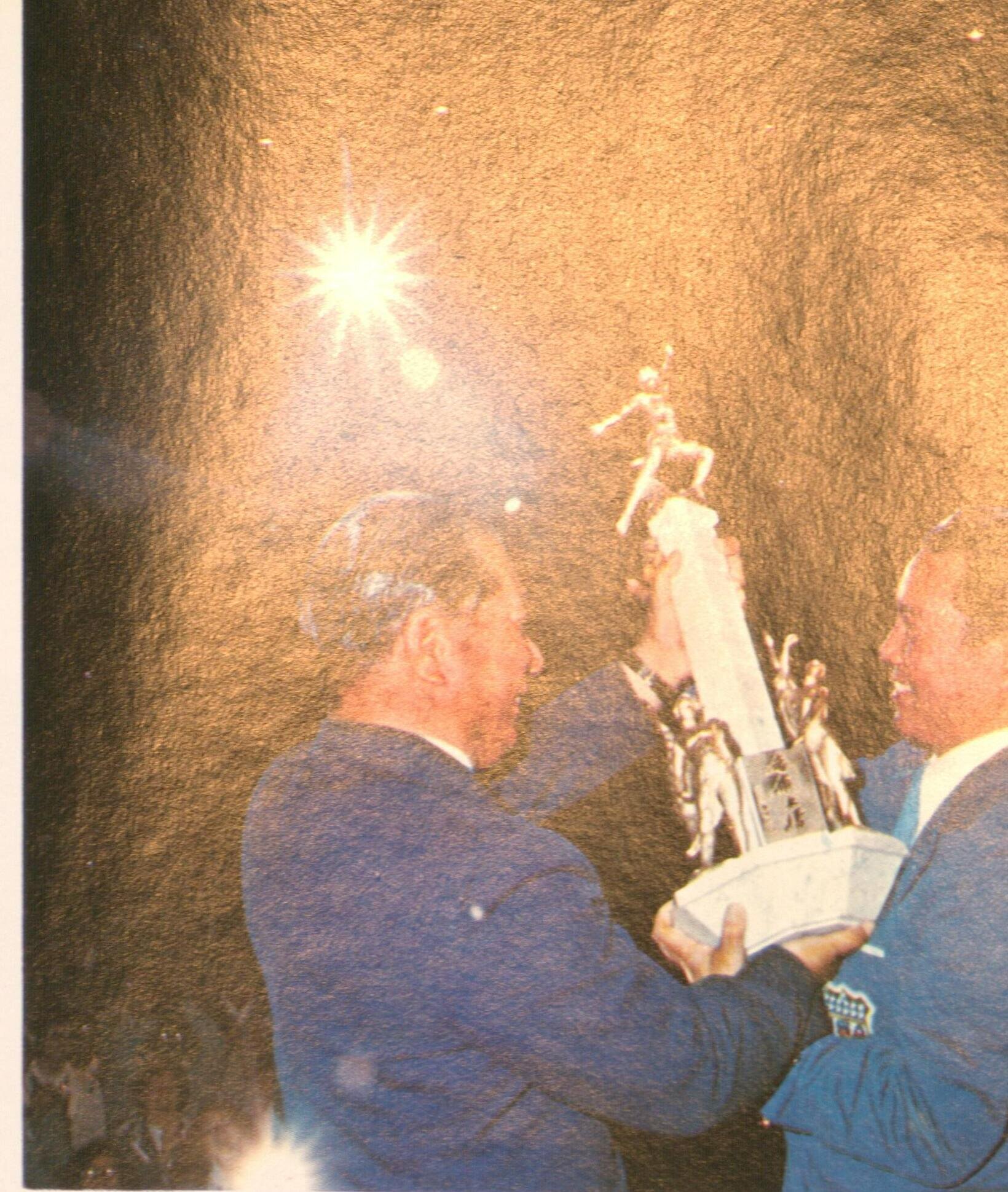
Amidst the cheers of thousands, President Ikeda presented a trophy entitled “The Tower of Peace” to General Director Williams in honor of his efforts to develop the Nichiren Shoshu Academy in the Western Hemisphere.
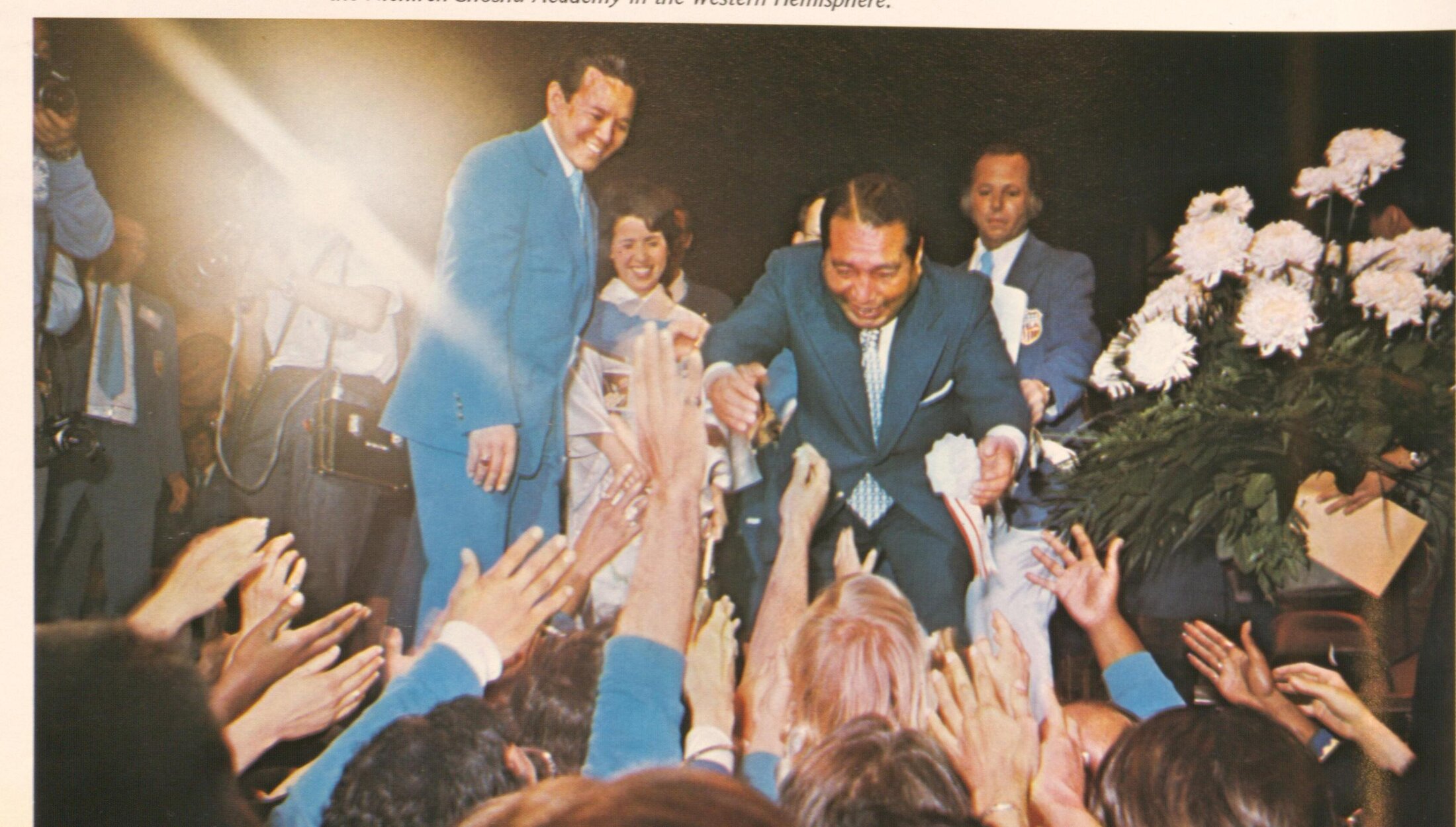
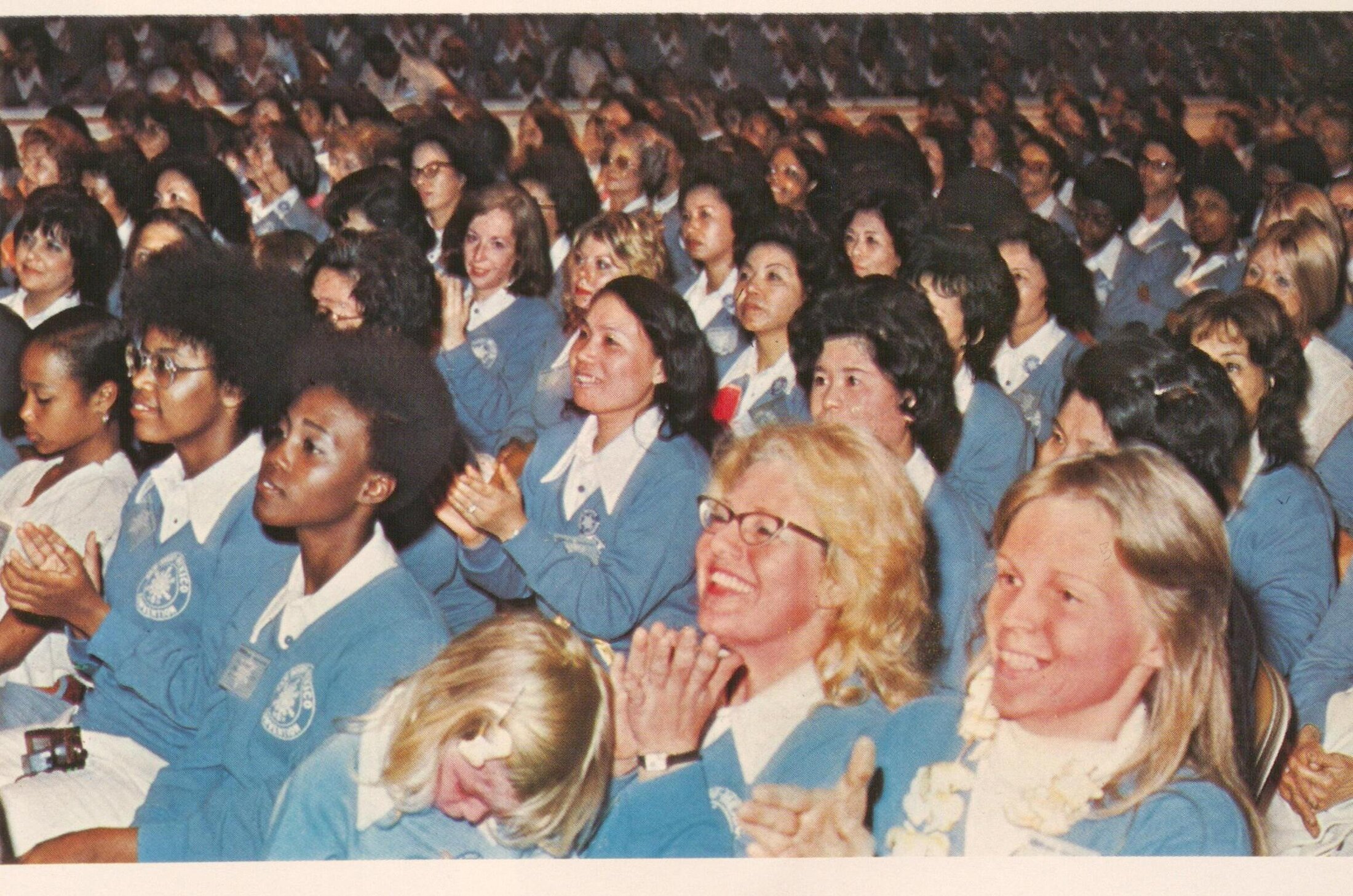
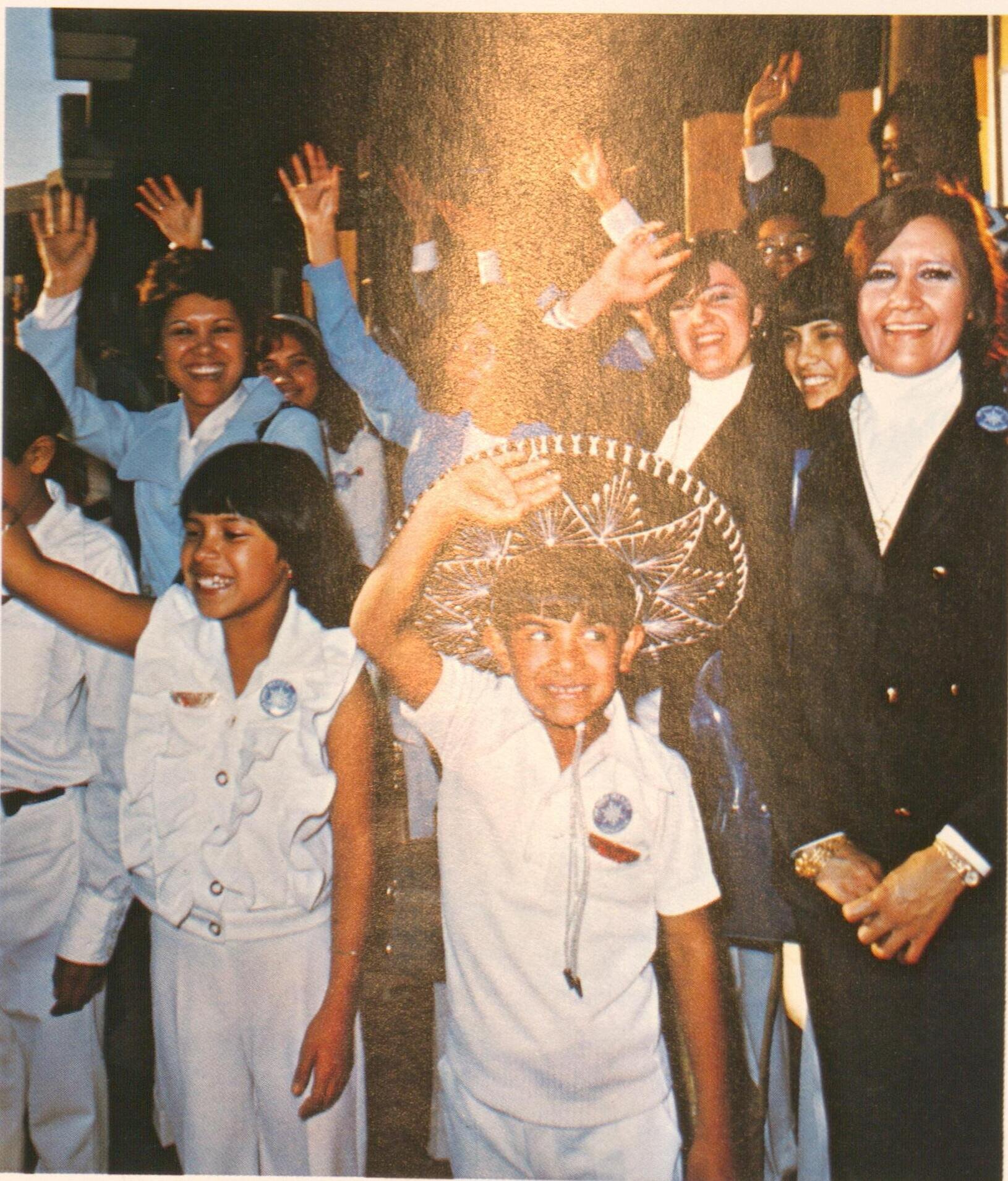
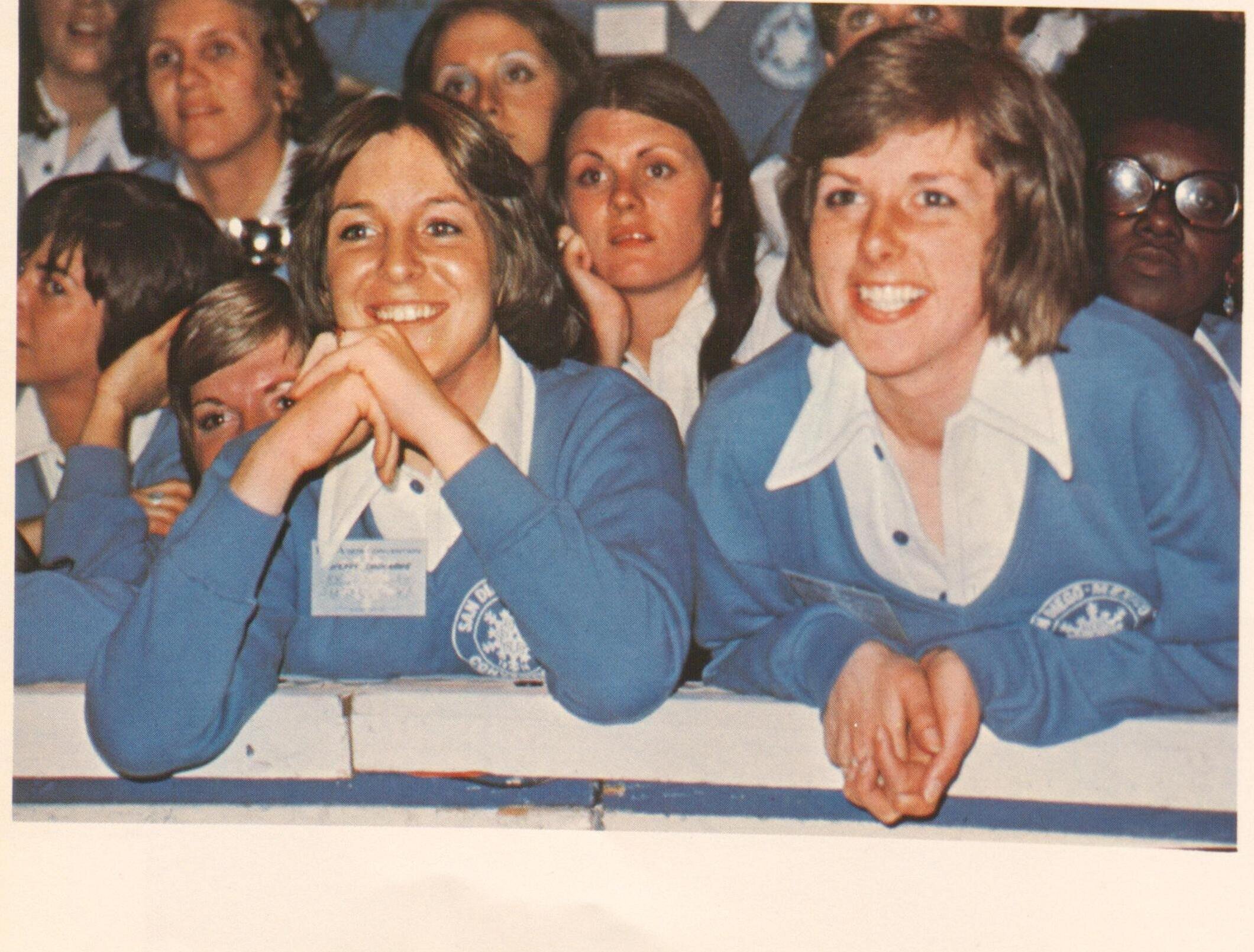
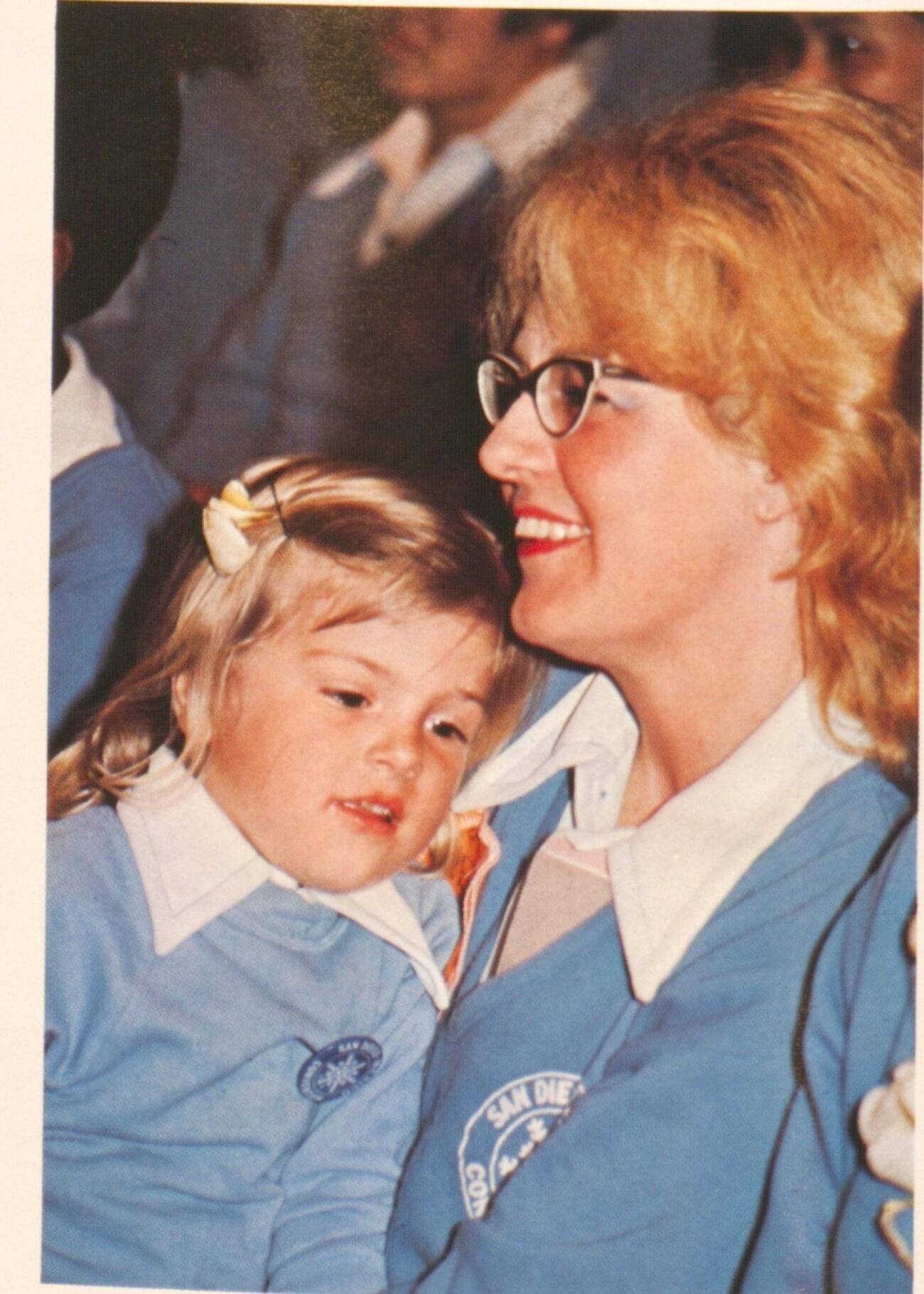

The San Diego Sports Arena was a sea of blue and white uniforms on April 7th. People of all ages and backgrounds were thrilled to hear the announcement of future targets during the 11th General Meeting of the Nichiren Shoshu Academy.
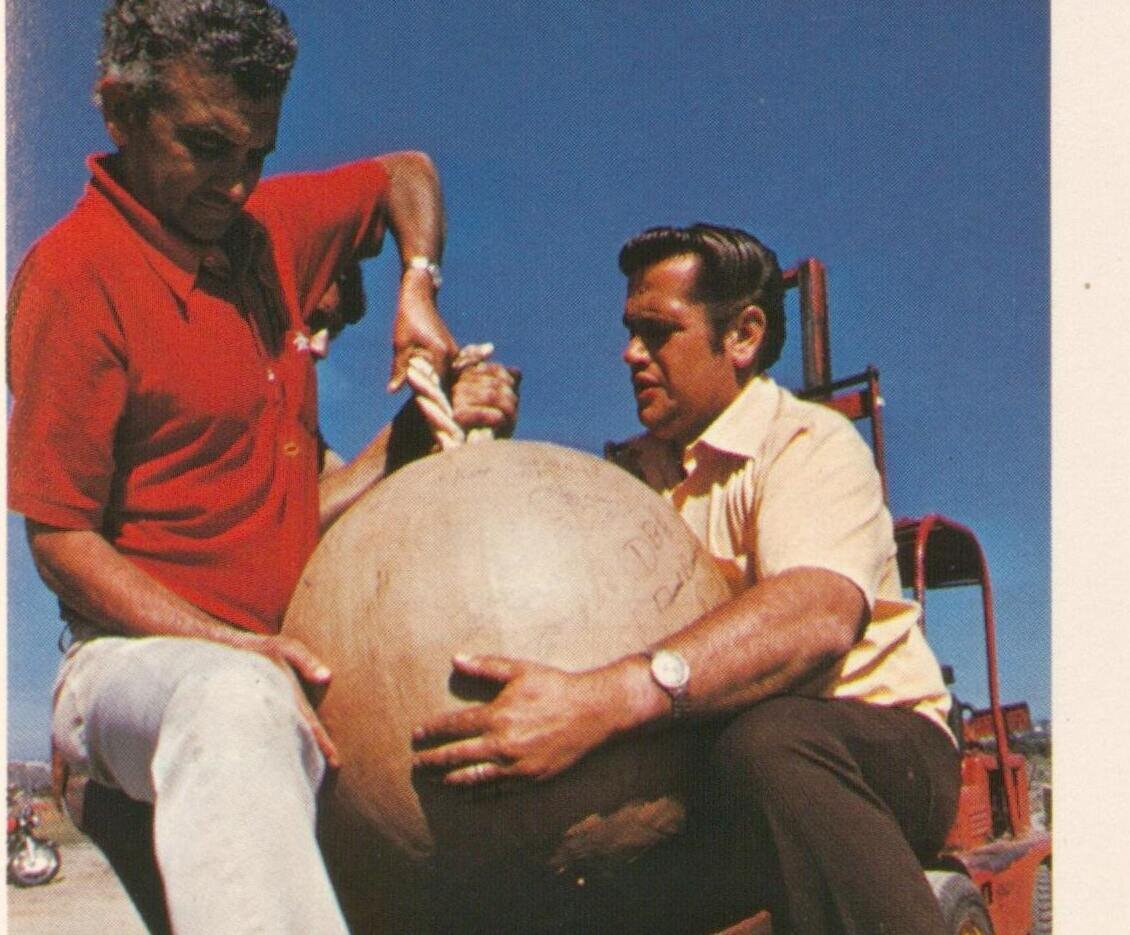
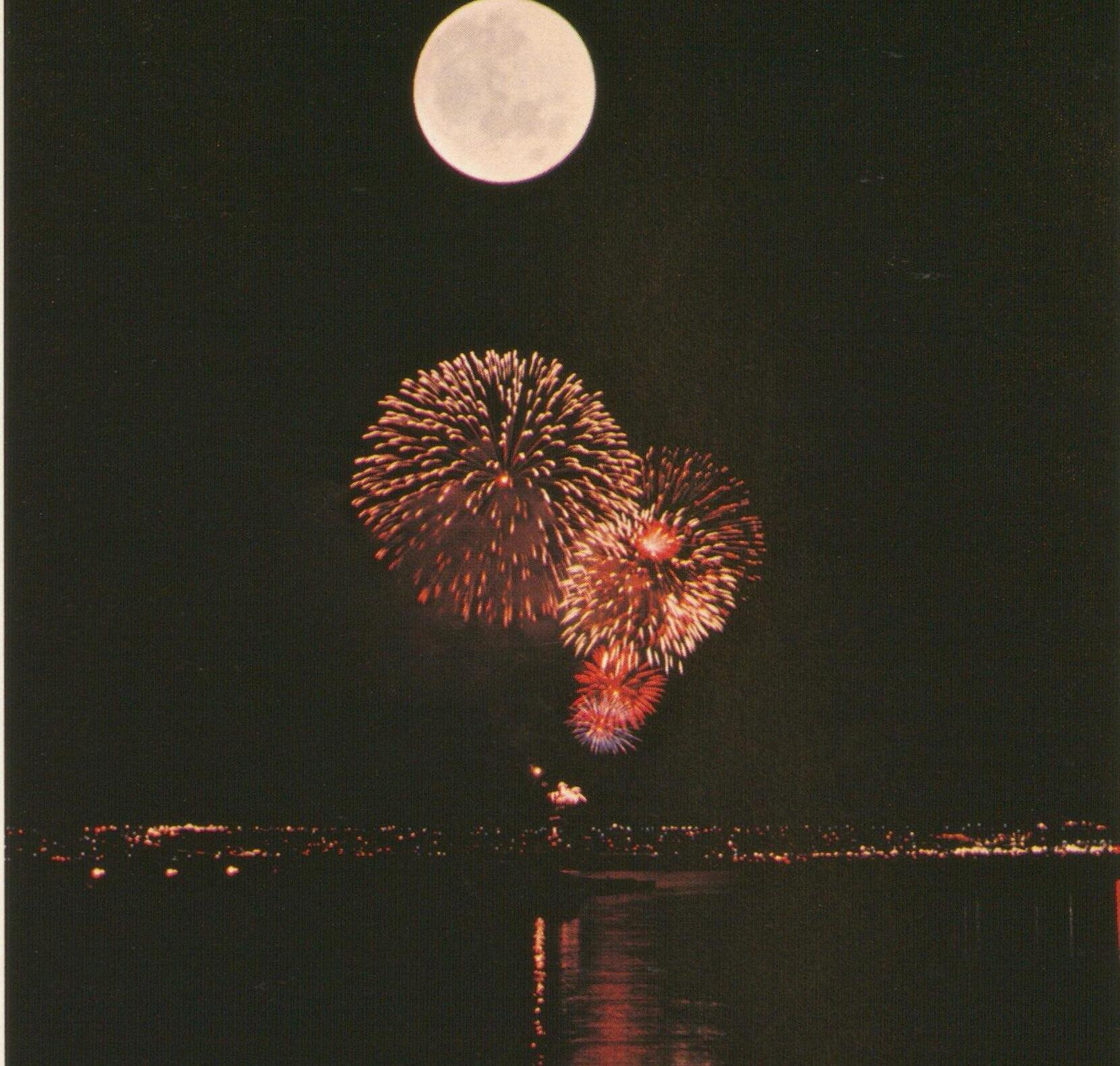
Workmen load a mortar with one of the few twenty-four inch rockets ever fired in the United States in preparation for a spectacular fireworks show over San Diego’s Mission Bay. The show was the largest display ever staged in the West.
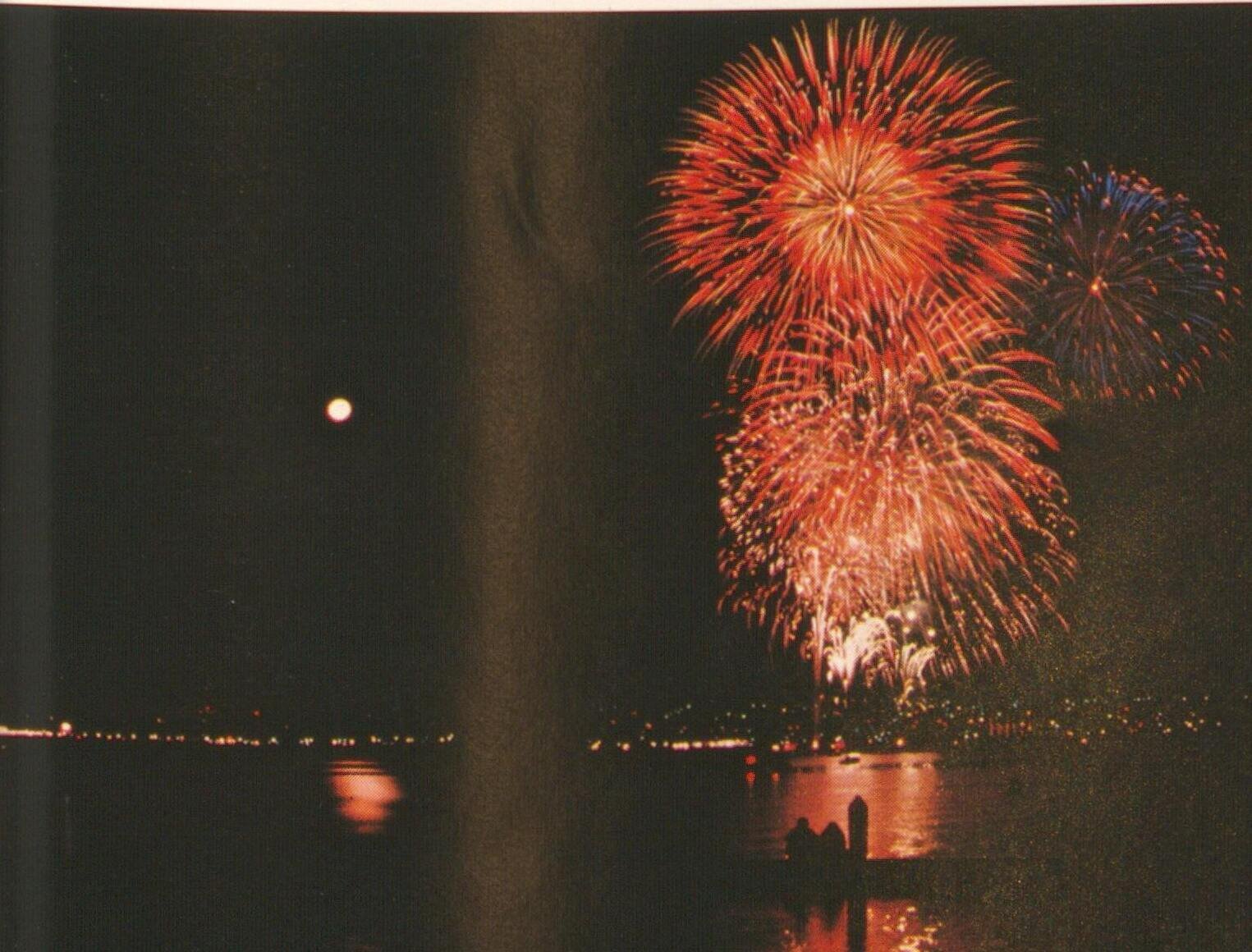

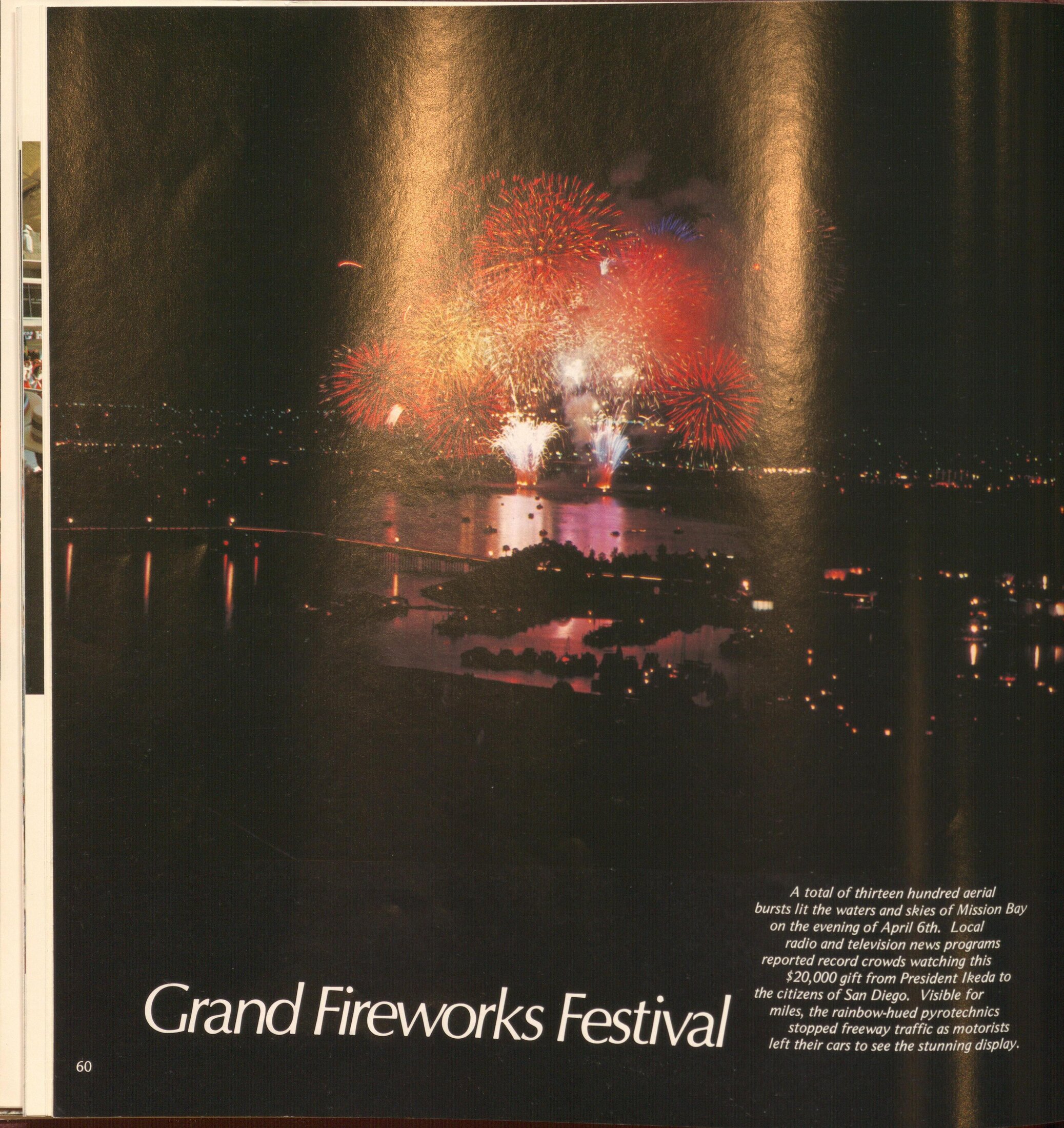
A total of thirteen hundred aerial bursts lit the waters and skies of Mission Bay on the evening of April 6th. Local radio and television news programs reported record crowds watching this $20,000 gift from President Ikeda to the citizens of San Diego. Visible for miles, the rainbow-hued pyrotechnics stopped freeway traffic as motorists left their cars to see the stunning display.
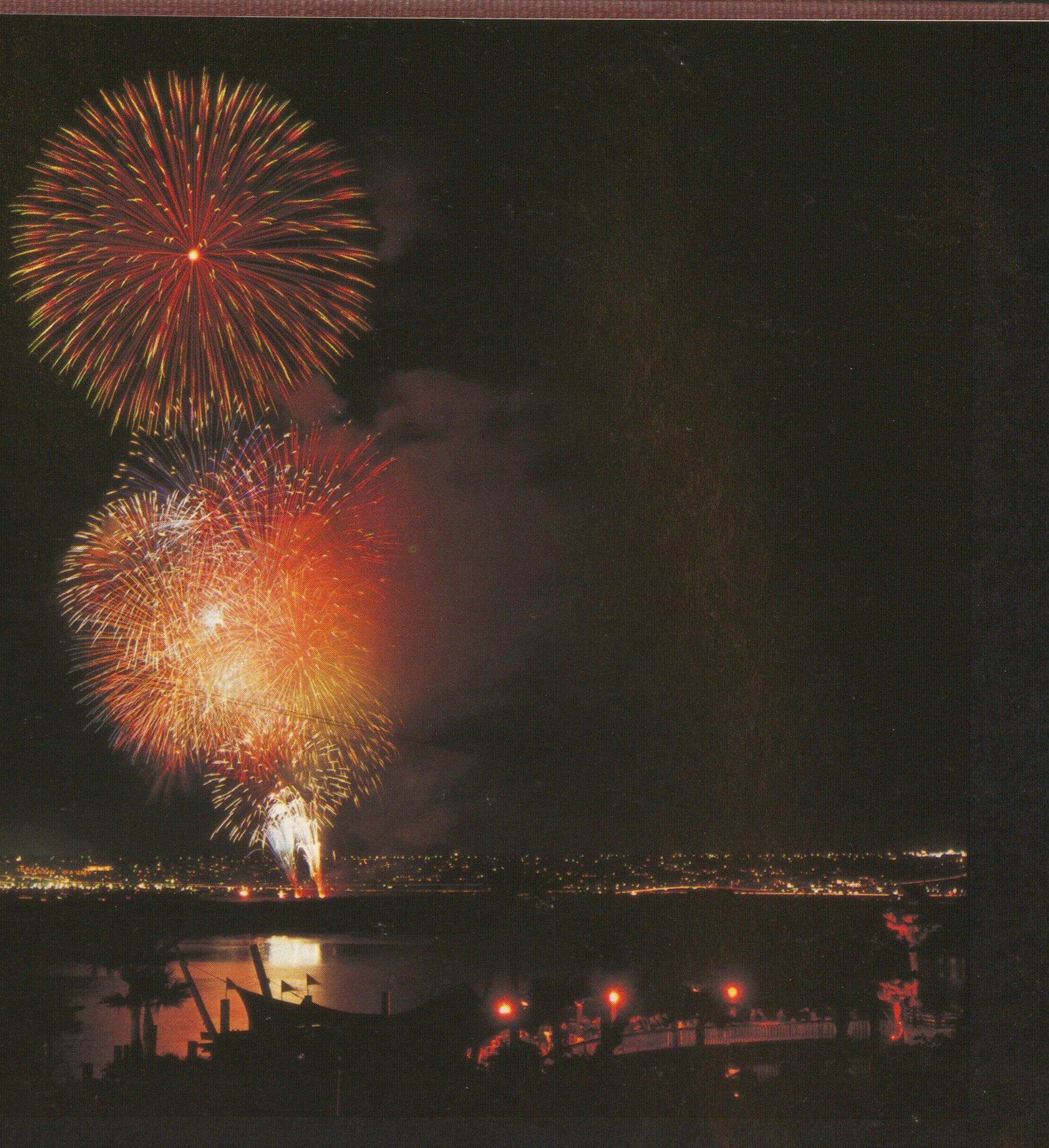
With a flurry of exploding shells (left) the show was over. The finale consisted of 270 shells fired simultaneously.
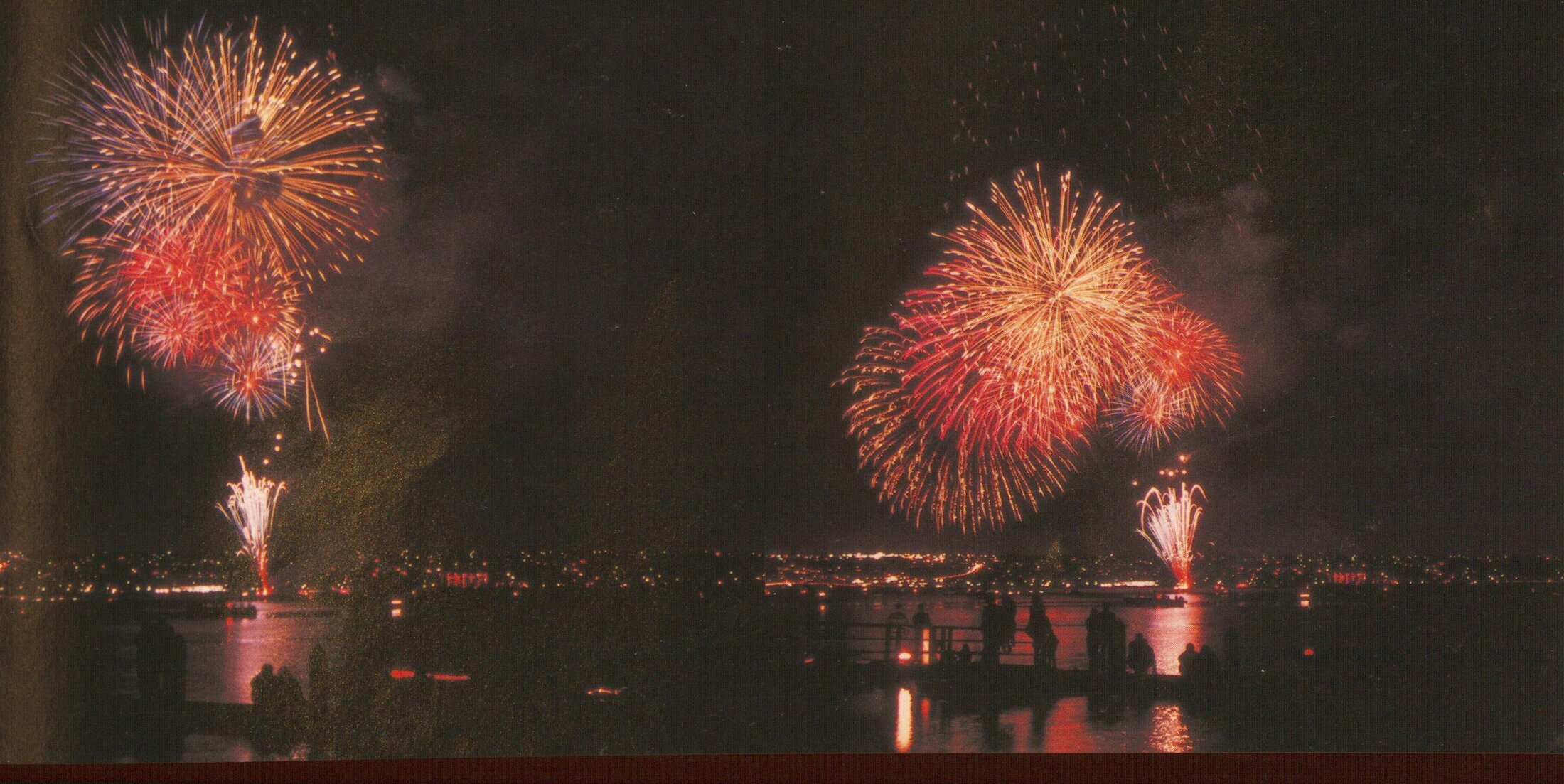
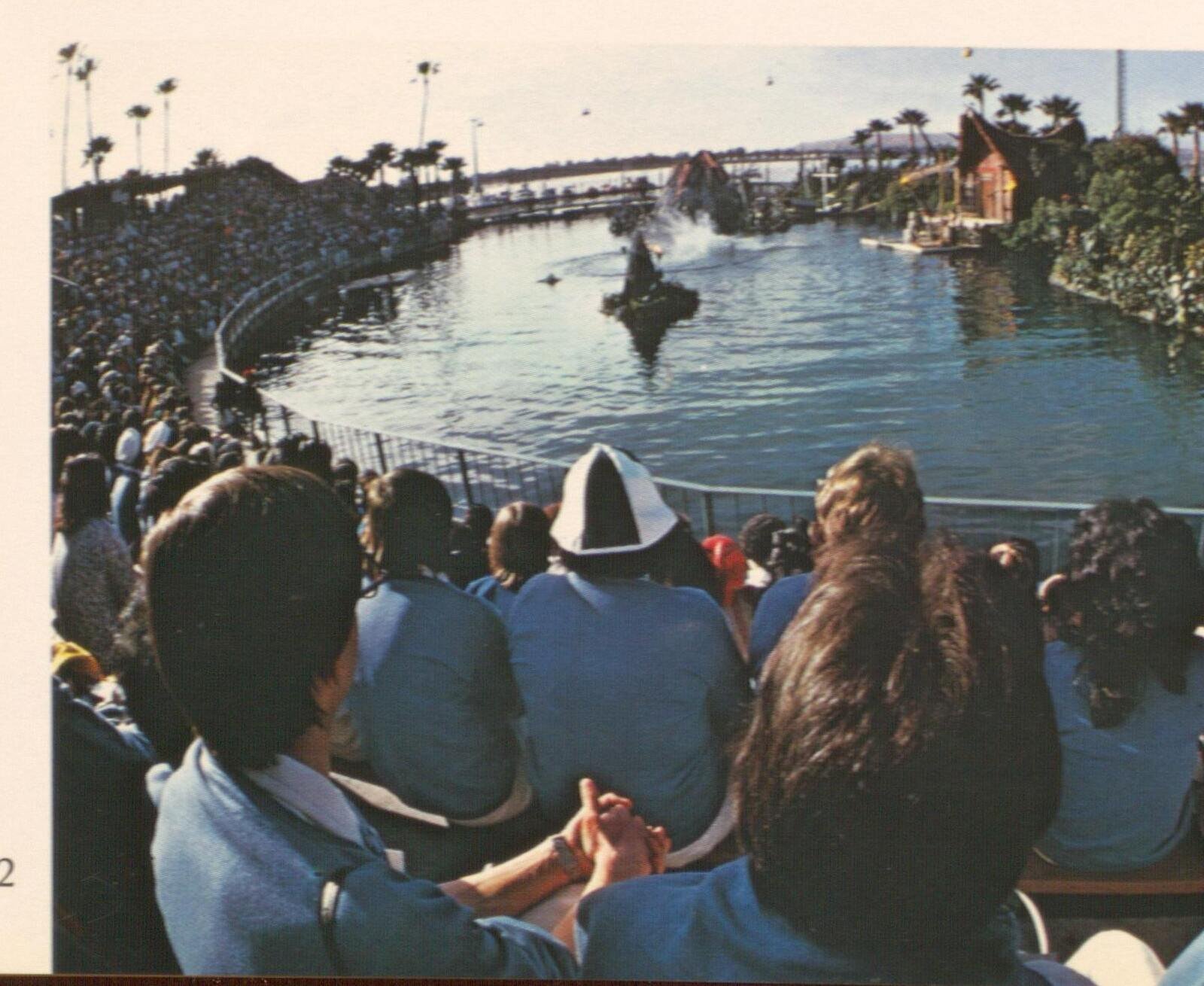
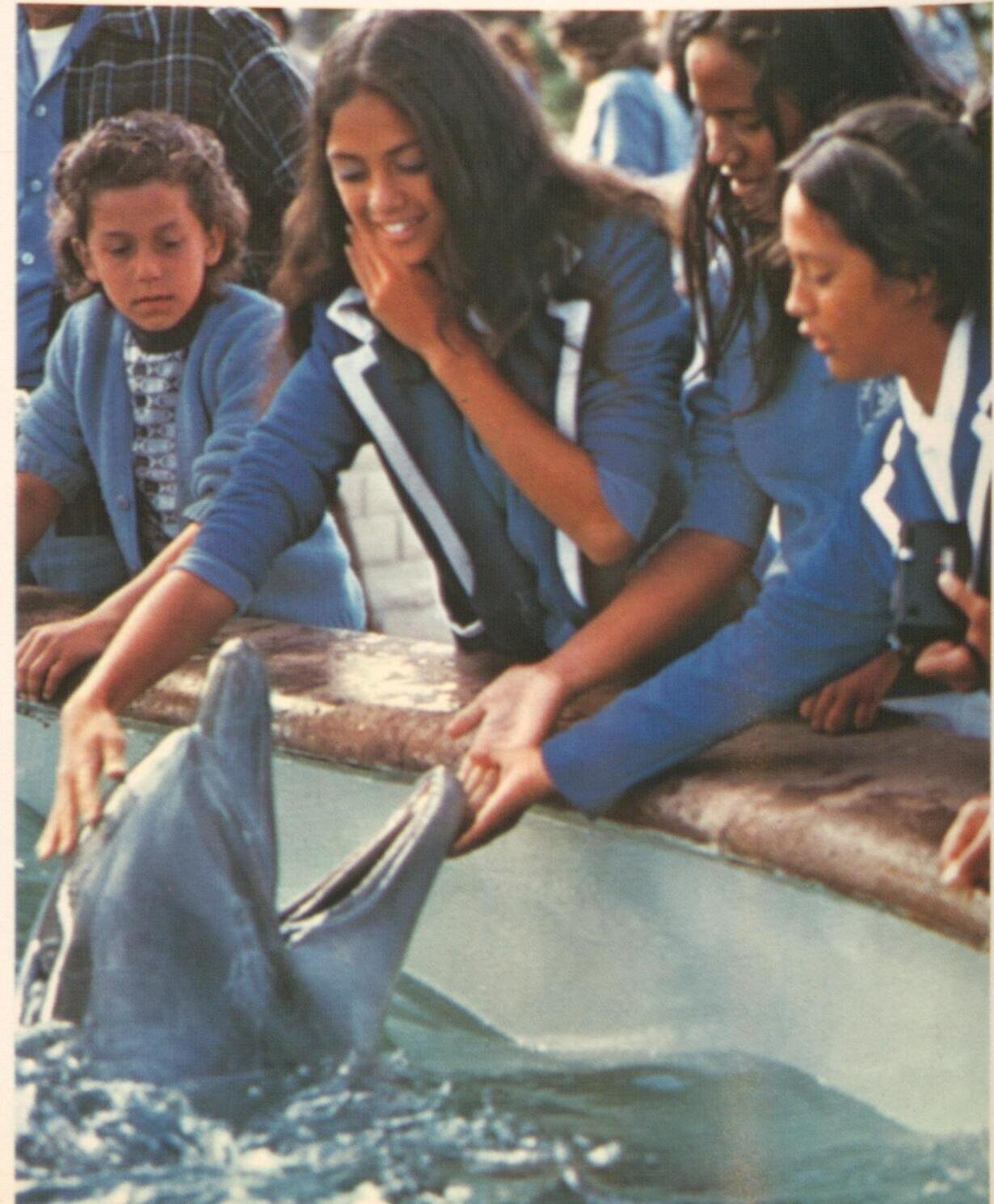
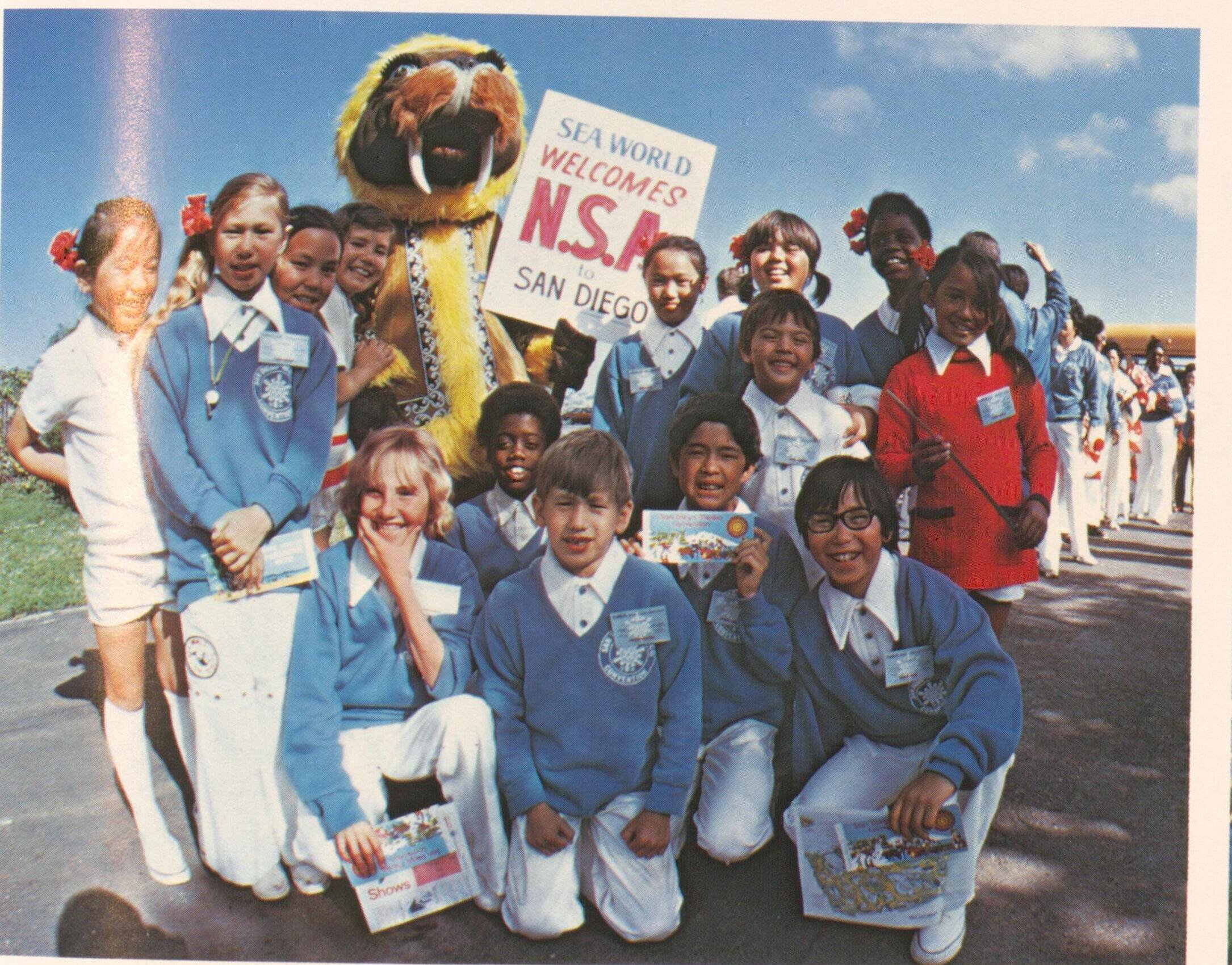
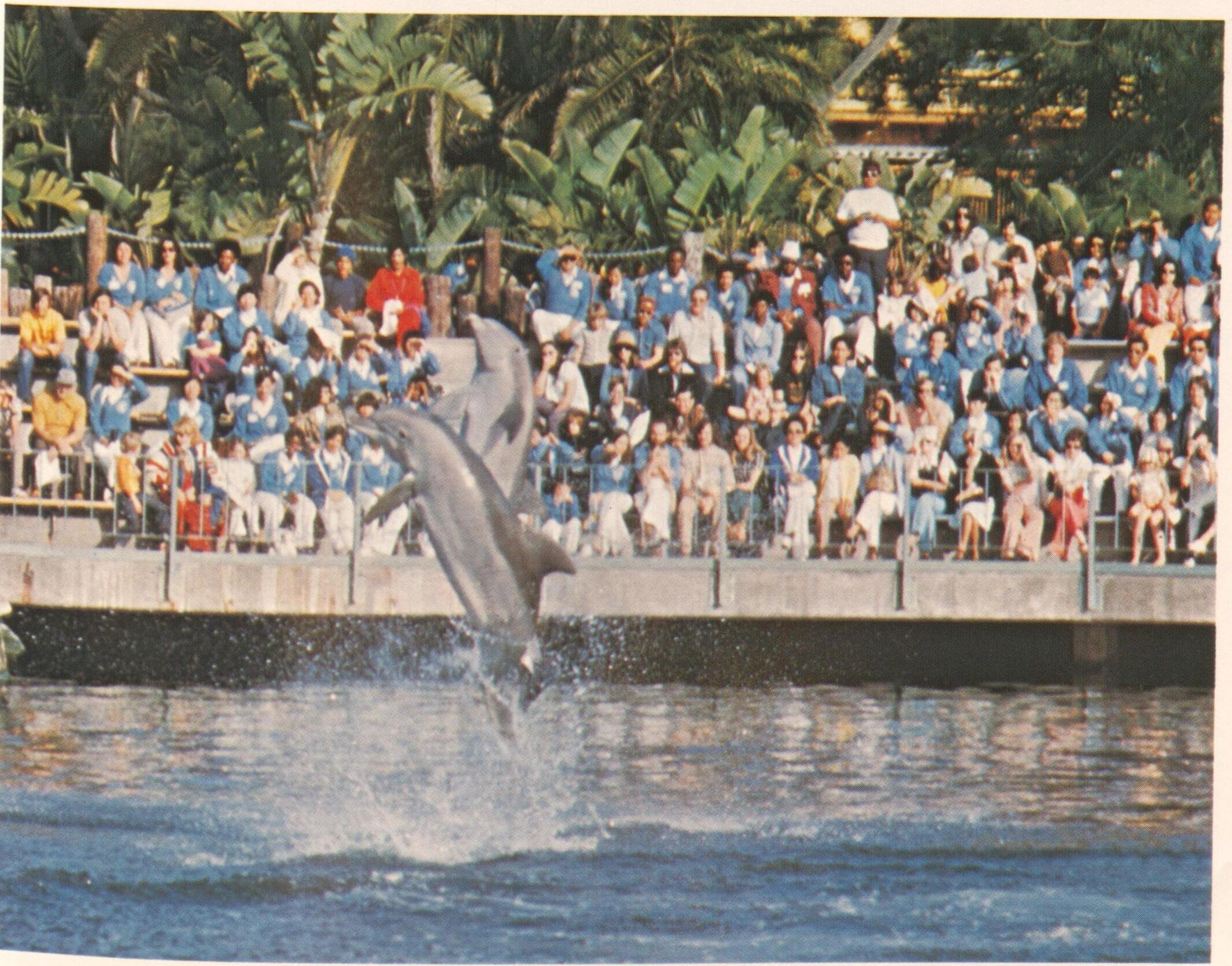
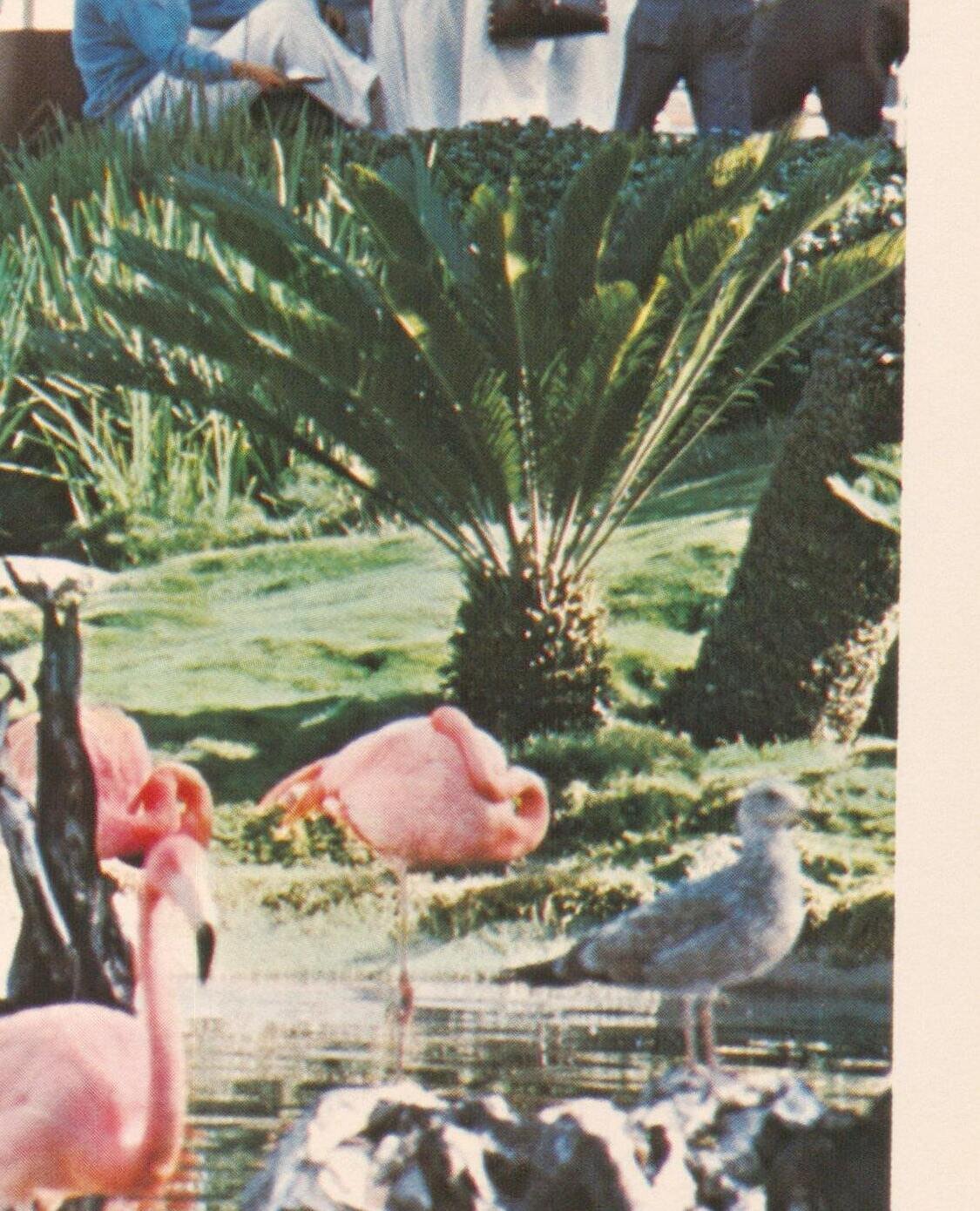
Known for its close ties with the sea, beginning with the landings of the Spanish explorer Cabrillo, San Diego preserves its nautical heritage with museums; a yacht harbor bristling with craft; a huge Navy base; and Sea World, a park that brings the wonders of the ocean to the land. NSA members spent a warm afternoon watching aquatic shows at Sea World, meeting some of Neptune’s frolicking subjects and learning about life in the great waters of the world. As darkness fell, they sat on grass-lined lagoons or in the large amphitheaters of the famed oceanic wonderland to witness the brilliant fireworks display.
The mammoth task of creating the Spring Festival on Ice cannot be gauged in terms of money alone. Like the gala musical productions that sprang out of Hollywood in the ’30s and ’40s, the key ingredient was a creative work force, not a large budget. This kind of effort is only possible today in NSA because of the uncommon dedication and spirit of its members who worked voluntarily against near-impossible time limitations to put on this one single performance lasting but two hours.
In several large studio workshops, NSA members carried out the work in three task forces — set production, costuming, music and choreography. In the very early morning hours, after the usual closing time, ice rinks in half a dozen communities became the training ground for scores of skaters. They honed their talents and worked out routines while the rest of the city slept.
The need for rugged, yet mobile sets, compounded the work of artists and craftsmen who constructed two hundred scenic pieces. Used either as background or as props, many of these sets had self-contained lighting or motorized units and were pushed over the ice during dance numbers.
A castle symbolizing man’s “Impossible Dream” was in reality a translucent bank of colored panels and a rear projection screen triggered in sequence by a programmed computer.
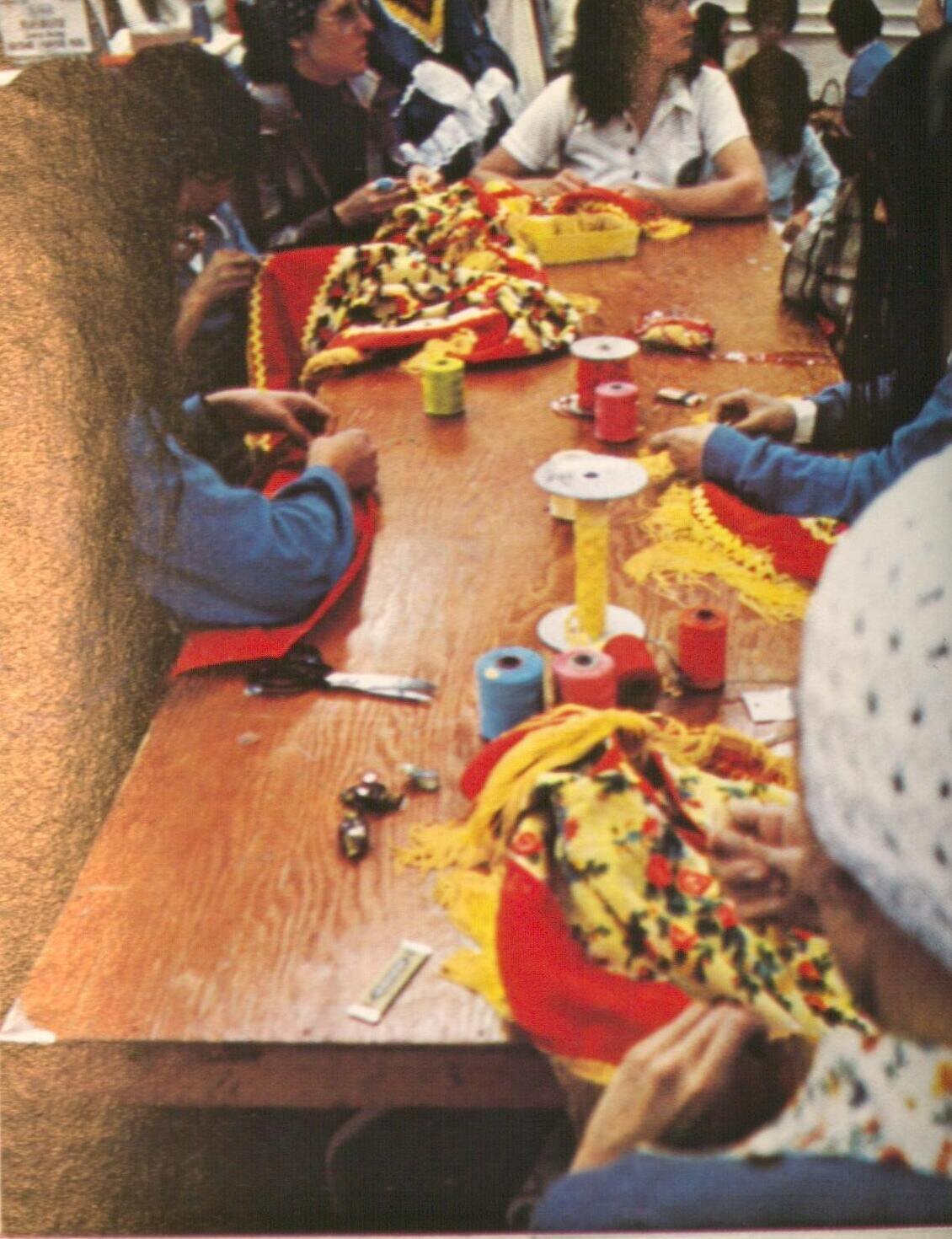
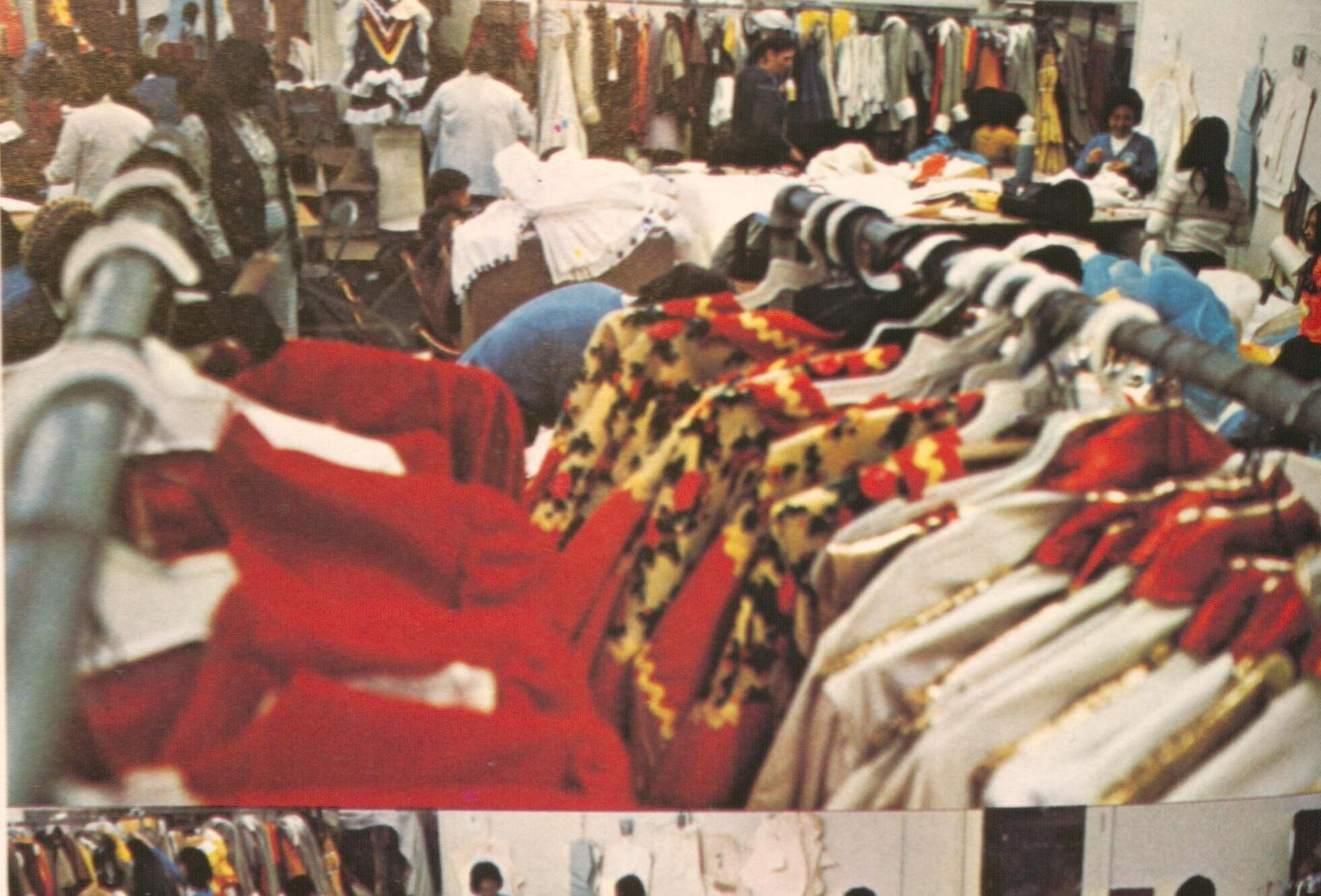
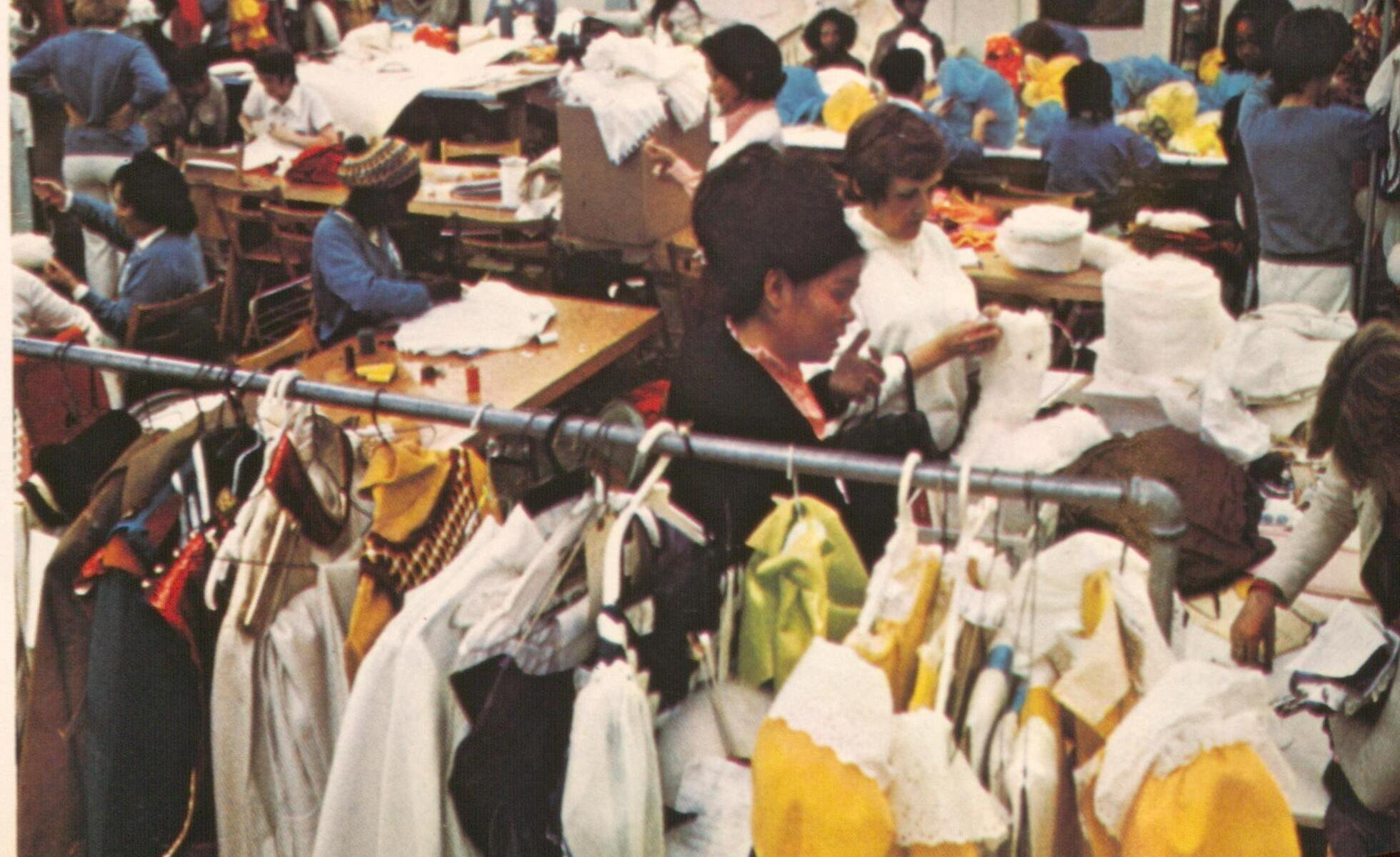
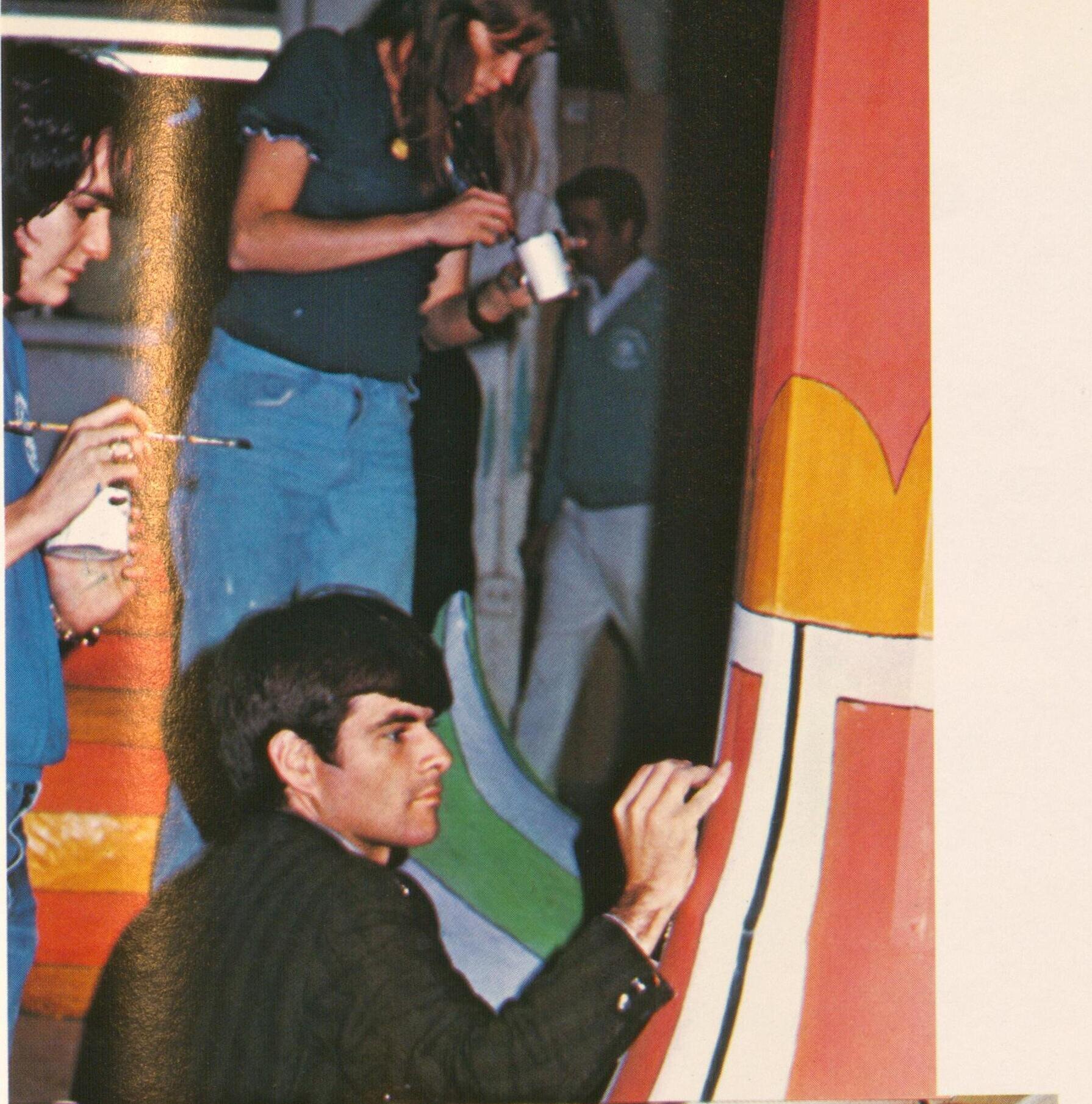
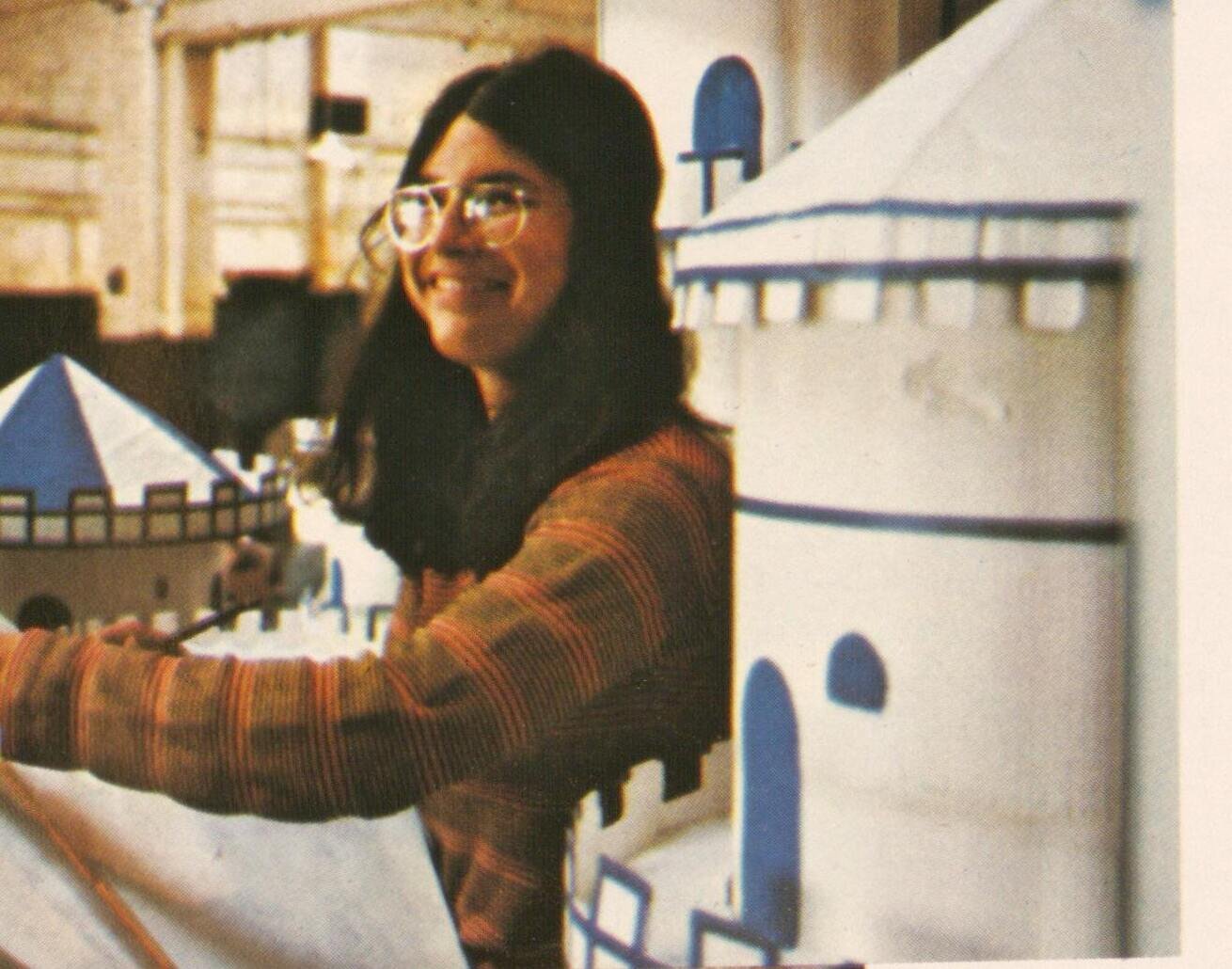
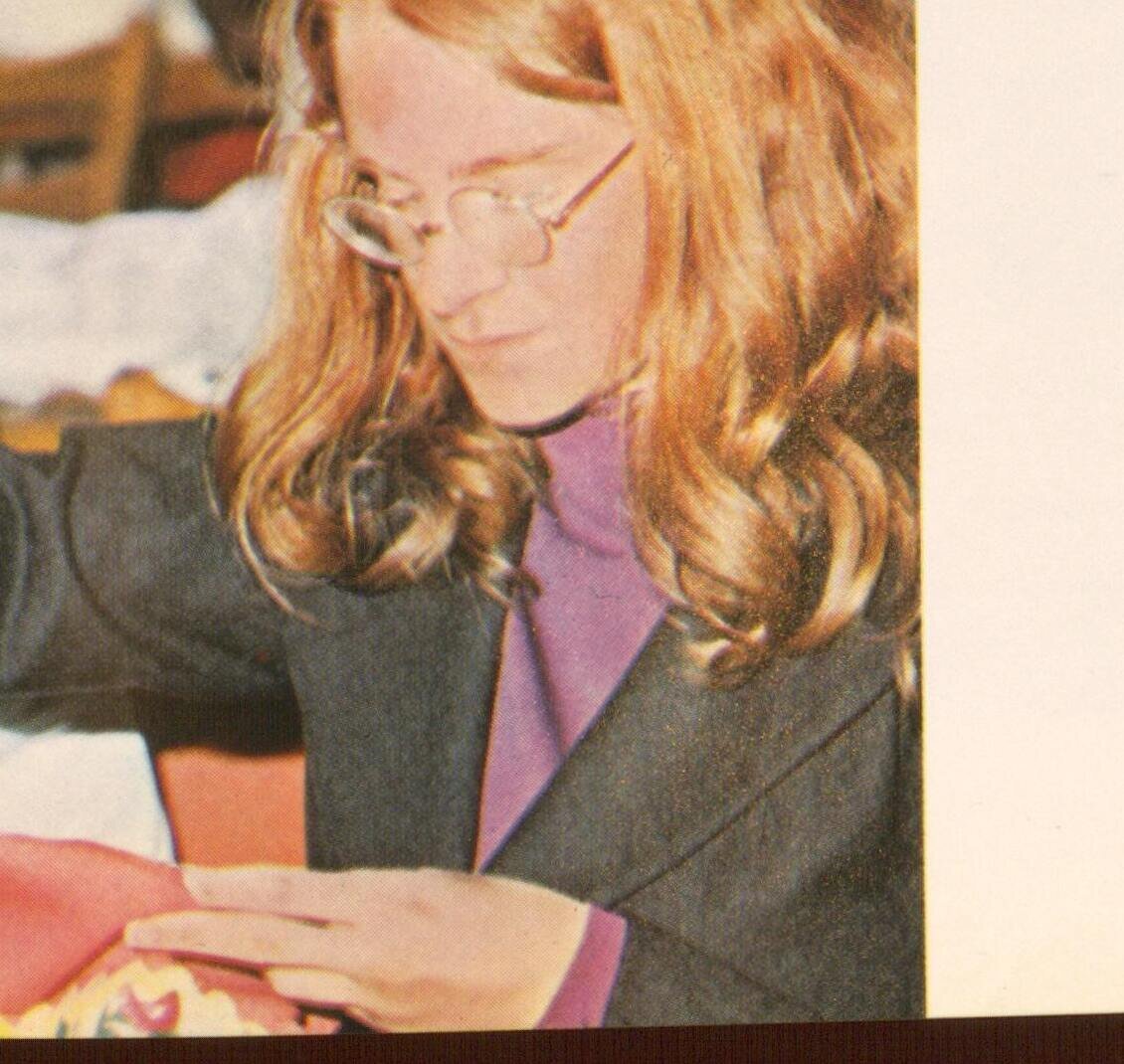
Because of international scope of the Spring Festival on Ice, costumes not only had to represent broad ethnic traditions, but also had to fit the specialized requirements of an ice show. In addition, most skaters had several costume changes, so the garments had to be easily put on and quickly shed.
Because of the hazard which might have been caused skaters by objects falling on the ice, each of the 37,500 buttons and sequins used on the costumes had to be painstakingly fastened.
Skaters often had to exit on one side of the arena and run, with their skates still on, around the entire floor to the other side. For their next appearance, in less than a minute, these vigorous performers changed costumes and were back on the ice for the next scene. The choreographers and stage managers faced a unique challenge, for instead of directing professional talent, they first had to teach most of the performers basic dance steps, then basic skating, then mate the two skills. The one thousand individuals who saw the production through from the first rehearsal to the performance forty-seven days later, clearly did the impossible.
Performers — 720
Stage crew and back-up personnel — 1,611
Total man hours of preparation — 1,130,400
Costumes — 1,200
Yards of material — 7,000
Yards of trim — 5,000
Buttons — 37,000
Lights sewn on costumes — 1,750
Hats — 150
Pieces constructed — 220
Lumber — 30,000 feet
Gallons of paint — 1,000
Gallons of glue — 400
Feet of chicken wire — 2,500
Yards of canvas — 1,350
Chorus members — 50
Languages in medleys — 6 (English, Spanish, Dutch, Japanese, Russian, Portuguese)
Man hours in recording studio — 6,650
Speakers — 180
Amplifiers — 2700 watts RMS
Overhead light in watts — 300,000
Special lighting in watts — 30,000
Decorative lights — 2,060
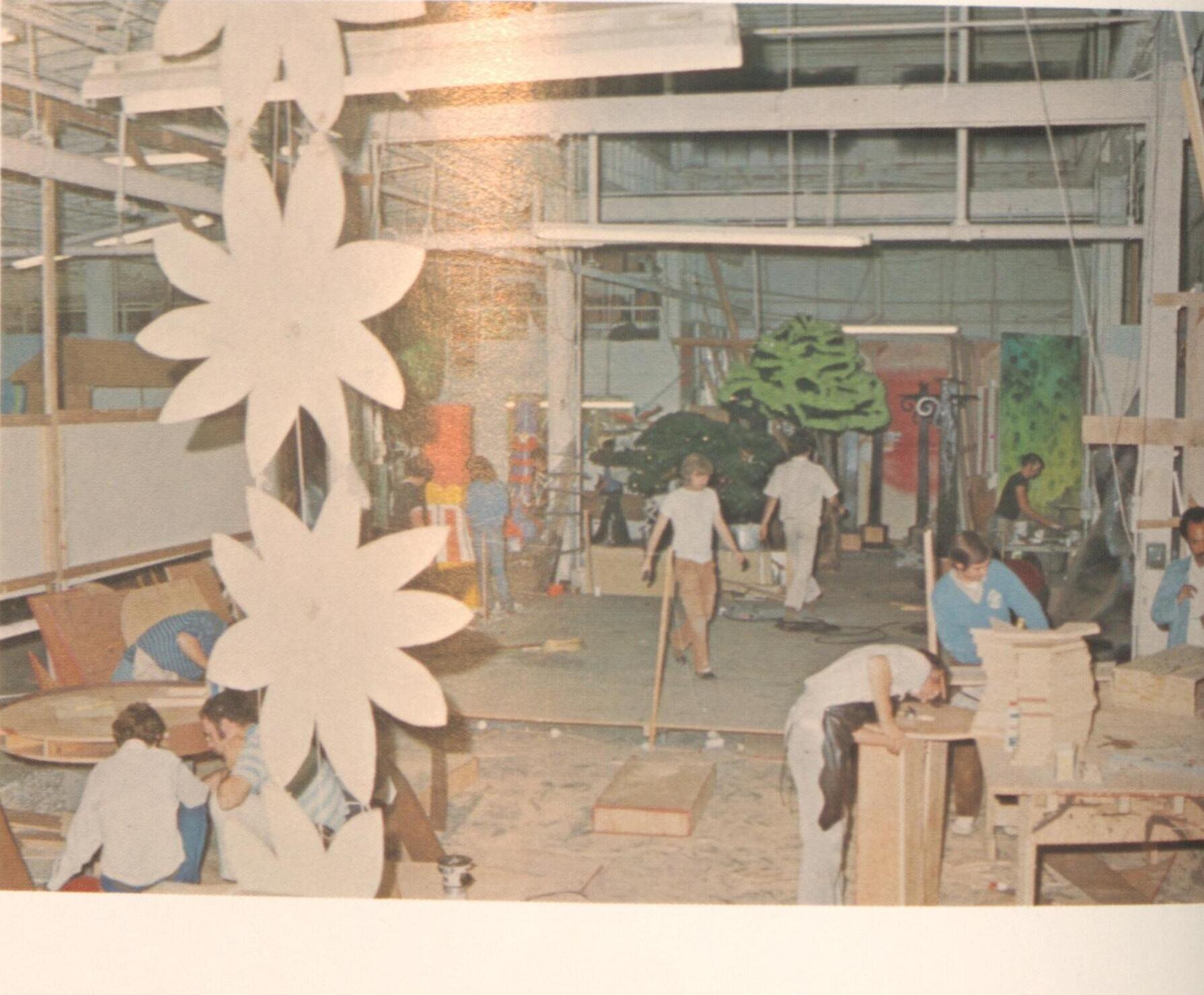
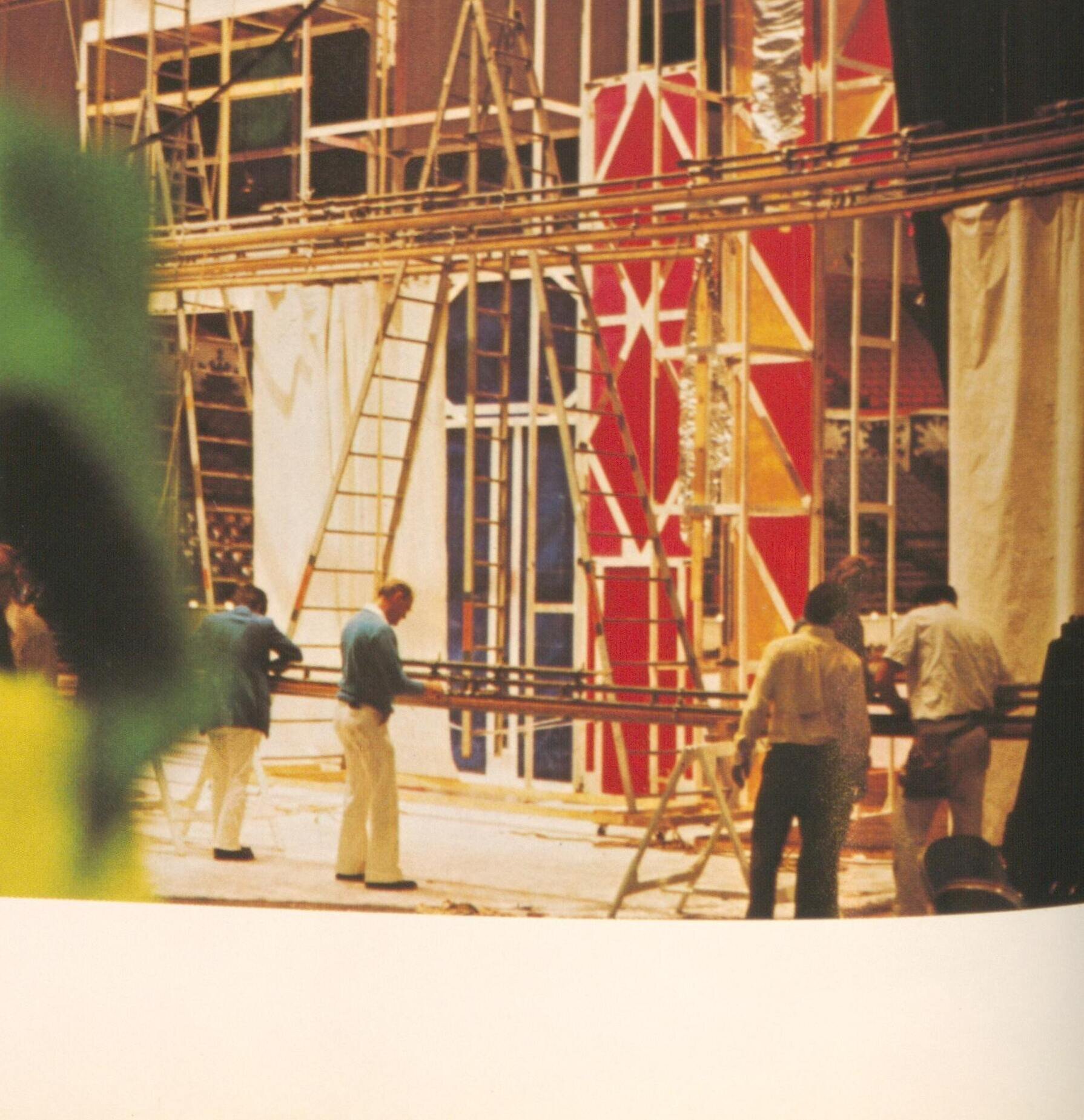
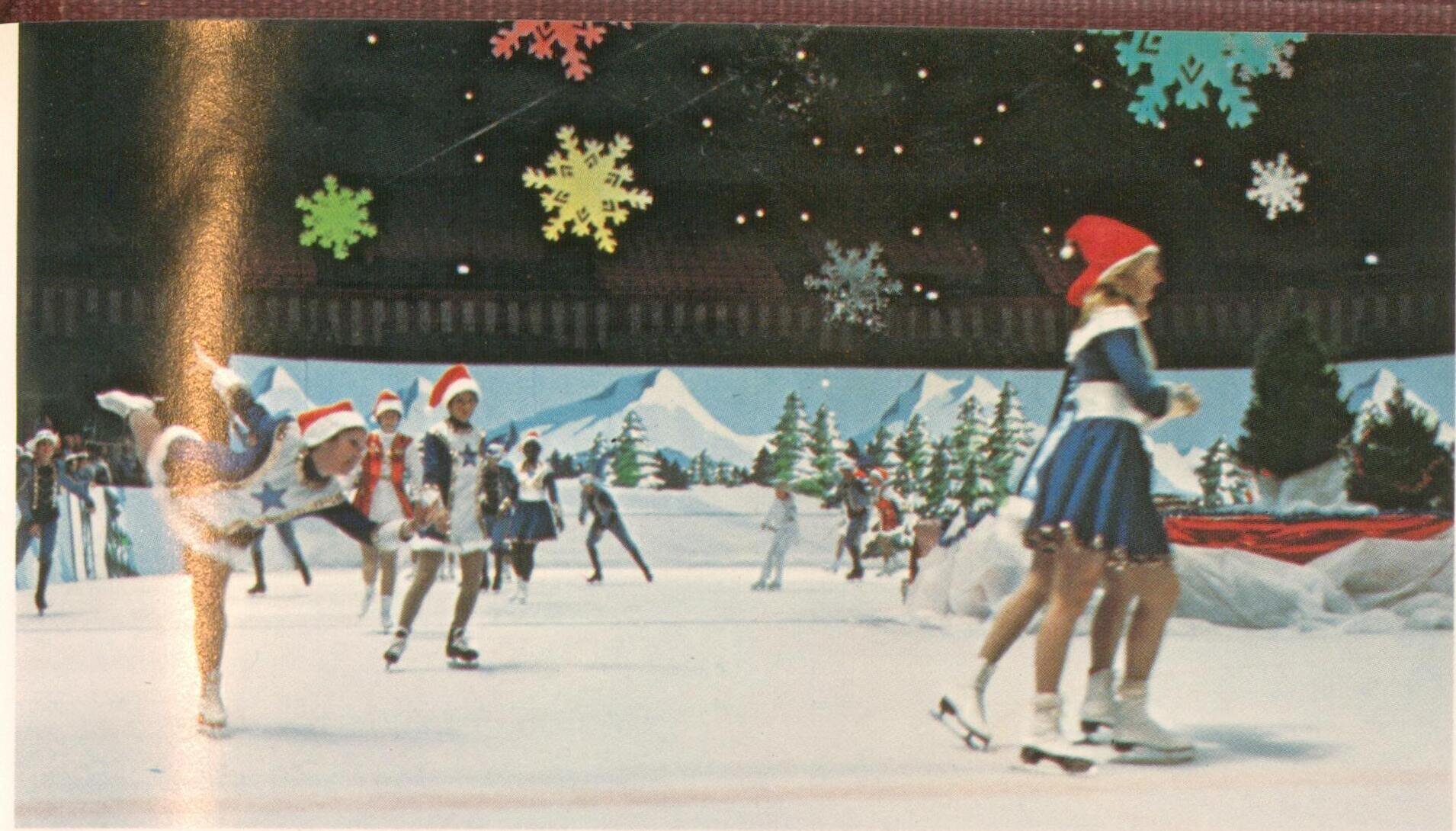
A monthly leader’s meeting held in November, 1973 at the San Diego Sports Arena gave the production staff of the Spring Festival On Ice a chance to try out some of their ideas. For while the theme of the convention show had been decided, few of the ideas had been worked out.
The mood of that meeting, with lovely Alpine scenery framing the gleaming ice, fired the imagination of thousands who would, only four months later, be directly involved in the production or performance of the April extravaganza. The theme of man’s triumph over hardship and the joy of living would soon take form in a beautiful performance that would stir hearts to new hope.
 BuddhaJones Archive Projectarchive @ buddhajones.org
About this project. BuddhaJones Archive Project seeks to collect and preserve information related to Nichiren Buddhism in America. All copyrighted content is presented here without permission under Fair Use guidelines, explicitly for the purposes of research, teaching, criticism, comment, and news reporting. This is a nonprofit, educational site unaffiliated with any religious organization or corporation.
BuddhaJones Archive Projectarchive @ buddhajones.orgAbout this project. BuddhaJones Archive Project seeks to collect and preserve information related to Nichiren Buddhism in America. All copyrighted content is presented here without permission under Fair Use guidelines, explicitly for the purposes of research, teaching, criticism, comment, and news reporting. This is a nonprofit, educational site unaffiliated with any religious organization or corporation.